
Union Budget 2026: Remembering the Indian Prime Ministers who took over the budget podium
On several occasions, extraordinary circumstances or political shifts forced the country’s top leaders to take charge, leaving their mark on India’s fiscal history
- Jan 26, 2026,
- Updated Feb 1, 2026 11:57 AM IST
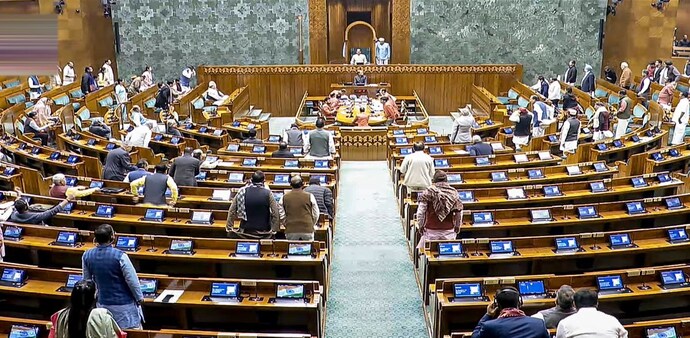
Budget 2026 | Union Finance Minister Nirmala Sitharaman’s presented her ninth consecutive Budget in the Parliament on February 1 2026. The Finance Minister emphasised that the government has consistently chosen reform over rhetoric and addressed global uncertainty.
1. Jawaharlal Nehru (1958) - First PM at the Budget Podium
Jawaharlal Nehru became the first Prime Minister to present the Union Budget in 1958. The trigger? Finance Minister T. T. Krishnamachari resigned amid the fallout from the Mundhra scandal, leaving the finance ministry vacant. Nehru stepped in to steer the country’s finances during this critical period.
2. Morarji Desai (1959–1963, 1967–1969) - The Record Holder
Morarji Desai, who later became PM (1977–1979), holds the record for presenting the most Union Budgets. He first took charge as Finance Minister while concurrently holding the PM’s support, presenting budgets consecutively from 1959 to 1963, including the interim 1962 budget.
He returned for the 1967–1969 budgets when political reshuffles left the ministry without a permanent head. In total, he presented 10 budgets (8 annual + 2 interim).
3. Indira Gandhi (1970) -Taking the Reins Amid Political Change
After Morarji Desai resigned as Finance Minister in 1969, Indira Gandhi temporarily assumed the finance portfolio and presented the 1970 Union Budget herself. She later appointed Yashwantrao Chavan as Finance Minister, a move that helped her maintain political stability and continuity during a turbulent period in her government.
4. Rajiv Gandhi (1987) - Short-Term Intervention
Prime Minister Rajiv Gandhi briefly took over as Finance Minister in 1987 after removing V. P. Singh from the post. The reason? A cabinet reshuffle and political strategy required the Prime Minister to directly oversee the Budget until a replacement could be appointed.
5. Manmohan Singh (1991–1996) - Steering the Nation Through Crisis
While serving as Finance Minister under PM P. V. Narasimha Rao, Manmohan Singh presented the landmark 1991 Budget in response to a severe balance-of-payments crisis. He introduced reforms for liberalisation, privatisation, and globalisation, and later implemented the service tax in 1994. Singh’s leadership at the podium was essential because India needed decisive economic action during a period of fiscal emergency.
Budget 2026 | Union Finance Minister Nirmala Sitharaman’s presented her ninth consecutive Budget in the Parliament on February 1 2026. The Finance Minister emphasised that the government has consistently chosen reform over rhetoric and addressed global uncertainty.
1. Jawaharlal Nehru (1958) - First PM at the Budget Podium
Jawaharlal Nehru became the first Prime Minister to present the Union Budget in 1958. The trigger? Finance Minister T. T. Krishnamachari resigned amid the fallout from the Mundhra scandal, leaving the finance ministry vacant. Nehru stepped in to steer the country’s finances during this critical period.
2. Morarji Desai (1959–1963, 1967–1969) - The Record Holder
Morarji Desai, who later became PM (1977–1979), holds the record for presenting the most Union Budgets. He first took charge as Finance Minister while concurrently holding the PM’s support, presenting budgets consecutively from 1959 to 1963, including the interim 1962 budget.
He returned for the 1967–1969 budgets when political reshuffles left the ministry without a permanent head. In total, he presented 10 budgets (8 annual + 2 interim).
3. Indira Gandhi (1970) -Taking the Reins Amid Political Change
After Morarji Desai resigned as Finance Minister in 1969, Indira Gandhi temporarily assumed the finance portfolio and presented the 1970 Union Budget herself. She later appointed Yashwantrao Chavan as Finance Minister, a move that helped her maintain political stability and continuity during a turbulent period in her government.
4. Rajiv Gandhi (1987) - Short-Term Intervention
Prime Minister Rajiv Gandhi briefly took over as Finance Minister in 1987 after removing V. P. Singh from the post. The reason? A cabinet reshuffle and political strategy required the Prime Minister to directly oversee the Budget until a replacement could be appointed.
5. Manmohan Singh (1991–1996) - Steering the Nation Through Crisis
While serving as Finance Minister under PM P. V. Narasimha Rao, Manmohan Singh presented the landmark 1991 Budget in response to a severe balance-of-payments crisis. He introduced reforms for liberalisation, privatisation, and globalisation, and later implemented the service tax in 1994. Singh’s leadership at the podium was essential because India needed decisive economic action during a period of fiscal emergency.