
Budget 2026: Here's what direct equity access for PROIs means for rupee and Indian markets
Union Budget 2026: The government is aiming to broaden the ownership base of domestic equities
- Feb 1, 2026,
- Updated Feb 1, 2026 12:56 PM IST
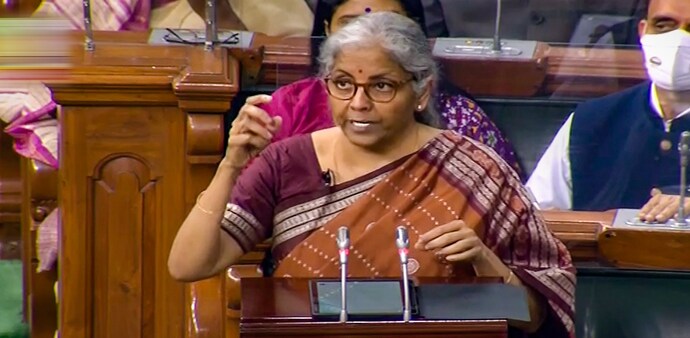
Union Budget 2026 | In her Union Budget speech, Union Finance Minister Nirmala Sitharaman on Sunday announced that Persons Resident Outside India (PROIs) will be allowed to invest directly in equity instruments of listed Indian companies through the Portfolio Investment Scheme (PIS).
By permitting PROIs to invest directly in equities and by doubling the per investor limit from 5% to 10%, the government is clearly aiming to broaden the ownership base of domestic equities, while containing systemic risks through an overall cap.
Commenting on the move, Shashank Udupa, Sebi-registered research analyst and fund manager at Smallcase, said, “This reform enhances market liquidity, improves price discovery, and expands the pool of long-term capital available to Indian companies.”
Union Budget 2026 Live Updates
He added that for large-cap stocks and index-heavy sectors such as banking, financial services, capital goods, and technology, higher PROI participation could translate into better valuations and more stable ownership structures. “Importantly, the measure also diversifies foreign inflows beyond traditional FPIs, reducing concentration risk. From a macro perspective, higher portfolio inflows support currency stability and lower the cost of equity capital for corporates,” Udupa said.
Echoing similar views, Sonam Srivastava, founder and fund manager at Wright Research PMS, said that the expansion of the PIS for overseas individuals sends a strong signal that the country wants to deepen and diversify foreign participation beyond large institutions.
“From a market perspective, this matters less for immediate flows and more for structure. PROI investors tend to be long-term, often with personal or economic links to India, and their capital is typically stickier than hot money flows. Increasing the aggregate cap from 10% to 24% meaningfully expands headroom, especially in mid- and large-cap names where foreign ownership limits often become binding constraints. Over time, this can improve liquidity, reduce volatility at the margin, and support better price discovery,” Srivastava said.
Manoj Purohit, Partner, Financial Services Tax, Tax & Regulatory Advisory, BDO India, added that the much-awaited amendment has been proposed in Budget 2026 to open up the Indian capital markets for PROIs. “Indian non-residents understand the sentiment of the Indian capital markets and are keen to invest in them. This measure will not only increase inflows but also help stabilise the currency and capital markets.”
Among the other major developments related to the stock market, the finance minister also announced an increase in the Securities Transaction Tax (STT) on futures to 0.05% from 0.02% earlier.
Union Budget 2026 | In her Union Budget speech, Union Finance Minister Nirmala Sitharaman on Sunday announced that Persons Resident Outside India (PROIs) will be allowed to invest directly in equity instruments of listed Indian companies through the Portfolio Investment Scheme (PIS).
By permitting PROIs to invest directly in equities and by doubling the per investor limit from 5% to 10%, the government is clearly aiming to broaden the ownership base of domestic equities, while containing systemic risks through an overall cap.
Commenting on the move, Shashank Udupa, Sebi-registered research analyst and fund manager at Smallcase, said, “This reform enhances market liquidity, improves price discovery, and expands the pool of long-term capital available to Indian companies.”
Union Budget 2026 Live Updates
He added that for large-cap stocks and index-heavy sectors such as banking, financial services, capital goods, and technology, higher PROI participation could translate into better valuations and more stable ownership structures. “Importantly, the measure also diversifies foreign inflows beyond traditional FPIs, reducing concentration risk. From a macro perspective, higher portfolio inflows support currency stability and lower the cost of equity capital for corporates,” Udupa said.
Echoing similar views, Sonam Srivastava, founder and fund manager at Wright Research PMS, said that the expansion of the PIS for overseas individuals sends a strong signal that the country wants to deepen and diversify foreign participation beyond large institutions.
“From a market perspective, this matters less for immediate flows and more for structure. PROI investors tend to be long-term, often with personal or economic links to India, and their capital is typically stickier than hot money flows. Increasing the aggregate cap from 10% to 24% meaningfully expands headroom, especially in mid- and large-cap names where foreign ownership limits often become binding constraints. Over time, this can improve liquidity, reduce volatility at the margin, and support better price discovery,” Srivastava said.
Manoj Purohit, Partner, Financial Services Tax, Tax & Regulatory Advisory, BDO India, added that the much-awaited amendment has been proposed in Budget 2026 to open up the Indian capital markets for PROIs. “Indian non-residents understand the sentiment of the Indian capital markets and are keen to invest in them. This measure will not only increase inflows but also help stabilise the currency and capital markets.”
Among the other major developments related to the stock market, the finance minister also announced an increase in the Securities Transaction Tax (STT) on futures to 0.05% from 0.02% earlier.