
Budget 2026 maintained continuity and consistency, says DEA Secretary
Union Budget 2026: Focus of Budget on infrastructure, youth, services, and manufacturing, US deal improves sentiments, removes uncertainty
- Feb 3, 2026,
- Updated Feb 3, 2026 7:07 PM IST
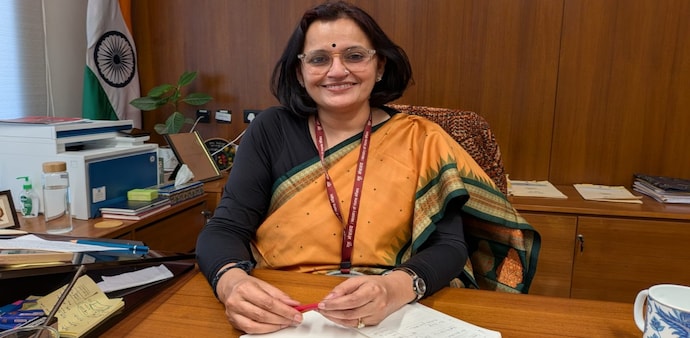
Union Budget 2026-27, which came amidst global uncertainty, kept a focus on continuity and consistency, said Economic Affairs Secretary Anuradha Thakur. In an interview to Business Today, Thakur welcomed the India-US trade deal, noting that it removes the uncertainty. Its impact on growth will have to be seen, she said, adding that the fiscal deficit target of 4.3% for FY27 is realistic.
Edited Excerpts
The Budget came at a time of an uncertain global environment. How much of an impact did this have on the Budget-making process?
It was mentioned in the speech that the uncertainty in the external environment is very high. The EU deal had just got signed. The Budget maintained continuity and consistency. We need to do more of what has worked. We are just sharpening focus on more strategic areas. And infrastructure was a big priority this time. While allocations to the highway sector increased, we have significantly diversified, with higher allocation to inland waterways and announcements were made on high-speed rail and the dedicated freight corridor. Each of these will have its own ecosystem and will have a multiplier effect on the various segments. The second pillar the Budget tried to address was the services sector, which contributes 55% to the GVA and just 30% to employment. Manufacturing also has the potential to give maximum employment. But the country has changed. People across the segment, across all segments, are looking for aspirational jobs. They're looking for dignified career pathways like healthcare, professionals, veterinary services, pharma. The Budget is also very youth-centric.
What is your view on the India-US trade deal?
It is a positive development on two counts. One is that it lifts uncertainty in the space, and secondly, it vastly improves investor and market sentiment, which are so important for our financial markets. That's turned right the moment it was announced. But how much of an impact it will have we will have to wait for the details of the deal. But the uncertainty ending itself is a plus.
Do you think the deal will help boost domestic GDP growth from the estimated 6.8%-7.2% in FY27?
I will wait for the details before commenting on that because the announcement on the higher tariff did not lead to a cliff. We held out for a year, and the sharp downturn in exports that was predicted did not come to pass. Since that has not happened, how much of an uptick it will have, therefore, is also to be seen.
There is a view that there is a very marginal reduction in fiscal deficit planned in FY27 to 4.3% from 4.4% this fiscal. What is your view because in the past, there have been years when the targets have been much more ambitious?
We laid down the targets in Parliament last year and the metric as well, which will be debt to GDP. All that we have said is that it will be a declining part, and we will reach a certain percentage by March 2031. That is the goal. And based on that, whatever the fiscal deficit works out, we will definitely highlight that, because markets and investors and rating agencies look out for that. On it being too slow or gradual, it works both ways. Several people suggested to allow it to remain at 4.4% so that the signal and the actual impact it can have on growth does not happen. The other side is that please bring it down. I think we took a view that we can have a realistic midway, and at least directionally, we should remain on the right course, and we should definitely reduce so that the path is not gone away from. That's what explains 4.3%.
The inflation targeting framework is under review and there is a new series of consumer price index-based inflation set to be released later this month. Will the 2% to 6% tolerance band still stand?
We've got the recommendations of the Reserve Bank of India, which we are in the process of examining. It will be fair to say that we should wait for our examination process to be complete, but this band has held us in good stead. It's definitely a band that has worked in the past. How much of it that will continue and whether we will change, we'll come to an examined response in some time.
A previous Economic Survey had said that food inflation should be excluded from inflation targeting. Has the ministry had any thought on this issue?
I would say that it's a bit hard to do. In headline inflation, which includes food and fuel, it actually is an important measure, because it keeps your inflation numbers close to the lived experience of people. It's an important thing that we need to bear in mind when we talk about headline versus core. There is core, which excludes food and fuel, so then both numbers are seen. That distinction between headline and core remains headline is important.
Union Budget 2026-27, which came amidst global uncertainty, kept a focus on continuity and consistency, said Economic Affairs Secretary Anuradha Thakur. In an interview to Business Today, Thakur welcomed the India-US trade deal, noting that it removes the uncertainty. Its impact on growth will have to be seen, she said, adding that the fiscal deficit target of 4.3% for FY27 is realistic.
Edited Excerpts
The Budget came at a time of an uncertain global environment. How much of an impact did this have on the Budget-making process?
It was mentioned in the speech that the uncertainty in the external environment is very high. The EU deal had just got signed. The Budget maintained continuity and consistency. We need to do more of what has worked. We are just sharpening focus on more strategic areas. And infrastructure was a big priority this time. While allocations to the highway sector increased, we have significantly diversified, with higher allocation to inland waterways and announcements were made on high-speed rail and the dedicated freight corridor. Each of these will have its own ecosystem and will have a multiplier effect on the various segments. The second pillar the Budget tried to address was the services sector, which contributes 55% to the GVA and just 30% to employment. Manufacturing also has the potential to give maximum employment. But the country has changed. People across the segment, across all segments, are looking for aspirational jobs. They're looking for dignified career pathways like healthcare, professionals, veterinary services, pharma. The Budget is also very youth-centric.
What is your view on the India-US trade deal?
It is a positive development on two counts. One is that it lifts uncertainty in the space, and secondly, it vastly improves investor and market sentiment, which are so important for our financial markets. That's turned right the moment it was announced. But how much of an impact it will have we will have to wait for the details of the deal. But the uncertainty ending itself is a plus.
Do you think the deal will help boost domestic GDP growth from the estimated 6.8%-7.2% in FY27?
I will wait for the details before commenting on that because the announcement on the higher tariff did not lead to a cliff. We held out for a year, and the sharp downturn in exports that was predicted did not come to pass. Since that has not happened, how much of an uptick it will have, therefore, is also to be seen.
There is a view that there is a very marginal reduction in fiscal deficit planned in FY27 to 4.3% from 4.4% this fiscal. What is your view because in the past, there have been years when the targets have been much more ambitious?
We laid down the targets in Parliament last year and the metric as well, which will be debt to GDP. All that we have said is that it will be a declining part, and we will reach a certain percentage by March 2031. That is the goal. And based on that, whatever the fiscal deficit works out, we will definitely highlight that, because markets and investors and rating agencies look out for that. On it being too slow or gradual, it works both ways. Several people suggested to allow it to remain at 4.4% so that the signal and the actual impact it can have on growth does not happen. The other side is that please bring it down. I think we took a view that we can have a realistic midway, and at least directionally, we should remain on the right course, and we should definitely reduce so that the path is not gone away from. That's what explains 4.3%.
The inflation targeting framework is under review and there is a new series of consumer price index-based inflation set to be released later this month. Will the 2% to 6% tolerance band still stand?
We've got the recommendations of the Reserve Bank of India, which we are in the process of examining. It will be fair to say that we should wait for our examination process to be complete, but this band has held us in good stead. It's definitely a band that has worked in the past. How much of it that will continue and whether we will change, we'll come to an examined response in some time.
A previous Economic Survey had said that food inflation should be excluded from inflation targeting. Has the ministry had any thought on this issue?
I would say that it's a bit hard to do. In headline inflation, which includes food and fuel, it actually is an important measure, because it keeps your inflation numbers close to the lived experience of people. It's an important thing that we need to bear in mind when we talk about headline versus core. There is core, which excludes food and fuel, so then both numbers are seen. That distinction between headline and core remains headline is important.