
No incentive scheme, GST refunds still unaddressed: Hits and misses for MSMEs in Budget 2026
Union Budget 2026: Some MSME entrepreneurs were disappointed by the absence of any income tax relief and no incentive scheme, similar to the production-linked incentive scheme available to large companies
- Feb 2, 2026,
- Updated Feb 2, 2026 3:20 PM IST
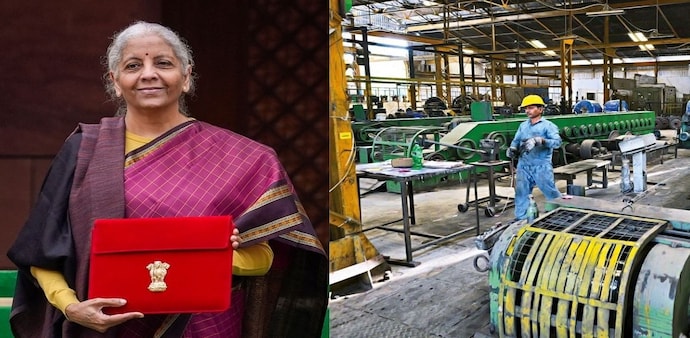
There were many hits and some misses in the proposals made by Finance Minister Nirmala Sitharaman for the Micro, Small and Medium Enterprises (MSME) sector in the Union Budget 2026-27. The FM outlined a three-pronged strategy to develop MSMEs as "Champions", focusing on equity, liquidity, and professional support.
The Rs 10,000 crore SME Growth Fund proposed in the Budget will likely address this sector’s overreliance on debt by providing risk capital. And the provision of an additional Rs 2,000 crore for the Self-Reliant India Fund, alongside creation of ‘Corporate Mitras’, will help lessen the sector’s compliance costs. Also, all central public sector units will now have to mandatorily use TReDS (Trade Receivables Discounting System) to enable faster payment cycles and improved working capital for MSMEs.
Neeraj Kedia, Chairman of the Banking and Finance Committee at the Federation of Indian Micro, Small and Medium Enterprises, welcomed the move to promote the sector by infusing capital through the new growth fund.
The President of the Federation of Indian Chambers of Commerce and Industry, Anant Goekna, said that MSMEs stand to benefit significantly from improved access to finance through the Budget proposals. “The Rs 10,000 crore SME Growth Fund, enhanced allocation to the Self-Reliant India Fund and strengthened liquidity support through the TReDS mechanism will provide much-needed financial depth to micro and small enterprises.”
But one of the key demands of the MSMEs, a time-bound and automatic refund process for the inverted duty structure created by the provisions of GST 2.0, remains unaddressed. The Federation of Indian Micro, Small and Medium Enterprises (FISME) had made a case for lower taxes earlier, besides seeking input tax relief. It had proposed that if input is taxed at 18% and finished product at 5%, concessional rate of 8% should be levied on goods sold by MSMEs. The federation had also sought a refund of GST payments on plant and machinery bought by small units.
India's small and micro businesses together account for nearly a third of the GDP, more than a third of the country’s manufacturing and nearly half of all exports. In FY26, the MSME sector has been hit hard with multiple headwinds, especially due to geopolitical uncertainties, Trump Tariffs and policy flip-flops, which have raised this sector’s compliance burden while keeping its credit needs unaddressed.
After the implementation of GST 2.0, which subsumed some of the earlier tax slabs of 0%, 5%, 12%, 18% and 28%+ cess to just have 0%, 5% and 18% slabs, with a 40% slab for ‘sin’ or luxury goods. This rejig meant a large number of daily use items and some aspirational products moved to lower tax slabs. While this made them cheaper for the end consumer, for the manufacturers of items where the input is now taxed more than the finished product, GST 2.0 has meant increased compliances and large amounts of working capital remaining stuck.
Mohan Ramaswamy, Founder and CEO, Rubix Data Sciences, referred to the Economic Survey for 2025-26 to point out that MSME credit expansion is happening alongside growing stress on cash flows. “The average borrowing per unincorporated enterprise has increased, and more firms are entering the formal credit system, yet nearly Rs 8.1 lakh crore remains stuck in delayed payments. The Budget’s decision to deepen the role of TReDS, by making it a settlement backbone, extending guarantee support, and integrating it with GeM addresses this imbalance by shifting the focus from loan disbursal to payment certainty."
He also said that the Rs 10,000 crore SME Growth Fund adds a much-needed equity layer to support firms ready to scale, and the data-led credit assessment models adopted by public sector banks reinforce more objective and efficient lending. “Taken together, these measures move MSME policy beyond incremental fixes toward building financial resilience, transparency, and scalability," Ramaswamy said.
Some MSME entrepreneurs were disappointed by the absence of any income tax relief and no incentive scheme, similar to the production-linked incentive scheme available to large companies, for encouraging production in the MSME sector. Also, another demand - mandatory 30% government sourcing from micro units and an assurance from the government that it will contribute EPF & ESI payments for the first three years for new micro-enterprise employment, also remained unaddressed in the Budget.
There were many hits and some misses in the proposals made by Finance Minister Nirmala Sitharaman for the Micro, Small and Medium Enterprises (MSME) sector in the Union Budget 2026-27. The FM outlined a three-pronged strategy to develop MSMEs as "Champions", focusing on equity, liquidity, and professional support.
The Rs 10,000 crore SME Growth Fund proposed in the Budget will likely address this sector’s overreliance on debt by providing risk capital. And the provision of an additional Rs 2,000 crore for the Self-Reliant India Fund, alongside creation of ‘Corporate Mitras’, will help lessen the sector’s compliance costs. Also, all central public sector units will now have to mandatorily use TReDS (Trade Receivables Discounting System) to enable faster payment cycles and improved working capital for MSMEs.
Neeraj Kedia, Chairman of the Banking and Finance Committee at the Federation of Indian Micro, Small and Medium Enterprises, welcomed the move to promote the sector by infusing capital through the new growth fund.
The President of the Federation of Indian Chambers of Commerce and Industry, Anant Goekna, said that MSMEs stand to benefit significantly from improved access to finance through the Budget proposals. “The Rs 10,000 crore SME Growth Fund, enhanced allocation to the Self-Reliant India Fund and strengthened liquidity support through the TReDS mechanism will provide much-needed financial depth to micro and small enterprises.”
But one of the key demands of the MSMEs, a time-bound and automatic refund process for the inverted duty structure created by the provisions of GST 2.0, remains unaddressed. The Federation of Indian Micro, Small and Medium Enterprises (FISME) had made a case for lower taxes earlier, besides seeking input tax relief. It had proposed that if input is taxed at 18% and finished product at 5%, concessional rate of 8% should be levied on goods sold by MSMEs. The federation had also sought a refund of GST payments on plant and machinery bought by small units.
India's small and micro businesses together account for nearly a third of the GDP, more than a third of the country’s manufacturing and nearly half of all exports. In FY26, the MSME sector has been hit hard with multiple headwinds, especially due to geopolitical uncertainties, Trump Tariffs and policy flip-flops, which have raised this sector’s compliance burden while keeping its credit needs unaddressed.
After the implementation of GST 2.0, which subsumed some of the earlier tax slabs of 0%, 5%, 12%, 18% and 28%+ cess to just have 0%, 5% and 18% slabs, with a 40% slab for ‘sin’ or luxury goods. This rejig meant a large number of daily use items and some aspirational products moved to lower tax slabs. While this made them cheaper for the end consumer, for the manufacturers of items where the input is now taxed more than the finished product, GST 2.0 has meant increased compliances and large amounts of working capital remaining stuck.
Mohan Ramaswamy, Founder and CEO, Rubix Data Sciences, referred to the Economic Survey for 2025-26 to point out that MSME credit expansion is happening alongside growing stress on cash flows. “The average borrowing per unincorporated enterprise has increased, and more firms are entering the formal credit system, yet nearly Rs 8.1 lakh crore remains stuck in delayed payments. The Budget’s decision to deepen the role of TReDS, by making it a settlement backbone, extending guarantee support, and integrating it with GeM addresses this imbalance by shifting the focus from loan disbursal to payment certainty."
He also said that the Rs 10,000 crore SME Growth Fund adds a much-needed equity layer to support firms ready to scale, and the data-led credit assessment models adopted by public sector banks reinforce more objective and efficient lending. “Taken together, these measures move MSME policy beyond incremental fixes toward building financial resilience, transparency, and scalability," Ramaswamy said.
Some MSME entrepreneurs were disappointed by the absence of any income tax relief and no incentive scheme, similar to the production-linked incentive scheme available to large companies, for encouraging production in the MSME sector. Also, another demand - mandatory 30% government sourcing from micro units and an assurance from the government that it will contribute EPF & ESI payments for the first three years for new micro-enterprise employment, also remained unaddressed in the Budget.