
'Tactical freeze, not a retreat': Geostrategist on funding pause for Chabahar project in Budget 2026
Union Budget 2026: India has already transferred its principal commitment of $120 million toward the development of Chabahar’s Shahid Beheshti terminal, says Brahma Chellaney
- Feb 1, 2026,
- Updated Feb 1, 2026 8:24 PM IST
Union Budget 2026 | India's decision to make no budgetary allocation for the Chabahar port project in Iran this year should be read as a tactical pause, rather than a signal of strategic withdrawal, geostrategist Brahma Chellaney said on Sunday. He, however, warned that any Indian exit could leave strategic space for China to step in.
Reacting to the absence of funding for Chabahar in the Budget 2026, Chellaney said: "Chabahar Port is India's only viable route to Afghanistan and Central Asia that bypasses Pakistan. An Indian exit would almost certainly leave a vacuum for China to fill. The absence of funding for Chabahar in India’s 2026–27 Budget may therefore reflect a tactical freeze rather than a strategic retreat, given Washington’s April 26 deadline for India to wind down operations or face sanctions."
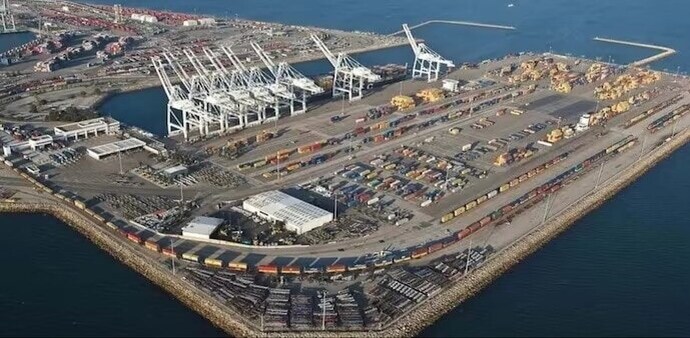
India has not allocated any funds for the Chabahar port project in this year's Budget, a shift from recent years when New Delhi had been making an annual outlay of Rs 100 crore to the connectivity initiative in Iran's Sistan-Balochistan province. India is a major partner in the development of the Chabahar port, which has been positioned as a key node in India's regional connectivity strategy.
The funding gap comes at a time when Washington has stepped up sanctions pressure on Iran. In September last year, the US imposed wide-ranging economic sanctions on Tehran, while granting India a six-month exemption from punitive measures linked to the Chabahar project. The waiver is scheduled to expire on April 26.
Chellaney argued that the absence of a fresh allocation does not automatically mean India is pulling out, particularly because a large part of India’s financial commitments to Chabahar are already in place. "India has already transferred its principal commitment of $120 million toward the development of Chabahar’s Shahid Beheshti terminal. Because these funds are already 'in the system', a fresh budgetary allocation may not have been technically necessary at this stage," he said.
The geostrategist said New Delhi may still be looking for room to keep the project alive amid US pressure. "New Delhi is reportedly exploring a "middle path" with Washington on Chabahar," he said.
Last month, External Affairs Ministry spokesperson Randhir Jaiswal said India is engaged with the United States on issues relating to the Chabahar port project. The engagement comes as India weighs options on the project after the Trump administration threatened a 25 per cent additional tariff on countries doing business with Tehran.
Chellaney also pointed to what he described as a shift in Washington's posture towards India's participation in Chabahar. "Stepping up its wanton pressure on New Delhi, the Trump administration last September gratuitously withdrew the Chabahar-specific sanctions exemption granted to India in 2018. It subsequently issued a temporary six-month waiver to let India wind down its operations by April 2026," he said.
Chabahar is being developed by India and Iran to strengthen connectivity and trade links, and both sides have pitched the port as part of the International North-South Transport Corridor (INSTC). The INSTC is a 7,200-km multi-mode transport route aimed at moving freight across a wide geography that includes India, Iran, Afghanistan, Armenia, Azerbaijan, Russia, Central Asia and Europe.
Union Budget 2026 | India's decision to make no budgetary allocation for the Chabahar port project in Iran this year should be read as a tactical pause, rather than a signal of strategic withdrawal, geostrategist Brahma Chellaney said on Sunday. He, however, warned that any Indian exit could leave strategic space for China to step in.
Reacting to the absence of funding for Chabahar in the Budget 2026, Chellaney said: "Chabahar Port is India's only viable route to Afghanistan and Central Asia that bypasses Pakistan. An Indian exit would almost certainly leave a vacuum for China to fill. The absence of funding for Chabahar in India’s 2026–27 Budget may therefore reflect a tactical freeze rather than a strategic retreat, given Washington’s April 26 deadline for India to wind down operations or face sanctions."
India has not allocated any funds for the Chabahar port project in this year's Budget, a shift from recent years when New Delhi had been making an annual outlay of Rs 100 crore to the connectivity initiative in Iran's Sistan-Balochistan province. India is a major partner in the development of the Chabahar port, which has been positioned as a key node in India's regional connectivity strategy.
The funding gap comes at a time when Washington has stepped up sanctions pressure on Iran. In September last year, the US imposed wide-ranging economic sanctions on Tehran, while granting India a six-month exemption from punitive measures linked to the Chabahar project. The waiver is scheduled to expire on April 26.
Chellaney argued that the absence of a fresh allocation does not automatically mean India is pulling out, particularly because a large part of India’s financial commitments to Chabahar are already in place. "India has already transferred its principal commitment of $120 million toward the development of Chabahar’s Shahid Beheshti terminal. Because these funds are already 'in the system', a fresh budgetary allocation may not have been technically necessary at this stage," he said.
The geostrategist said New Delhi may still be looking for room to keep the project alive amid US pressure. "New Delhi is reportedly exploring a "middle path" with Washington on Chabahar," he said.
Last month, External Affairs Ministry spokesperson Randhir Jaiswal said India is engaged with the United States on issues relating to the Chabahar port project. The engagement comes as India weighs options on the project after the Trump administration threatened a 25 per cent additional tariff on countries doing business with Tehran.
Chellaney also pointed to what he described as a shift in Washington's posture towards India's participation in Chabahar. "Stepping up its wanton pressure on New Delhi, the Trump administration last September gratuitously withdrew the Chabahar-specific sanctions exemption granted to India in 2018. It subsequently issued a temporary six-month waiver to let India wind down its operations by April 2026," he said.
Chabahar is being developed by India and Iran to strengthen connectivity and trade links, and both sides have pitched the port as part of the International North-South Transport Corridor (INSTC). The INSTC is a 7,200-km multi-mode transport route aimed at moving freight across a wide geography that includes India, Iran, Afghanistan, Armenia, Azerbaijan, Russia, Central Asia and Europe.