
Union Budget 2026: What is the Halwa Ceremony? What is its significance? Explained
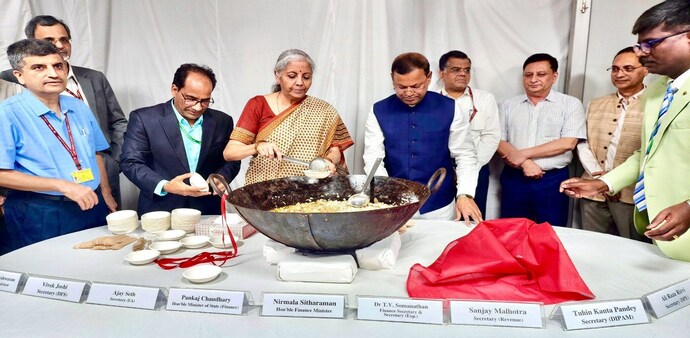
Held annually by the Ministry of Finance, the ceremony involves preparing and serving halwa, a traditional Indian sweet, to officials directly involved in drafting the Budget
- Jan 19, 2026,
- Updated Jan 19, 2026 3:06 PM IST
A few days ahead of the Union Budget reaching Parliament, a small but decisive moment plays out behind closed doors in North Block. The Halwa Ceremony, a long-standing Finance Ministry ritual, signals that the Budget has entered its final and most confidential phase.
Held annually by the Ministry of Finance, the ceremony involves preparing and serving halwa, a traditional Indian sweet, to officials directly involved in drafting the Budget. For Union Budget 2026, the ritual once again would mark a clear administrative line: policy choices, numbers and allocations have been finalised.
While symbolic on the surface, the ceremony carries real institutional weight and continues to shape how India’s Budget is prepared and protected.
Why the Halwa Ceremony matters
The Halwa Ceremony is not a formality. It indicates that months of consultations with ministries, regulators, industry bodies and economists have concluded. Once it is held, no major changes are made to the Budget proposals unless absolutely necessary.
More importantly, it marks the start of the lock-in period.
The lock-in phase begins
Immediately after the ceremony, a select group of Finance Ministry officials enters a strict lock-in inside North Block. During this period:
-
External communication is barred
-
Phone access is restricted
-
Security protocols are tightened
Advertisement
The objective is simple: prevent leaks of sensitive information such as tax proposals, fiscal deficit targets and sector-wise allocations before Budget Day.
For markets, this is the moment when speculation intensifies, and the countdown to official clarity begins.
A ritual rooted in tradition
In Indian custom, beginning an important task with something sweet is believed to bring positive outcomes. The Halwa Ceremony reflects this belief while also recognising the collective effort of hundreds of officials who work behind the scenes on the Budget.
Serving the same dish to everyone involved underscores equality and shared responsibility, values deeply embedded in India’s administrative culture.
Despite rapid digitisation and changes in governance practices, the ceremony has endured as a reminder that policymaking is driven by people as much as by numbers.
How the tradition evolved
The Halwa Ceremony has been part of India’s Budget process for decades. In earlier years, Budget documents were printed at Rashtrapati Bhavan. The printing was later shifted to the basement of North Block, where the ceremony continues to be held.
Even as Budget presentations moved from evenings to mornings and from briefcases to tablets, the Halwa Ceremony has remained unchanged, offering continuity amid procedural change.
A few days ahead of the Union Budget reaching Parliament, a small but decisive moment plays out behind closed doors in North Block. The Halwa Ceremony, a long-standing Finance Ministry ritual, signals that the Budget has entered its final and most confidential phase.
Held annually by the Ministry of Finance, the ceremony involves preparing and serving halwa, a traditional Indian sweet, to officials directly involved in drafting the Budget. For Union Budget 2026, the ritual once again would mark a clear administrative line: policy choices, numbers and allocations have been finalised.
While symbolic on the surface, the ceremony carries real institutional weight and continues to shape how India’s Budget is prepared and protected.
Why the Halwa Ceremony matters
The Halwa Ceremony is not a formality. It indicates that months of consultations with ministries, regulators, industry bodies and economists have concluded. Once it is held, no major changes are made to the Budget proposals unless absolutely necessary.
More importantly, it marks the start of the lock-in period.
The lock-in phase begins
Immediately after the ceremony, a select group of Finance Ministry officials enters a strict lock-in inside North Block. During this period:
-
External communication is barred
-
Phone access is restricted
-
Security protocols are tightened
Advertisement
The objective is simple: prevent leaks of sensitive information such as tax proposals, fiscal deficit targets and sector-wise allocations before Budget Day.
For markets, this is the moment when speculation intensifies, and the countdown to official clarity begins.
A ritual rooted in tradition
In Indian custom, beginning an important task with something sweet is believed to bring positive outcomes. The Halwa Ceremony reflects this belief while also recognising the collective effort of hundreds of officials who work behind the scenes on the Budget.
Serving the same dish to everyone involved underscores equality and shared responsibility, values deeply embedded in India’s administrative culture.
Despite rapid digitisation and changes in governance practices, the ceremony has endured as a reminder that policymaking is driven by people as much as by numbers.
How the tradition evolved
The Halwa Ceremony has been part of India’s Budget process for decades. In earlier years, Budget documents were printed at Rashtrapati Bhavan. The printing was later shifted to the basement of North Block, where the ceremony continues to be held.
Even as Budget presentations moved from evenings to mornings and from briefcases to tablets, the Halwa Ceremony has remained unchanged, offering continuity amid procedural change.