
Budget 2026: When poetry found a place in India’s Budget speeches
Union Budget 2026: As the Budget approaches, here's a look back at how India's finance ministers have woven poetry, philosophy and cultural metaphors into landmark Budget speeches over the years
- Jan 26, 2026,
- Updated Feb 1, 2026 12:08 PM IST
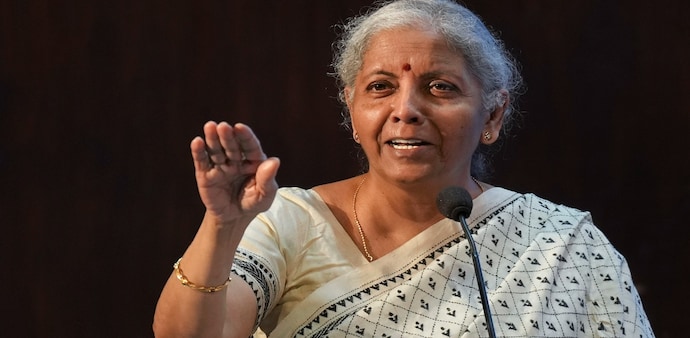
Budget 2026 | Union Finance Minister Nirmala Sitharaman’s presented her ninth consecutive Budget in the Parliament on February 1 2026. The Finance Minister emphasised that the government has consistently chosen reform over rhetoric and addressed global uncertainty.
Over the decades, India’s Budget speeches have also doubled as literary moments, with finance ministers frequently turning to poetry and philosophy to frame economic change and national ambition.
One of the most historic examples came in 1991, when then finance minister Manmohan Singh delivered his landmark Budget while ushering in economic liberalisation.
He quoted Allama Iqbal:
“Yunan-o-Misr-o-Roma sab mit gaye jahan se, Ab tak magar hai baaki naam-o-nishaan hamara…”
Translation: Ancient civilisations of Greece, Egypt and Rome have vanished, yet our civilisation endures.
Singh also cited Victor Hugo’s famous line: “No power on earth can stop an idea whose time has come,” signalling the inevitability of reform.
In his 1992 Budget speech, he warned against short-term policy errors by quoting Muzaffar Razmi:
“Kuchh aise bhee manzar hain taareekh ki nazron mein, Lamhon ne khataa ki thi, sadiyon ne sazaa paayee.”
Translation: History has seen moments where mistakes made in an instant were punished for centuries.
During the BJP-led government between 1999 and 2002, finance minister Yashwant Sinha used a metaphor to stress the need for bold action:
“Taqaazaa hai waqt kaa ke toofaan se joojho, Kahaan tak chaloge kinaare kinaare.”
Translation: The times demand that you confront the storm; how long will you walk safely along the shore?
Former finance minister P Chidambaram frequently turned to classical and philosophical texts. He often quoted Saint Thiruvalluvar, including:
“Kalangathu kanda vinaikkan thulangkathu thookkang kadinthu seyal.”
Translation: What the mind knows to be right must be pursued with unwavering resolve.
Arun Jaitley’s speeches blended realism with optimism. In his 2014-15 Budget, he said:
“Kuchh to gul khilaye hain, kuchh abhi khilaane hain, Par baagh mein ab bhi kaante kuchh puraane hain.”
Translation: Some flowers have bloomed, more are yet to bloom, but old thorns still remain in the garden.
In 2017, he recited:
“Kashti chalaane walon ne jab haar kar di patwar hamein…”
Translation: When the sailors handed us the oars in defeat, we faced storms and whirlpools at every turn.
Finance Minister Nirmala Sitharaman has continued the tradition. In 2019–20, she quoted Manzoor Hashmi:
“Yaqin ho to koi rasta nikalta hai, Hawa ki ot bhi le kar chirag jalta hai.”
Translation: When there is faith, a path emerges; even a lamp sheltered from the wind can keep burning.
During the Covid-19 pandemic in 2021, she quoted Rabindranath Tagore:
“Faith is the bird that feels the light when the dawn is still dark.”
Together, these moments show how India’s Budget speeches have often communicated policy not just through numbers, but through verse.
Budget 2026 | Union Finance Minister Nirmala Sitharaman’s presented her ninth consecutive Budget in the Parliament on February 1 2026. The Finance Minister emphasised that the government has consistently chosen reform over rhetoric and addressed global uncertainty.
Over the decades, India’s Budget speeches have also doubled as literary moments, with finance ministers frequently turning to poetry and philosophy to frame economic change and national ambition.
One of the most historic examples came in 1991, when then finance minister Manmohan Singh delivered his landmark Budget while ushering in economic liberalisation.
He quoted Allama Iqbal:
“Yunan-o-Misr-o-Roma sab mit gaye jahan se, Ab tak magar hai baaki naam-o-nishaan hamara…”
Translation: Ancient civilisations of Greece, Egypt and Rome have vanished, yet our civilisation endures.
Singh also cited Victor Hugo’s famous line: “No power on earth can stop an idea whose time has come,” signalling the inevitability of reform.
In his 1992 Budget speech, he warned against short-term policy errors by quoting Muzaffar Razmi:
“Kuchh aise bhee manzar hain taareekh ki nazron mein, Lamhon ne khataa ki thi, sadiyon ne sazaa paayee.”
Translation: History has seen moments where mistakes made in an instant were punished for centuries.
During the BJP-led government between 1999 and 2002, finance minister Yashwant Sinha used a metaphor to stress the need for bold action:
“Taqaazaa hai waqt kaa ke toofaan se joojho, Kahaan tak chaloge kinaare kinaare.”
Translation: The times demand that you confront the storm; how long will you walk safely along the shore?
Former finance minister P Chidambaram frequently turned to classical and philosophical texts. He often quoted Saint Thiruvalluvar, including:
“Kalangathu kanda vinaikkan thulangkathu thookkang kadinthu seyal.”
Translation: What the mind knows to be right must be pursued with unwavering resolve.
Arun Jaitley’s speeches blended realism with optimism. In his 2014-15 Budget, he said:
“Kuchh to gul khilaye hain, kuchh abhi khilaane hain, Par baagh mein ab bhi kaante kuchh puraane hain.”
Translation: Some flowers have bloomed, more are yet to bloom, but old thorns still remain in the garden.
In 2017, he recited:
“Kashti chalaane walon ne jab haar kar di patwar hamein…”
Translation: When the sailors handed us the oars in defeat, we faced storms and whirlpools at every turn.
Finance Minister Nirmala Sitharaman has continued the tradition. In 2019–20, she quoted Manzoor Hashmi:
“Yaqin ho to koi rasta nikalta hai, Hawa ki ot bhi le kar chirag jalta hai.”
Translation: When there is faith, a path emerges; even a lamp sheltered from the wind can keep burning.
During the Covid-19 pandemic in 2021, she quoted Rabindranath Tagore:
“Faith is the bird that feels the light when the dawn is still dark.”
Together, these moments show how India’s Budget speeches have often communicated policy not just through numbers, but through verse.