
Davos 2026: 'AI-enabled vulnerabilities represent the greatest cyber risk today,' says WEF’s Akshay Joshi
Joshi said cybersecurity risks tend to follow every major technological shift, but AI stands apart because of the speed and scale of its adoption.
- Jan 23, 2026,
- Updated Jan 23, 2026 5:54 PM IST
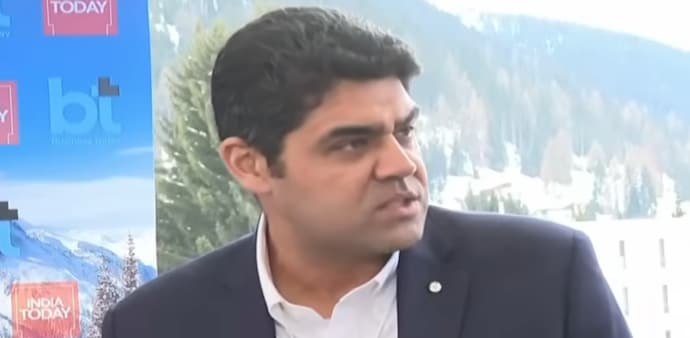
Artificial intelligence (AI) is rapidly emerging as the world’s most pressing cybersecurity challenge, with its ability to automate and scale attacks reshaping the global threat landscape. “AI-enabled vulnerabilities represent the greatest cyber risk today,” Akshay Joshi, Head of the Centre for Cybersecurity at the World Economic Forum, said in conversation with Business Today at the World Economic Forum in Davos.
Joshi said cybersecurity risks tend to follow every major technological shift, but AI stands apart because of the speed and scale of its adoption. “Cybersecurity is an evergreen issue. Every time a new technology is adopted with great enthusiasm, we eventually begin to understand the risks and vulnerabilities that come with it. AI is particularly interesting because adoption has been extremely rapid,” he said.
Data from the Forum’s Global Cybersecurity Outlook highlights how organisations are scrambling to catch up. When asked last year whether they were testing AI tools for security before deploying them, only 37% of organisations said they were doing so. “The good news is that this year, that number has risen to 64%. So we are making progress,” Joshi said.
At the same time, concern about AI-driven threats has intensified. “Eighty-seven percent of respondents believe AI-enabled vulnerabilities represent the greatest cyber risk today,” he said, describing AI as “two sides of the same coin”, capable of empowering attackers, but also strengthening defenders.
Joshi said the Centre for Cybersecurity is actively exploring how AI can assist cyber defence, from anomaly detection to identifying insider threats. “AI can be very effective there,” he said, especially as organisations struggle with a global shortage of cybersecurity professionals. “We’ve spoken for years about the shortage of cybersecurity professionals, roughly five million globally. Any support AI can provide, working alongside human expertise, is very welcome.”
Geopolitics is adding another layer of complexity. “Geopolitics is now deeply intertwined with cybersecurity, it’s become a defining feature of cyber strategies,” Joshi said, noting that critical infrastructure and private organisations are increasingly caught in the crossfire of global tensions.
On India’s preparedness, Joshi struck a balanced note. “India sits somewhere in the middle, roughly around the 50% confidence range. There is confidence, but also a degree of scepticism,” he said.
Cybersecurity, he stressed, is no longer a niche or technical issue. “Cybersecurity is not a distant or abstract issue. It affects individuals, corporations and governments alike.”
Artificial intelligence (AI) is rapidly emerging as the world’s most pressing cybersecurity challenge, with its ability to automate and scale attacks reshaping the global threat landscape. “AI-enabled vulnerabilities represent the greatest cyber risk today,” Akshay Joshi, Head of the Centre for Cybersecurity at the World Economic Forum, said in conversation with Business Today at the World Economic Forum in Davos.
Joshi said cybersecurity risks tend to follow every major technological shift, but AI stands apart because of the speed and scale of its adoption. “Cybersecurity is an evergreen issue. Every time a new technology is adopted with great enthusiasm, we eventually begin to understand the risks and vulnerabilities that come with it. AI is particularly interesting because adoption has been extremely rapid,” he said.
Data from the Forum’s Global Cybersecurity Outlook highlights how organisations are scrambling to catch up. When asked last year whether they were testing AI tools for security before deploying them, only 37% of organisations said they were doing so. “The good news is that this year, that number has risen to 64%. So we are making progress,” Joshi said.
At the same time, concern about AI-driven threats has intensified. “Eighty-seven percent of respondents believe AI-enabled vulnerabilities represent the greatest cyber risk today,” he said, describing AI as “two sides of the same coin”, capable of empowering attackers, but also strengthening defenders.
Joshi said the Centre for Cybersecurity is actively exploring how AI can assist cyber defence, from anomaly detection to identifying insider threats. “AI can be very effective there,” he said, especially as organisations struggle with a global shortage of cybersecurity professionals. “We’ve spoken for years about the shortage of cybersecurity professionals, roughly five million globally. Any support AI can provide, working alongside human expertise, is very welcome.”
Geopolitics is adding another layer of complexity. “Geopolitics is now deeply intertwined with cybersecurity, it’s become a defining feature of cyber strategies,” Joshi said, noting that critical infrastructure and private organisations are increasingly caught in the crossfire of global tensions.
On India’s preparedness, Joshi struck a balanced note. “India sits somewhere in the middle, roughly around the 50% confidence range. There is confidence, but also a degree of scepticism,” he said.
Cybersecurity, he stressed, is no longer a niche or technical issue. “Cybersecurity is not a distant or abstract issue. It affects individuals, corporations and governments alike.”