
Davos 2026: From AI to climate risks, 5 defining themes set to shape talks at the World Economic Forum
A central focus in 2026 will be the governance of artificial intelligence and the need to restore resilience in global trade. As AI reshapes economies and societies at unprecedented speed, leaders are expected to debate how regulation, ethics and innovation can move in step.
- Jan 13, 2026,
- Updated Jan 13, 2026 9:20 PM IST
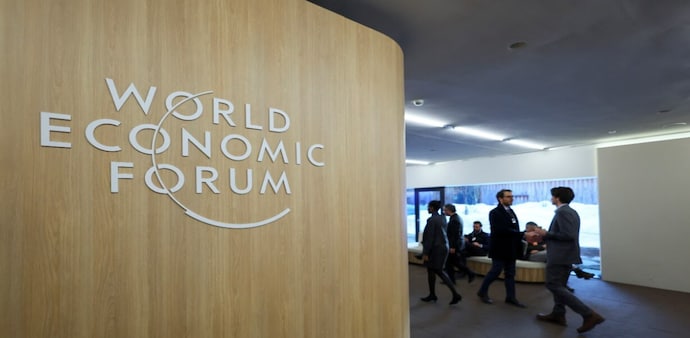
The World Economic Forum’s Annual Meeting 2026 will convene global leaders in Davos-Klosters from January 19 to 23, setting the tone for international dialogue at a time of deep geopolitical, economic and technological shifts. Anchored by the theme “A Spirit of Dialogue”, the gathering aims to move beyond crisis response and towards long-term cooperation, as governments, businesses and civil society confront the twin challenges of rapid technological change and rising global fragmentation.
A central focus this year will be the governance of artificial intelligence and the need to restore resilience in global trade. As AI reshapes economies and societies at unprecedented speed, leaders are expected to debate how regulation, ethics and innovation can move in step. At the same time, concerns over trade fragmentation and supply chain vulnerabilities will push discussions on how countries can rebuild trust and cooperation in an increasingly contested world.
The Forum has framed the 56th Annual Meeting around five defining questions for 2026, each reflecting the pressures shaping the global agenda.
Divided geopolitical landscape
The first centres on cooperation in a more divided geopolitical landscape. Sessions will explore how public–private partnerships can keep humanitarian aid flowing in times of crisis, how critical materials are becoming both strategic assets and potential flashpoints, and why regional alliances may now offer more practical results than sweeping global deals. Experts in international relations will also revisit enduring questions around war, peace and the changing role of the Global South.
New sources of growth
The second question looks at unlocking new sources of growth in a transformed global economy. With old economic models under strain, leaders will debate the future of work, capital and technology. From alternative scenarios for the world economy in 2030 to the growing influence of women as holders of global investable wealth, the discussions will underline that the next growth cycle is likely to be shaped as much by social shifts as by technological breakthroughs.
Investing in people
A third strand will focus on investing in people. As automation and digitalisation accelerate, the Forum will highlight the urgent need to build skills in AI, data and emerging technologies. Topics will range from the convergence of quantum computing and AI in healthcare to how countries such as Japan are rethinking work and productivity. The persistent digital talent gap, many argue, is less about a shortage of workers and more about systems that fail to connect people to opportunity.
Innovation at scale
Innovation at scale, deployed responsibly, forms the fourth pillar of the agenda. While frontier technologies are moving from promise to practice, leaders will confront the cultural, institutional and trust barriers that continue to slow adoption. From “suptech” tools that help regulators oversee financial systems to debates on whether AI can strengthen, rather than strain, energy networks, the emphasis will be on aligning innovation with public interest.
Climate risks
The final question turns to prosperity within planetary boundaries. With climate risks intensifying, discussions will spotlight water management, carbon pricing in trade and the role insurers could play in unlocking climate finance. Environmental leaders will underscore a simple message: economic resilience ultimately depends on planetary health.
As the Forum’s flagship event that opens each year, Davos 2026 carries a familiar but renewed ambition—to transform dialogue into action. In a world marked by uncertainty and division, the meeting seeks to rekindle cooperation, positioning conversation not as an end in itself, but as the starting point for shared solutions to the challenges of the decade ahead.
The World Economic Forum’s Annual Meeting 2026 will convene global leaders in Davos-Klosters from January 19 to 23, setting the tone for international dialogue at a time of deep geopolitical, economic and technological shifts. Anchored by the theme “A Spirit of Dialogue”, the gathering aims to move beyond crisis response and towards long-term cooperation, as governments, businesses and civil society confront the twin challenges of rapid technological change and rising global fragmentation.
A central focus this year will be the governance of artificial intelligence and the need to restore resilience in global trade. As AI reshapes economies and societies at unprecedented speed, leaders are expected to debate how regulation, ethics and innovation can move in step. At the same time, concerns over trade fragmentation and supply chain vulnerabilities will push discussions on how countries can rebuild trust and cooperation in an increasingly contested world.
The Forum has framed the 56th Annual Meeting around five defining questions for 2026, each reflecting the pressures shaping the global agenda.
Divided geopolitical landscape
The first centres on cooperation in a more divided geopolitical landscape. Sessions will explore how public–private partnerships can keep humanitarian aid flowing in times of crisis, how critical materials are becoming both strategic assets and potential flashpoints, and why regional alliances may now offer more practical results than sweeping global deals. Experts in international relations will also revisit enduring questions around war, peace and the changing role of the Global South.
New sources of growth
The second question looks at unlocking new sources of growth in a transformed global economy. With old economic models under strain, leaders will debate the future of work, capital and technology. From alternative scenarios for the world economy in 2030 to the growing influence of women as holders of global investable wealth, the discussions will underline that the next growth cycle is likely to be shaped as much by social shifts as by technological breakthroughs.
Investing in people
A third strand will focus on investing in people. As automation and digitalisation accelerate, the Forum will highlight the urgent need to build skills in AI, data and emerging technologies. Topics will range from the convergence of quantum computing and AI in healthcare to how countries such as Japan are rethinking work and productivity. The persistent digital talent gap, many argue, is less about a shortage of workers and more about systems that fail to connect people to opportunity.
Innovation at scale
Innovation at scale, deployed responsibly, forms the fourth pillar of the agenda. While frontier technologies are moving from promise to practice, leaders will confront the cultural, institutional and trust barriers that continue to slow adoption. From “suptech” tools that help regulators oversee financial systems to debates on whether AI can strengthen, rather than strain, energy networks, the emphasis will be on aligning innovation with public interest.
Climate risks
The final question turns to prosperity within planetary boundaries. With climate risks intensifying, discussions will spotlight water management, carbon pricing in trade and the role insurers could play in unlocking climate finance. Environmental leaders will underscore a simple message: economic resilience ultimately depends on planetary health.
As the Forum’s flagship event that opens each year, Davos 2026 carries a familiar but renewed ambition—to transform dialogue into action. In a world marked by uncertainty and division, the meeting seeks to rekindle cooperation, positioning conversation not as an end in itself, but as the starting point for shared solutions to the challenges of the decade ahead.