
Davos 2026: AI ‘tsunami’ will leave young workers & middle class at risk, warns IMF chief
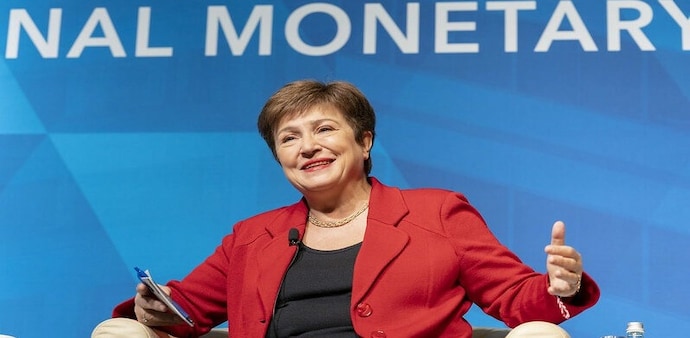
WEF Davos 2026: Georgieva expressed concern that AI is advancing faster than policymakers’ ability to regulate it. “This is moving so fast, and yet we don’t know how to make it safe. We don’t know how to make it inclusive,” she said.
- Jan 24, 2026,
- Updated Jan 24, 2026 2:43 PM IST
Artificial intelligence is poised to disrupt labour markets on a massive scale, with young workers and the middle class facing the greatest risks, International Monetary Fund managing director Kristalina Georgieva warned at the World Economic Forum in Davos on January 23.
Describing AI as a “tsunami hitting the labour market”, Georgieva said IMF research shows that 60% of jobs in advanced economies will be affected by the technology in the coming years, either through enhancement, elimination or transformation. Globally, around 40% of jobs are expected to be impacted.
While AI is already boosting productivity and wages for some workers, Georgieva cautioned that the transition could deepen inequality if governments and businesses fail to manage the disruption.
Entry-level roles & middle-class wages under pressure
Georgieva said around one in 10 jobs in advanced economies has already been enhanced by AI, often resulting in higher pay and positive spillovers for local economies. However, she warned that entry-level roles — typically filled by younger workers — are among the most vulnerable to automation.
“Tasks that are eliminated are usually what entry-level jobs do at present, so young people searching for jobs find it harder to get to a good placement,” she said.
Workers whose roles are not directly transformed by AI also face wage pressure, she added, as productivity gains increasingly accrue to those who can effectively use the technology. Without such gains, pay could stagnate or fall. “So the middle class, inevitably, is going to be affected,” Georgieva said.
Regulation lag & fears of widening inequality
Georgieva expressed concern that AI is advancing faster than policymakers’ ability to regulate it, warning that insufficient safeguards could worsen inequality. “This is moving so fast, and yet we don’t know how to make it safe. We don’t know how to make it inclusive,” she said.
Labour groups echoed those concerns. Christy Hoffman, general secretary of the UNI Global Union, said AI-driven productivity gains often translate into job cuts unless benefits are shared more evenly. She urged employers to consult workers before deploying AI tools and to ensure gains are distributed across the economy.
Other leaders at Davos highlighted broader risks. Microsoft chief executive Satya Nadella warned that AI could lose its “social permission” if its benefits remain concentrated among a handful of powerful firms. European Central Bank president Christine Lagarde cautioned that geopolitical tensions and trade barriers could slow AI development, while also deepening global inequality.
Artificial intelligence is poised to disrupt labour markets on a massive scale, with young workers and the middle class facing the greatest risks, International Monetary Fund managing director Kristalina Georgieva warned at the World Economic Forum in Davos on January 23.
Describing AI as a “tsunami hitting the labour market”, Georgieva said IMF research shows that 60% of jobs in advanced economies will be affected by the technology in the coming years, either through enhancement, elimination or transformation. Globally, around 40% of jobs are expected to be impacted.
While AI is already boosting productivity and wages for some workers, Georgieva cautioned that the transition could deepen inequality if governments and businesses fail to manage the disruption.
Entry-level roles & middle-class wages under pressure
Georgieva said around one in 10 jobs in advanced economies has already been enhanced by AI, often resulting in higher pay and positive spillovers for local economies. However, she warned that entry-level roles — typically filled by younger workers — are among the most vulnerable to automation.
“Tasks that are eliminated are usually what entry-level jobs do at present, so young people searching for jobs find it harder to get to a good placement,” she said.
Workers whose roles are not directly transformed by AI also face wage pressure, she added, as productivity gains increasingly accrue to those who can effectively use the technology. Without such gains, pay could stagnate or fall. “So the middle class, inevitably, is going to be affected,” Georgieva said.
Regulation lag & fears of widening inequality
Georgieva expressed concern that AI is advancing faster than policymakers’ ability to regulate it, warning that insufficient safeguards could worsen inequality. “This is moving so fast, and yet we don’t know how to make it safe. We don’t know how to make it inclusive,” she said.
Labour groups echoed those concerns. Christy Hoffman, general secretary of the UNI Global Union, said AI-driven productivity gains often translate into job cuts unless benefits are shared more evenly. She urged employers to consult workers before deploying AI tools and to ensure gains are distributed across the economy.
Other leaders at Davos highlighted broader risks. Microsoft chief executive Satya Nadella warned that AI could lose its “social permission” if its benefits remain concentrated among a handful of powerful firms. European Central Bank president Christine Lagarde cautioned that geopolitical tensions and trade barriers could slow AI development, while also deepening global inequality.