
Davos 2026: 'You should never waste a crisis': Tata Steel CEO bets on India’s resilient demand to drive growth
WEF Davos 2026: Speaking at the World Economic Forum in Davos, Narendran described the current period as one that has “permanently changed the way you look at supply chains.”
- Jan 22, 2026,
- Updated Jan 22, 2026 11:01 PM IST
Tata Steel CEO and Managing Director TV Narendran on January 22 laid out how rising trade barriers, geopolitical uncertainty and shifting supply chains are reshaping global industry — but emphasised that India’s robust domestic economy and infrastructure demand provide ballast for growth.
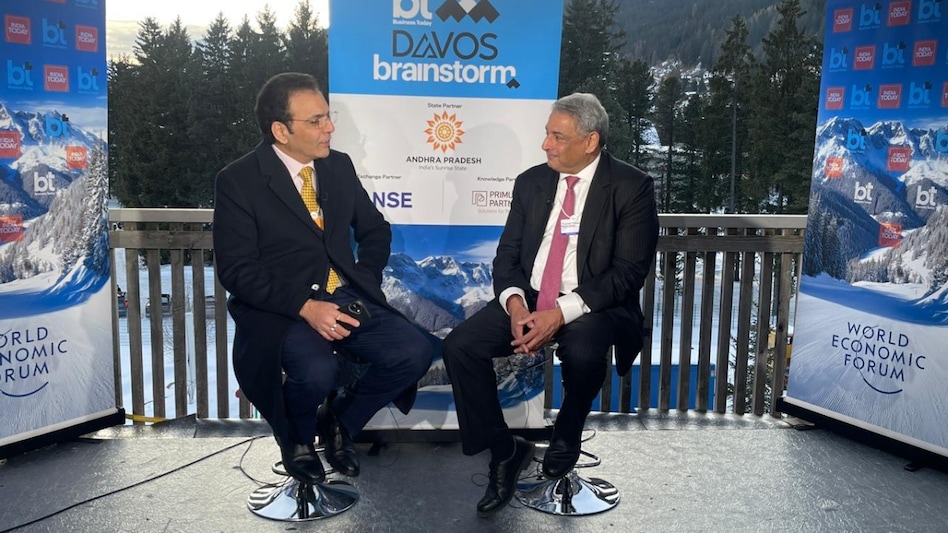
In an exclusive interaction with Business Today TV at the World Economic Forum in Davos, Narendran described the current period as one that has “permanently changed the way you look at supply chains,” noting that the past focus on cost optimisation has given way to a premium on resilience amid trade disruption and geopolitical flux.
Catch our exclusive coverage of WEF 2026 at Davos here
Narendran said capital‑intensive sectors like steel must now plan for long‑term horizons, given that steel plants are designed to operate for 20 years or more. Countries with large domestic markets and abundant raw materials — like India — are “reasonably well positioned,” he added.
On the changing nature of global trade, Narendran said that localisation — whether within countries or regions — is becoming the norm as markets seek autonomy from volatile cross‑border flows. He pointed to moves by the U.S. and Europe to shield domestic production and suggested that nations are realigning trade corridors, including stronger engagement between the European Union and India.
Reflecting on India’s efforts to respond to economic shocks, he said crises often accelerate reforms and cited the country’s ongoing structural changes. “You should never waste a crisis,” he said, underscoring that India has not let disruptions stall its reform momentum.
Turning to the steel sector’s outlook, Narendran acknowledged significant disruption from trade barriers in Europe and the U.S., where duties on steel exports from Tata Steel’s European business have required operational adjustments. At the same time, he noted that demand in Europe is beginning to strengthen, underpinned by increased spending on infrastructure and defence.
In contrast, India’s domestic steel market remains a key pillar, propelled by strong demand from infrastructure, construction, industrial projects, railways and the automotive sector. Narendran said commercial demand is improving, rural markets are healthier than two years ago, and consumption across segments “is quite strong,” although slow payments in the MSME segment pose a challenge to some buyers.
On managing tariff impacts, Tata Steel is focusing on maximising sales within its key markets — reducing export dependency in Europe and maintaining limited exports (around 10%) in India — while also exploring growth in the Middle East and Africa. He pointed to the strength of India’s diaspora connections as a strategic advantage in emerging markets.
Asked what reforms would sustain India’s growth momentum, Narendran stressed the need for continued infrastructure investment and lowering business costs outside factory gates. He noted that while policy intent at the national level is strong, successful execution at local and district levels remains critical, especially for MSMEs and smaller manufacturers.
Watch the full interview here
Tata Steel CEO and Managing Director TV Narendran on January 22 laid out how rising trade barriers, geopolitical uncertainty and shifting supply chains are reshaping global industry — but emphasised that India’s robust domestic economy and infrastructure demand provide ballast for growth.
In an exclusive interaction with Business Today TV at the World Economic Forum in Davos, Narendran described the current period as one that has “permanently changed the way you look at supply chains,” noting that the past focus on cost optimisation has given way to a premium on resilience amid trade disruption and geopolitical flux.
Catch our exclusive coverage of WEF 2026 at Davos here
Narendran said capital‑intensive sectors like steel must now plan for long‑term horizons, given that steel plants are designed to operate for 20 years or more. Countries with large domestic markets and abundant raw materials — like India — are “reasonably well positioned,” he added.
On the changing nature of global trade, Narendran said that localisation — whether within countries or regions — is becoming the norm as markets seek autonomy from volatile cross‑border flows. He pointed to moves by the U.S. and Europe to shield domestic production and suggested that nations are realigning trade corridors, including stronger engagement between the European Union and India.
Reflecting on India’s efforts to respond to economic shocks, he said crises often accelerate reforms and cited the country’s ongoing structural changes. “You should never waste a crisis,” he said, underscoring that India has not let disruptions stall its reform momentum.
Turning to the steel sector’s outlook, Narendran acknowledged significant disruption from trade barriers in Europe and the U.S., where duties on steel exports from Tata Steel’s European business have required operational adjustments. At the same time, he noted that demand in Europe is beginning to strengthen, underpinned by increased spending on infrastructure and defence.
In contrast, India’s domestic steel market remains a key pillar, propelled by strong demand from infrastructure, construction, industrial projects, railways and the automotive sector. Narendran said commercial demand is improving, rural markets are healthier than two years ago, and consumption across segments “is quite strong,” although slow payments in the MSME segment pose a challenge to some buyers.
On managing tariff impacts, Tata Steel is focusing on maximising sales within its key markets — reducing export dependency in Europe and maintaining limited exports (around 10%) in India — while also exploring growth in the Middle East and Africa. He pointed to the strength of India’s diaspora connections as a strategic advantage in emerging markets.
Asked what reforms would sustain India’s growth momentum, Narendran stressed the need for continued infrastructure investment and lowering business costs outside factory gates. He noted that while policy intent at the national level is strong, successful execution at local and district levels remains critical, especially for MSMEs and smaller manufacturers.
Watch the full interview here