
Davos 2026: US is no longer setting the agenda for the world, says Fareed Zakaria
WEF Davos 2026: 'There's no question that the greatest beneficiary of the Trump foreign policy is China,' says Zakaria
- Jan 21, 2026,
- Updated Jan 21, 2026 4:47 PM IST
The United States has ceased to function as the agenda-setter for the global order, with allies and rivals alike now reshaping their economic and diplomatic strategies to manage uncertainty created by Washington, according to foreign policy expert Fareed Zakaria.
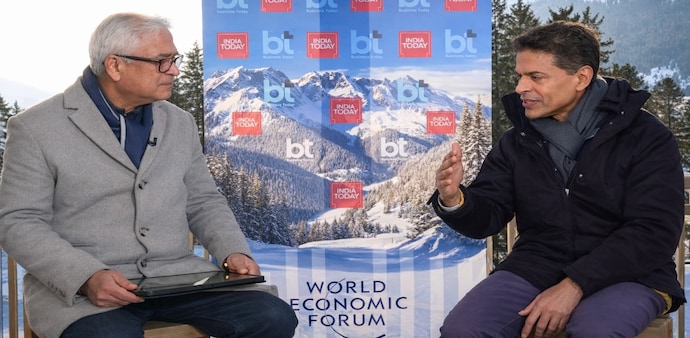
Speaking to India Today's Rajdeep Sardesai on the sidelines of the World Economic Forum in Davos, Zakaria said the greatest unintended beneficiary of former US President Donald Trump's foreign policy has been China.
"There's no question that the greatest beneficiary of the Trump foreign policy is China," Zakaria said, pointing to recent shifts among America's closest allies.
He cited Canada as a striking example. "Look at what happened last week where Mark Carney, the prime minister of Canada, arguably America's closest ally, goes to China because he has to. He needs markets. He needs investment because Donald Trump has turned Canada into an economic enemy," Zakaria said.
As a result, Canada is now being forced to rethink decades of strategy. "The Canadians are looking now for new markets. They have to diversify," he said, recalling a statement by Canada’s foreign minister. "She said, for the last 30 or 40 years, our strategy was very clear - integration with the US at every level, diplomatic, political, and economic. Now their strategy is, she says, in the next 10 years we have to do massive diversification away from America," Zakaria said.
He argued this approach is spreading globally. "And I would argue that is becoming a mantra that you are hearing almost everywhere," he said. "People are saying as you put it de-risk from America, diversify away from America."
Zakaria said the shift does not mean countries can ignore the United States altogether. "Everyone is going to have to deal with America. The United States is too strong. It's too big a market. It's too dominant a military player," he said.
But he added that perceptions have changed fundamentally. "Everyone now regards America as a problem to be managed and they will go about doing their own thing, trying to find new markets, forging new trade deals," Zakaria said.
He said this had produced an unusual inversion of global leadership. "The interesting thing is while Trump is being protectionist and nationalist, other countries are reaching out and doing more free trade with one another, finding ways of cooperating with one another," he said.
"So for the first time in my lifetime, the United States is no longer setting the agenda for the world," Zakaria said. "The US is doing its thing. Protectionism, nationalism - and other countries have to manage that."
The noted commentator pointed to Europe's trade diplomacy as an example. "But look at what Europe is doing. They signed a free trade deal with Mercosur," he said, referring to South America’s major trade bloc. "They're going to sign a free trade deal, I guarantee you, in two or three weeks with India. They're going to sign one with Southeast Asia."
He said similar shifts were visible elsewhere. "Brazilians are searching for ways to expand trade. The Africans are searching for ways to do more trade," Zakaria said.
India, he noted, has also responded strategically. "Modi has done more reforms in India as a response to Trump's tariffs," he said.
Zakaria described the broader global response in stark terms. "So in a strange way, everyone is treating the US like the kind of crazy parent you have to deal with," he said. "But no one is listening. No one is following its lead. And that loss of the agenda-setting power of America, the soft power is very meaningful."
The United States has ceased to function as the agenda-setter for the global order, with allies and rivals alike now reshaping their economic and diplomatic strategies to manage uncertainty created by Washington, according to foreign policy expert Fareed Zakaria.
Speaking to India Today's Rajdeep Sardesai on the sidelines of the World Economic Forum in Davos, Zakaria said the greatest unintended beneficiary of former US President Donald Trump's foreign policy has been China.
"There's no question that the greatest beneficiary of the Trump foreign policy is China," Zakaria said, pointing to recent shifts among America's closest allies.
He cited Canada as a striking example. "Look at what happened last week where Mark Carney, the prime minister of Canada, arguably America's closest ally, goes to China because he has to. He needs markets. He needs investment because Donald Trump has turned Canada into an economic enemy," Zakaria said.
As a result, Canada is now being forced to rethink decades of strategy. "The Canadians are looking now for new markets. They have to diversify," he said, recalling a statement by Canada’s foreign minister. "She said, for the last 30 or 40 years, our strategy was very clear - integration with the US at every level, diplomatic, political, and economic. Now their strategy is, she says, in the next 10 years we have to do massive diversification away from America," Zakaria said.
He argued this approach is spreading globally. "And I would argue that is becoming a mantra that you are hearing almost everywhere," he said. "People are saying as you put it de-risk from America, diversify away from America."
Zakaria said the shift does not mean countries can ignore the United States altogether. "Everyone is going to have to deal with America. The United States is too strong. It's too big a market. It's too dominant a military player," he said.
But he added that perceptions have changed fundamentally. "Everyone now regards America as a problem to be managed and they will go about doing their own thing, trying to find new markets, forging new trade deals," Zakaria said.
He said this had produced an unusual inversion of global leadership. "The interesting thing is while Trump is being protectionist and nationalist, other countries are reaching out and doing more free trade with one another, finding ways of cooperating with one another," he said.
"So for the first time in my lifetime, the United States is no longer setting the agenda for the world," Zakaria said. "The US is doing its thing. Protectionism, nationalism - and other countries have to manage that."
The noted commentator pointed to Europe's trade diplomacy as an example. "But look at what Europe is doing. They signed a free trade deal with Mercosur," he said, referring to South America’s major trade bloc. "They're going to sign a free trade deal, I guarantee you, in two or three weeks with India. They're going to sign one with Southeast Asia."
He said similar shifts were visible elsewhere. "Brazilians are searching for ways to expand trade. The Africans are searching for ways to do more trade," Zakaria said.
India, he noted, has also responded strategically. "Modi has done more reforms in India as a response to Trump's tariffs," he said.
Zakaria described the broader global response in stark terms. "So in a strange way, everyone is treating the US like the kind of crazy parent you have to deal with," he said. "But no one is listening. No one is following its lead. And that loss of the agenda-setting power of America, the soft power is very meaningful."