
'10th war resolved': Donald Trump announces 10-day Israel-Lebanon ceasefire
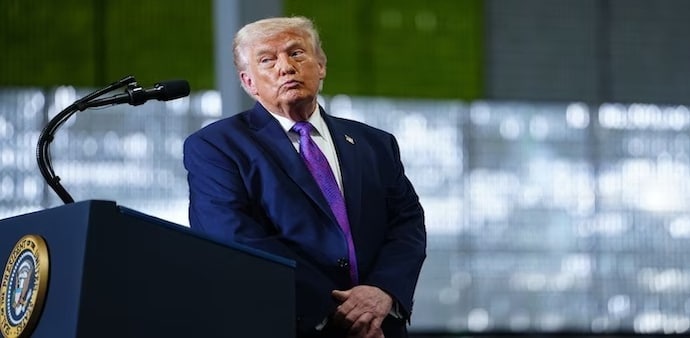
The US President said a 10-day ceasefire will take effect at 5 pm ET on April 16, following what he described as “excellent” conversations with Lebanese President Joseph Aoun and Israeli Prime Minister Benjamin Netanyahu.
- Apr 16, 2026,
- Updated Apr 16, 2026 10:12 PM IST
A tentative pause in hostilities between Israel and Lebanon has been announced by Donald Trump, but the circumstances surrounding it underscore just how fragile the moment remains.
The US President said a 10-day ceasefire will take effect at 5 pm ET on April 16, following what he described as “excellent” conversations with Lebanese President Joseph Aoun and Israeli Prime Minister Benjamin Netanyahu. The pause comes after more than a month of escalating conflict involving Israel and the Iran-backed militant group Hezbollah.
"I just had excellent conversations with the Highly Respected President Joseph Aoun, of Lebanon, and Prime Minister Bibi Netanyahu, of Israel. These two Leaders have agreed that in order to achieve PEACE between their Countries, they will formally begin a 10 Day CEASEFIRE at 5 P.M. EST. On Tuesday, the two Countries met for the first time in 34 years here in Washington, D.C., with our Great Secretary of State, Marco Rubio. I have directed Vice President JD Vance and Secretary of State Rubio, together with the Chairman of the Joint Chiefs of Staff, Dan Razin' Caine, to work with Israel and Lebanon to achieve a Lasting PEACE. It has been my Honor to solve 9 Wars across the World, and this will be my 10th, so let's, GET IT DONE! President DONALD J. TRUMP" Trump wrote.
Yet, even as Washington positions itself as the broker of a breakthrough, the diplomatic reality appears more complicated. Earlier in the day, Aoun refused to engage directly with Netanyahu, contradicting expectations of immediate leader-to-leader dialogue and highlighting the deep-rooted hostility that continues to define relations between the two countries.
Prime Minister Nawaf Salam said securing a ceasefire was Lebanon’s top priority during the landmark talks held with Israel in Washington on Tuesday, involving the two countries’ ambassadors to the United States.
“While I congratulate all Lebanese on this achievement, I also extend my condolences to the families of those who lost their lives,” Salam said, adding that he stands in solidarity with the wounded and with citizens who were forced to flee their towns and villages.
Trump, in a series of posts, cast the ceasefire as a stepping stone toward a broader peace framework. He said he has directed Vice President JD Vance and Secretary of State Marco Rubio to work with both sides to secure a long-term resolution. He also announced plans to invite Aoun and Netanyahu to the White House for what he described as the first meaningful talks between the two nations since 1983.
That historical reference is significant. In 1983, Israel and Lebanon signed an agreement under which Lebanon would formally recognize Israel in exchange for Israeli withdrawal. But the accord quickly unraveled amid Lebanon’s civil war and was rescinded within a year—cementing decades of non-recognition and hostility.
This week’s developments mark a rare diplomatic opening. On Tuesday, representatives from both countries met in Washington for their first direct engagement in over three decades, facilitated by the US administration. The talks followed weeks of intensifying cross-border violence tied to Hezbollah’s involvement, raising fears of a broader regional escalation.
A tentative pause in hostilities between Israel and Lebanon has been announced by Donald Trump, but the circumstances surrounding it underscore just how fragile the moment remains.
The US President said a 10-day ceasefire will take effect at 5 pm ET on April 16, following what he described as “excellent” conversations with Lebanese President Joseph Aoun and Israeli Prime Minister Benjamin Netanyahu. The pause comes after more than a month of escalating conflict involving Israel and the Iran-backed militant group Hezbollah.
"I just had excellent conversations with the Highly Respected President Joseph Aoun, of Lebanon, and Prime Minister Bibi Netanyahu, of Israel. These two Leaders have agreed that in order to achieve PEACE between their Countries, they will formally begin a 10 Day CEASEFIRE at 5 P.M. EST. On Tuesday, the two Countries met for the first time in 34 years here in Washington, D.C., with our Great Secretary of State, Marco Rubio. I have directed Vice President JD Vance and Secretary of State Rubio, together with the Chairman of the Joint Chiefs of Staff, Dan Razin' Caine, to work with Israel and Lebanon to achieve a Lasting PEACE. It has been my Honor to solve 9 Wars across the World, and this will be my 10th, so let's, GET IT DONE! President DONALD J. TRUMP" Trump wrote.
Yet, even as Washington positions itself as the broker of a breakthrough, the diplomatic reality appears more complicated. Earlier in the day, Aoun refused to engage directly with Netanyahu, contradicting expectations of immediate leader-to-leader dialogue and highlighting the deep-rooted hostility that continues to define relations between the two countries.
Prime Minister Nawaf Salam said securing a ceasefire was Lebanon’s top priority during the landmark talks held with Israel in Washington on Tuesday, involving the two countries’ ambassadors to the United States.
“While I congratulate all Lebanese on this achievement, I also extend my condolences to the families of those who lost their lives,” Salam said, adding that he stands in solidarity with the wounded and with citizens who were forced to flee their towns and villages.
Trump, in a series of posts, cast the ceasefire as a stepping stone toward a broader peace framework. He said he has directed Vice President JD Vance and Secretary of State Marco Rubio to work with both sides to secure a long-term resolution. He also announced plans to invite Aoun and Netanyahu to the White House for what he described as the first meaningful talks between the two nations since 1983.
That historical reference is significant. In 1983, Israel and Lebanon signed an agreement under which Lebanon would formally recognize Israel in exchange for Israeli withdrawal. But the accord quickly unraveled amid Lebanon’s civil war and was rescinded within a year—cementing decades of non-recognition and hostility.
This week’s developments mark a rare diplomatic opening. On Tuesday, representatives from both countries met in Washington for their first direct engagement in over three decades, facilitated by the US administration. The talks followed weeks of intensifying cross-border violence tied to Hezbollah’s involvement, raising fears of a broader regional escalation.