
$200 million US Navy drone vanishes over Strait of Hormuz. What happened?
At the time of disappearance, it was operating in one of the world’s most sensitive maritime corridors — a narrow waterway through which nearly a fifth of global oil shipments pass.
- Apr 10, 2026,
- Updated Apr 10, 2026 4:45 PM IST
A high-value US Navy surveillance drone, reportedly worth over $200 million, has gone missing over the Strait of Hormuz, triggering questions across military and intelligence circles about whether it suffered a technical failure, was shot down, or simply fell off tracking systems in a contested airspace.
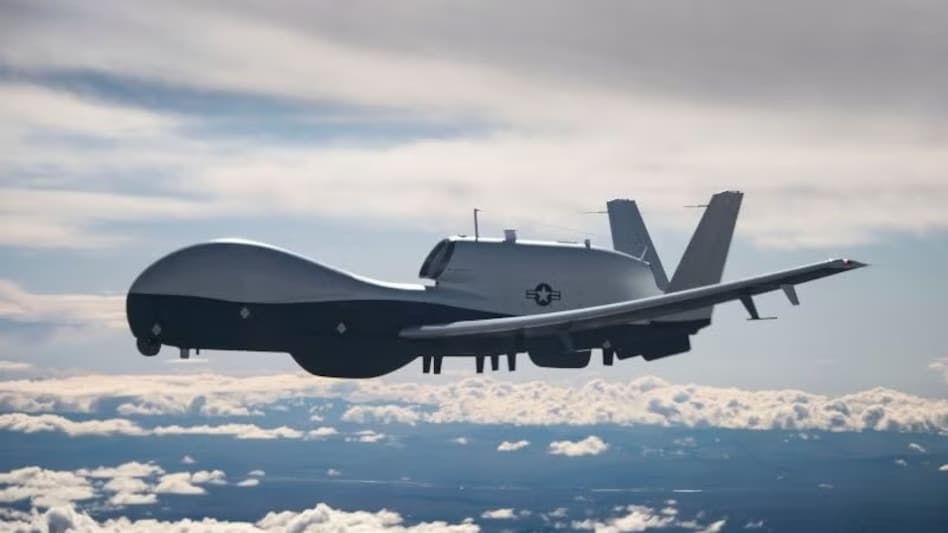
According to multiple reports, the aircraft — identified as a MQ-4C Triton, a long-endurance maritime surveillance drone — was conducting a routine intelligence mission over the Persian Gulf and Strait of Hormuz before the incident.
Flight tracking data and open-source monitoring suggest the drone:
- Completed roughly three hours of surveillance
- Began returning toward its base in Italy (Naval Air Station Sigonella)
- Issued a “7700” emergency transponder code, indicating a general in-flight emergency
- Suddenly lost altitude rapidly
- Then vanished from tracking systems
At the time of disappearance, it was operating in one of the world’s most sensitive maritime corridors — a narrow waterway through which nearly a fifth of global oil shipments pass.
What makes the MQ-4C Triton significant
The MQ-4C Triton is among the most advanced unmanned aircraft in the US Navy’s fleet. Designed for high-altitude, long-endurance (HALE) surveillance, it can:
- Stay airborne for over 24 hours
- Operate above 50,000 feet
- Monitor vast ocean regions with advanced radar and sensors
It is often described as the Navy’s “eyes over the ocean,” supporting patrol aircraft and naval task forces across the Middle East and Indo-Pacific.
The key mystery: crash, interception, or malfunction?
So far, there is no official confirmation from the US Navy or Pentagon about what happened to the aircraft. That uncertainty has fueled three main theories:
1. Technical failure: The drone may have suffered a catastrophic systems malfunction during its return flight, causing loss of control after the emergency signal.
2. Crash at sea: Given the rapid altitude drop, one possibility is that the aircraft crashed into the Persian Gulf before recovery or tracking confirmation.
3. Hostile action or electronic interference: Because the incident occurred near Iranian-controlled waters and amid heightened regional tensions, analysts have not ruled out:
- Electronic warfare disruption
- Surface-to-air engagement
- Or other hostile interference
However, there is no verified evidence of a shootdown at this stage.
Why the Strait of Hormuz matters
The Strait of Hormuz is one of the most militarized maritime chokepoints in the world. Past incidents — including drone shootdowns and tanker seizures — have made it a frequent flashpoint between the US and Iranian forces.
Any loss of a surveillance platform in this region immediately raises geopolitical concerns due to:
- Ongoing US-Iran tensions
- Heavy military surveillance activity
- High-value commercial shipping traffic
- What happens next
- Investigators will likely focus on:
- Satellite and radar reconstruction of the flight path
- Possible debris recovery in the Persian Gulf
- Signal logs from the aircraft’s emergency transmission
- Electronic warfare activity in the region at the time
Cost of US-Iran war
The United States is burning through roughly $10,300 (around Rs 9.8 lakh) every second on its war effort. Data from the Stockholm International Peace Research Institute (SIPRI) shows that munitions and missiles make up the largest chunk of spending, at about $320 million per day (nearly Rs 3,040 crore), accounting for 36% of the total.
Air operations follow, costing an estimated $245 million daily (around Rs 2,327.5 crore), or 27.5% of overall expenditure, while naval activities add another $155 million per day (approximately Rs 1,472.5 crore).
Missile defence systems — including THAAD, Patriot batteries, and Aegis BMD interceptors — contribute about $95 million per day (roughly Rs 902.5 crore), making up 10.7% of daily costs. Intelligence and cyber operations come in at around $45 million per day (about Rs 427.5 crore), with personnel and logistics expenses adding another $30 million per day (approximately Rs 285 crore).
A high-value US Navy surveillance drone, reportedly worth over $200 million, has gone missing over the Strait of Hormuz, triggering questions across military and intelligence circles about whether it suffered a technical failure, was shot down, or simply fell off tracking systems in a contested airspace.
According to multiple reports, the aircraft — identified as a MQ-4C Triton, a long-endurance maritime surveillance drone — was conducting a routine intelligence mission over the Persian Gulf and Strait of Hormuz before the incident.
Flight tracking data and open-source monitoring suggest the drone:
- Completed roughly three hours of surveillance
- Began returning toward its base in Italy (Naval Air Station Sigonella)
- Issued a “7700” emergency transponder code, indicating a general in-flight emergency
- Suddenly lost altitude rapidly
- Then vanished from tracking systems
At the time of disappearance, it was operating in one of the world’s most sensitive maritime corridors — a narrow waterway through which nearly a fifth of global oil shipments pass.
What makes the MQ-4C Triton significant
The MQ-4C Triton is among the most advanced unmanned aircraft in the US Navy’s fleet. Designed for high-altitude, long-endurance (HALE) surveillance, it can:
- Stay airborne for over 24 hours
- Operate above 50,000 feet
- Monitor vast ocean regions with advanced radar and sensors
It is often described as the Navy’s “eyes over the ocean,” supporting patrol aircraft and naval task forces across the Middle East and Indo-Pacific.
The key mystery: crash, interception, or malfunction?
So far, there is no official confirmation from the US Navy or Pentagon about what happened to the aircraft. That uncertainty has fueled three main theories:
1. Technical failure: The drone may have suffered a catastrophic systems malfunction during its return flight, causing loss of control after the emergency signal.
2. Crash at sea: Given the rapid altitude drop, one possibility is that the aircraft crashed into the Persian Gulf before recovery or tracking confirmation.
3. Hostile action or electronic interference: Because the incident occurred near Iranian-controlled waters and amid heightened regional tensions, analysts have not ruled out:
- Electronic warfare disruption
- Surface-to-air engagement
- Or other hostile interference
However, there is no verified evidence of a shootdown at this stage.
Why the Strait of Hormuz matters
The Strait of Hormuz is one of the most militarized maritime chokepoints in the world. Past incidents — including drone shootdowns and tanker seizures — have made it a frequent flashpoint between the US and Iranian forces.
Any loss of a surveillance platform in this region immediately raises geopolitical concerns due to:
- Ongoing US-Iran tensions
- Heavy military surveillance activity
- High-value commercial shipping traffic
- What happens next
- Investigators will likely focus on:
- Satellite and radar reconstruction of the flight path
- Possible debris recovery in the Persian Gulf
- Signal logs from the aircraft’s emergency transmission
- Electronic warfare activity in the region at the time
Cost of US-Iran war
The United States is burning through roughly $10,300 (around Rs 9.8 lakh) every second on its war effort. Data from the Stockholm International Peace Research Institute (SIPRI) shows that munitions and missiles make up the largest chunk of spending, at about $320 million per day (nearly Rs 3,040 crore), accounting for 36% of the total.
Air operations follow, costing an estimated $245 million daily (around Rs 2,327.5 crore), or 27.5% of overall expenditure, while naval activities add another $155 million per day (approximately Rs 1,472.5 crore).
Missile defence systems — including THAAD, Patriot batteries, and Aegis BMD interceptors — contribute about $95 million per day (roughly Rs 902.5 crore), making up 10.7% of daily costs. Intelligence and cyber operations come in at around $45 million per day (about Rs 427.5 crore), with personnel and logistics expenses adding another $30 million per day (approximately Rs 285 crore).