
A historic Andy Warhol painting of a soup can just sold for ₹83.65 crore: Why this 1962 artwork is iconic
The artwork, made using casein and graphite on linen, came from the prestigious Sonnabend Collection Foundation.
- Nov 23, 2026,
- Updated Nov 23, 2026 7:00 AM IST
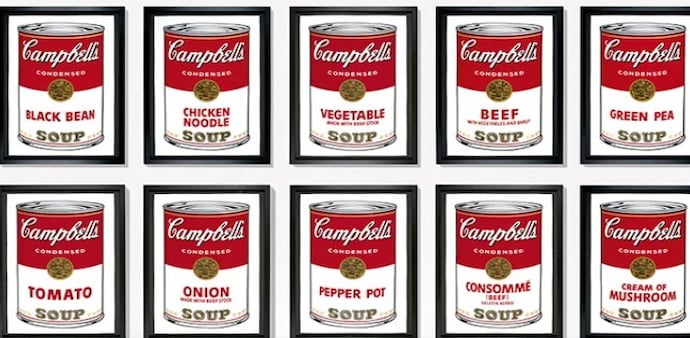
Andy Warhol’s 1962 painting of a Campbell’s Soup can has sold for $9.026 million (around ₹83.65 crore) at Christie’s in New York. The hand-painted work, “Campbell’s Soup Can (Turkey Noodle),” was sold on November 19 after a fierce bidding war, with the final price including the buyer’s premium, Hindustan Times reported on Sunday.
The painting is 64 years old and depicts something far less expensive in real life: a can of soup. The work opened at $4 million (around ₹37.07 crore), but the bidding quickly climbed, with the hammer falling at just over $7 million (around ₹64.88 crore).
The artwork, made using casein and graphite on linen, came from the prestigious Sonnabend Collection Foundation. Christie’s described it as one of the most important examples of early Pop Art.
Warhol painted the work in 1962, the same year he first unveiled his soup can paintings. Unlike his later silkscreened canvases, this one was hand-painted.
Christie’s said, “Vibrant color, graphic impact, and a rare hand painted quality all combine to create a palpable sense of the artist’s hand in this particular work.”
Don't Miss: Gold worth $3,514, price tag $4,890: Why Trump's new coin costs collectors $1,376 more
The painting was first exhibited at the Ferus Gallery in Los Angeles in 1962. It was later gifted to Warhol’s friend, photographer Edward Wallowitch, before entering the collection of Ileana and Michael Sonnabend. It was also on long-term loan to the Baltimore Museum of Art.
How Warhol created the painting
According to Christie’s, “Warhol cut out elements of the original source image from some of Campbell’s corporate stationery” and placed the cutouts on tracing paper before projecting the image onto the canvas.
The painting was most recently displayed at The Sonnabend Collection Mantova. Its sale will support the Sonnabend Collection Foundation.
Why did Warhol choose a soup can?
Warhol explained his choice of Campbell’s soup in the book “I'll Be Your Mirror: The Selected Andy Warhol Interviews”.
He said, “Because I used to drink it. I used to have the same lunch every day, for twenty years, I guess, the same thing over and over again. Someone said my life has dominated me; I liked that idea.”
A product that costs only a few dollars at a supermarket thus became the subject of an artwork worth $9.026 million (around ₹83.65 crore).