
After Japan and UK, France urges citizens to prepare for major emergencies. Here's what goes in the 72-hour kit
The French government says the kit should help people stay at home while waiting for emergency services or leave quickly if they are asked to evacuate.
- Oct 28, 2026,
- Updated Oct 28, 2026 12:08 PM IST
After Japan and the UK, France has also urged citizens to prepare for major emergencies by keeping a 72-hour emergency kit ready. The French government says the first 72 hours after a major disaster can be the most difficult, especially when electricity, gas, water supplies or roads are disrupted.
The advice is not linked to one specific emergency. France's official guidance covers a range of risks, including floods, storms, wildfires, earthquakes, industrial accidents, epidemics, cyberattacks and major network disruptions.
What should be in the emergency kit?
The French government says the kit should help people stay at home while waiting for emergency services or leave quickly if they are asked to evacuate.
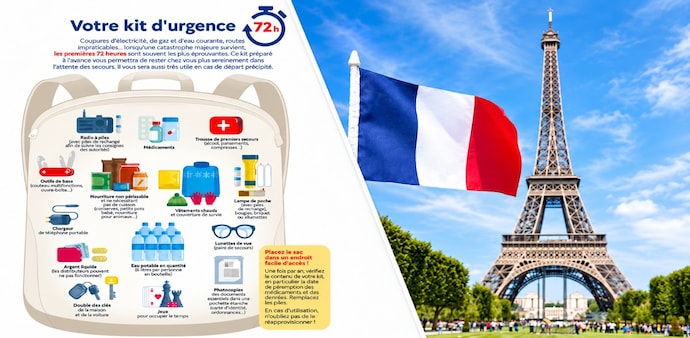
The bag should contain a battery-powered radio with spare batteries to follow instructions from authorities, along with medicines and a first aid kit. Basic tools such as a multifunction knife and a can opener should also be included.
People should keep non-perishable food that does not need cooking, including canned food. If needed, food for babies and pets can also be packed.
The kit should also have warm clothes and a survival blanket, a flashlight with spare batteries, candles, a lighter or matches and a phone charger.
Don't Miss: From food to medicines: Japan and UK urge citizens to keep emergency supplies ready for at least 3 day
Keep water, cash and important documents
France's emergency kit guidance recommends 6 litres of drinking water per person in bottles.
People should also keep some cash because ATMs may not work during a major emergency. Those who use glasses are advised to keep a spare pair.
The bag should contain photocopies of essential documents, including identity documents and prescriptions, kept in a waterproof folder. Spare keys for the house and car should also be included.
Games can be added to help pass the time.
Keep the bag easy to reach
The French government advises keeping the emergency bag in an easily accessible place. It recommends checking the kit once a year, particularly the expiry dates of medicines and food, and replacing batteries.
The kit should also be restocked after it is used.
France says the aim is to help people remain prepared and more self-reliant during the first 72 hours of a major crisis, rather than to warn of any specific emergency.