
After Trump's 'Iran ceasefire over' claim, US strikes hit India-backed Chabahar Port
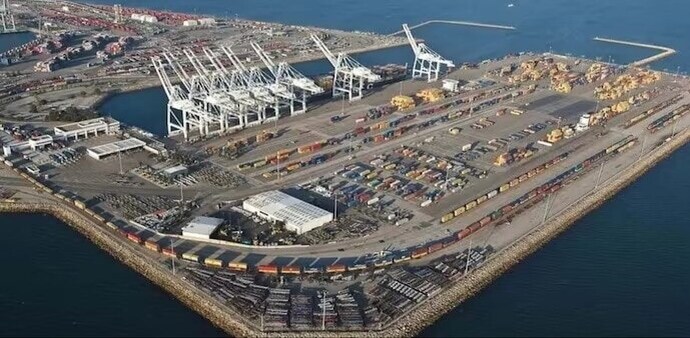
The port, located on the Makran coast in Sistan-Baluchistan province, consists of the Shahid Kalantari and Shahid Beheshti terminals and serves as Iran's only deep-water oceanic port
- Jul 9, 2026,
- Updated Jul 9, 2026 10:17 AM IST
The India-backed Chabahar Port in Iran was attacked on Thursday as the US stepped up its attacks against Tehran for a second day after US President Donald Trump declared that the ceasefire was "over". Explosions were reported across Chabahar along with widespread power outages in parts of the city, the Iranian state media reported.
The port, located on the Makran coast in Sistan-Baluchistan province, consists of the Shahid Kalantari and Shahid Beheshti terminals and serves as Iran's only deep-water oceanic port. The port is only about 170 km west of Pakistan's Gwadar Port, making it a critical economic and strategic lifeline for New Delhi.
The Chabahar Port allows India to bypass Pakistan and establish trade and humanitarian corridors into Afghanistan and central Asia.
After declaring that the June 17 memorandum of understanding was over, the US launched a larger wave of military strikes against Iran on Wednesday.
Meanwhile, the White House is preparing for what could become a multi-day or even multi-week military campaign against Iran focused on reopening the Strait of Hormuz, after Trump declared the US-Iran ceasefire "over." A US official told Axios that Washington intended to "slap them a bit so they understand we're not fing around," adding that the duration of the operation would depend on Tehran's next moves.
The US officials said restoring freedom of navigation through the strategic waterway has become the administration's primary military objective, while Iran has maintained that the strait will reopen only on its own terms.
Despite the heightened tensions, Trump told reporters aboard Air Force One that Iranian officials had "called a little while ago" and "want to make a deal," although Iran has not immediately confirmed any direct contact. “I just don't know if they're worthy of making a deal. I don't know that they're going to honor the deal,” he told reporters.
Echoing the administration's stance, US Vice President JD Vance warned that any attempt by Iran to close the Strait of Hormuz would trigger a US military response, adding that American strikes would continue "until they open up that lane and stop shooting at ships."
After the second straight day of US attacks, Iran has claimed missile and drone attacks on US military bases in Kuwait and Bahrain.
The India-backed Chabahar Port in Iran was attacked on Thursday as the US stepped up its attacks against Tehran for a second day after US President Donald Trump declared that the ceasefire was "over". Explosions were reported across Chabahar along with widespread power outages in parts of the city, the Iranian state media reported.
The port, located on the Makran coast in Sistan-Baluchistan province, consists of the Shahid Kalantari and Shahid Beheshti terminals and serves as Iran's only deep-water oceanic port. The port is only about 170 km west of Pakistan's Gwadar Port, making it a critical economic and strategic lifeline for New Delhi.
The Chabahar Port allows India to bypass Pakistan and establish trade and humanitarian corridors into Afghanistan and central Asia.
After declaring that the June 17 memorandum of understanding was over, the US launched a larger wave of military strikes against Iran on Wednesday.
Meanwhile, the White House is preparing for what could become a multi-day or even multi-week military campaign against Iran focused on reopening the Strait of Hormuz, after Trump declared the US-Iran ceasefire "over." A US official told Axios that Washington intended to "slap them a bit so they understand we're not fing around," adding that the duration of the operation would depend on Tehran's next moves.
The US officials said restoring freedom of navigation through the strategic waterway has become the administration's primary military objective, while Iran has maintained that the strait will reopen only on its own terms.
Despite the heightened tensions, Trump told reporters aboard Air Force One that Iranian officials had "called a little while ago" and "want to make a deal," although Iran has not immediately confirmed any direct contact. “I just don't know if they're worthy of making a deal. I don't know that they're going to honor the deal,” he told reporters.
Echoing the administration's stance, US Vice President JD Vance warned that any attempt by Iran to close the Strait of Hormuz would trigger a US military response, adding that American strikes would continue "until they open up that lane and stop shooting at ships."
After the second straight day of US attacks, Iran has claimed missile and drone attacks on US military bases in Kuwait and Bahrain.