
'Agreed to open Strait of Hormuz': Trump announces two-week ceasefire with Iran, drops threat to end a 'whole civilisation'
Iranian Foreign Minister Abbas Araqchi said Tehran would halt counter-attacks and restore safe passage through the Strait of Hormuz
- Apr 8, 2026,
- Updated Apr 8, 2026 8:50 AM IST
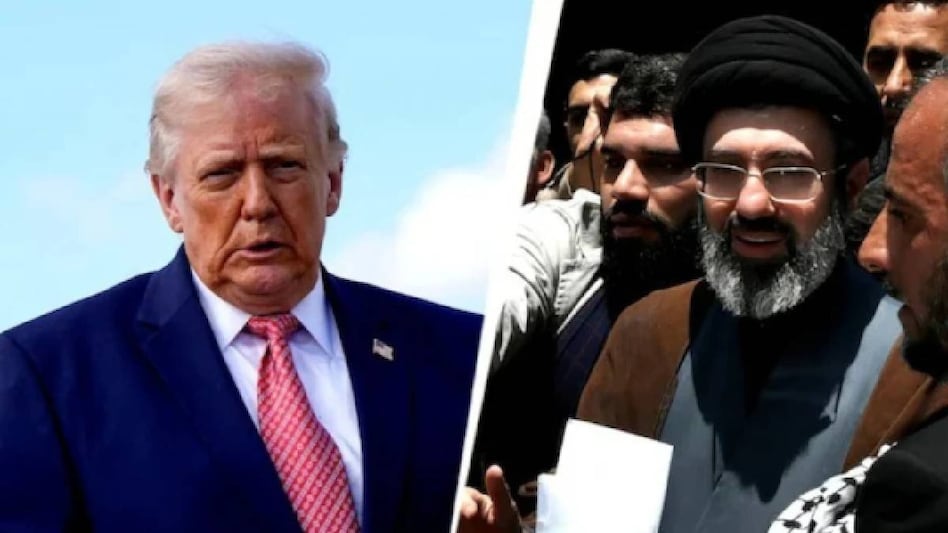
Less than two hours before his self-imposed deadline, US President Donald Trump pulled back from the brink — agreeing to a two-week ceasefire with Iran after spending the day warning that "a whole civilisation will die tonight."
The whiplash reversal, announced on Trump's Truth Social platform Tuesday, came moments before his 8 pm EDT ultimatum for Tehran to reopen the Strait of Hormuz or face attacks on civilian infrastructure.
"This will be a double-sided CEASEFIRE! The reason for doing so is that we have already met and exceeded all Military objectives, and are very far along with a definitive Agreement concerning Longterm PEACE with Iran, and PEACE in the Middle East," Trump wrote.
Pakistan steps in
The deal was brokered by Pakistani Prime Minister Shehbaz Sharif, who confirmed that Iranian and US delegations will meet in Islamabad on Friday. The agreement also includes a cessation of Israel's bombing campaign in Lebanon.
The ceasefire hinges on Iran lifting its blockade of the Strait of Hormuz — a chokepoint for roughly one-fifth of global oil trade. Iranian Foreign Minister Abbas Araqchi said Tehran would halt counter-attacks and restore safe passage through the waterway.
Two White House officials confirmed Israel has agreed to suspend its bombing campaign on Iran as well. Even so, Israeli media reported missile attacks continuing in the interim, with explosions audible in Tel Aviv. Gulf nations, Kuwait, Bahrain, Saudi Arabia, and the UAE, issued near-simultaneous alerts and activated air defences.
The cost so far
Now in its sixth week, the war has killed more than 5,000 people across nearly a dozen countries, including over 1,600 Iranian civilians, according to government sources and human rights groups.
The Strait's closure had already sent oil prices sharply higher, stoking fears of a global recession. The US Energy Information Administration warned fuel prices could keep rising for months even after the waterway reopens.
Markets responded quickly to the ceasefire news: US stock futures climbed within minutes, while crude futures dropped to their lowest since March 26.
From threats to talks
The day's events had rattled world leaders, financial markets, and energy traders. Trump's civilisation-or-death warning drew condemnation from the United Nations, Pope Leo, and international law experts who cautioned that striking civilian infrastructure could constitute a war crime.
Politically, the pressure was mounting. Trump's approval ratings had hit record lows with the midterm campaign underway, leaving Republicans at risk of losing narrow Congressional majorities. A Reuters/Ipsos poll showed two-thirds of Americans wanted a swift end to US involvement.
As the deadline approached, US and Israeli forces struck railway and road bridges, an airport, a petrochemical plant, and Kharg Island, Iran's primary oil export terminal.
Less than two hours before his self-imposed deadline, US President Donald Trump pulled back from the brink — agreeing to a two-week ceasefire with Iran after spending the day warning that "a whole civilisation will die tonight."
The whiplash reversal, announced on Trump's Truth Social platform Tuesday, came moments before his 8 pm EDT ultimatum for Tehran to reopen the Strait of Hormuz or face attacks on civilian infrastructure.
"This will be a double-sided CEASEFIRE! The reason for doing so is that we have already met and exceeded all Military objectives, and are very far along with a definitive Agreement concerning Longterm PEACE with Iran, and PEACE in the Middle East," Trump wrote.
Pakistan steps in
The deal was brokered by Pakistani Prime Minister Shehbaz Sharif, who confirmed that Iranian and US delegations will meet in Islamabad on Friday. The agreement also includes a cessation of Israel's bombing campaign in Lebanon.
The ceasefire hinges on Iran lifting its blockade of the Strait of Hormuz — a chokepoint for roughly one-fifth of global oil trade. Iranian Foreign Minister Abbas Araqchi said Tehran would halt counter-attacks and restore safe passage through the waterway.
Two White House officials confirmed Israel has agreed to suspend its bombing campaign on Iran as well. Even so, Israeli media reported missile attacks continuing in the interim, with explosions audible in Tel Aviv. Gulf nations, Kuwait, Bahrain, Saudi Arabia, and the UAE, issued near-simultaneous alerts and activated air defences.
The cost so far
Now in its sixth week, the war has killed more than 5,000 people across nearly a dozen countries, including over 1,600 Iranian civilians, according to government sources and human rights groups.
The Strait's closure had already sent oil prices sharply higher, stoking fears of a global recession. The US Energy Information Administration warned fuel prices could keep rising for months even after the waterway reopens.
Markets responded quickly to the ceasefire news: US stock futures climbed within minutes, while crude futures dropped to their lowest since March 26.
From threats to talks
The day's events had rattled world leaders, financial markets, and energy traders. Trump's civilisation-or-death warning drew condemnation from the United Nations, Pope Leo, and international law experts who cautioned that striking civilian infrastructure could constitute a war crime.
Politically, the pressure was mounting. Trump's approval ratings had hit record lows with the midterm campaign underway, leaving Republicans at risk of losing narrow Congressional majorities. A Reuters/Ipsos poll showed two-thirds of Americans wanted a swift end to US involvement.
As the deadline approached, US and Israeli forces struck railway and road bridges, an airport, a petrochemical plant, and Kharg Island, Iran's primary oil export terminal.