
All about Sanae Takaichi, elected by Parliament to become Japan's first woman PM. Details here
Takaichi, the 64-year-old leader of the ruling Liberal Democratic Party (LDP), will head a minority government. With this, she has become Japan’s fifth premier in as many years.
- Oct 21, 2025,
- Updated Oct 21, 2025 12:05 PM IST
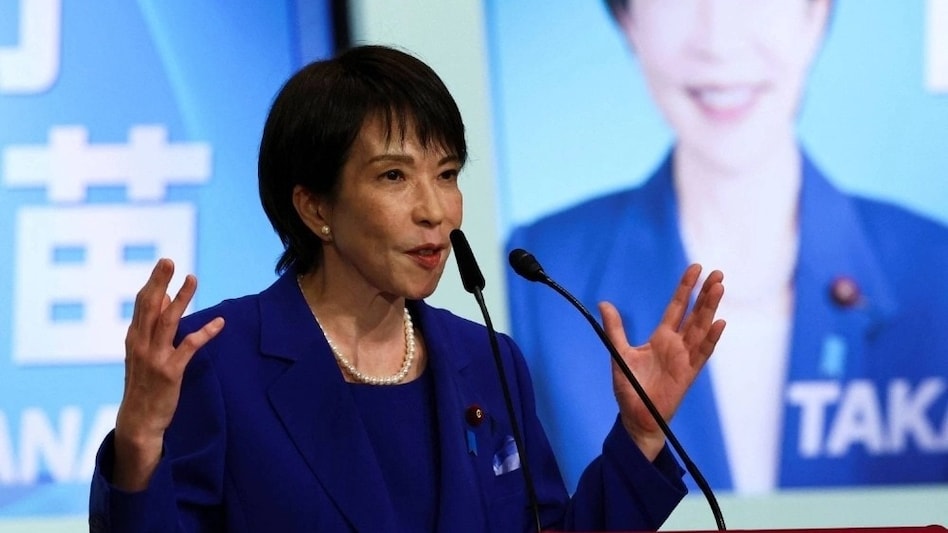
The Japanese Parliament appointed Sanae Takaichi as its first-ever woman prime minister after the veteran conservative lawmaker won a parliamentary vote and sealed a last-minute coalition deal on Tuesday.
Takaichi, the 64-year-old leader of the ruling Liberal Democratic Party (LDP), will head a minority government. With this, she has become Japan’s fifth premier in as many years. Takaichi was confirmed by both houses of parliament and will formally take office after meeting the emperor.
Known for her conservative views and tough stance on China, Takaichi is an admirer of former British leader Margaret Thatcher. After her confirmation, she bowed several times to lawmakers in parliament.
Her appointment follows a turbulent week for the LDP, after its coalition partner Komeito pulled out over a funding scandal and concerns about Takaichi’s right-wing views. To stay in power, she struck a deal late Monday with the Japan Innovation Party (JIP), a reformist, right-leaning group that supports lowering the food tax to zero and banning corporate donations.
“I will make Japan’s economy stronger and reshape Japan as a country that can be responsible for future generations,” Takaichi said.
Residents in her hometown of Nara shared mixed feelings. “She’s a strong-minded person, regardless of being a woman,” said pensioner Toru Takahashi, 76. “She’s not like Trump. But she’s clear about what’s right and wrong,” he told AFP.
Takaichi has promised to include more women in her cabinet, aiming for what she called “Nordic” levels of representation. Reports suggest she may appoint Satsuki Katayama as finance minister and Kimi Onoda as economic security minister.
Japan ranks 118th out of 148 countries in the World Economic Forum’s 2025 Global Gender Gap Report. Only about 15% of lawmakers in the lower house are women, and corporate leadership remains mostly male.
She has also spoken openly about women’s health issues, including her experience with menopause. Japan's first woman Prime Minister, however, also supports traditional family laws, including requiring married couples to share the same surname, and backs male-only succession for the imperial family.
“I hope she makes Japan a more livable place for women,” said Keiko Yoshida, a 39-year-old office worker in Nara. Student Nina Terao, 18, added: “It would be great to see more childcare support and help for women returning to work after having children.”
Takaichi faces a long list of challenges — from reviving Japan’s sluggish economy and addressing its population decline to managing relations with key allies. US President Donald Trump is due to visit Tokyo next week, with trade and defense expected to top the agenda.
“I’d like her to be a prime minister who can clearly say ‘No’ when needed,” said Satoshi Sakamoto, 73, another Nara resident.
A close ally of late prime minister Shinzo Abe, Takaichi supports aggressive government spending and easy monetary policies. Though once critical of China, she has softened her tone recently, avoiding her usual visit to the Yasukuni shrine, which honors Japan’s war dead.
“Prices have gone up, and it’s tough,” said pensioner Satoe Tominaga, 77. “Honestly, I mostly shop at 100-yen stores now,” she told AFP, adding she was “50-50” about the new leader.
The Japanese Parliament appointed Sanae Takaichi as its first-ever woman prime minister after the veteran conservative lawmaker won a parliamentary vote and sealed a last-minute coalition deal on Tuesday.
Takaichi, the 64-year-old leader of the ruling Liberal Democratic Party (LDP), will head a minority government. With this, she has become Japan’s fifth premier in as many years. Takaichi was confirmed by both houses of parliament and will formally take office after meeting the emperor.
Known for her conservative views and tough stance on China, Takaichi is an admirer of former British leader Margaret Thatcher. After her confirmation, she bowed several times to lawmakers in parliament.
Her appointment follows a turbulent week for the LDP, after its coalition partner Komeito pulled out over a funding scandal and concerns about Takaichi’s right-wing views. To stay in power, she struck a deal late Monday with the Japan Innovation Party (JIP), a reformist, right-leaning group that supports lowering the food tax to zero and banning corporate donations.
“I will make Japan’s economy stronger and reshape Japan as a country that can be responsible for future generations,” Takaichi said.
Residents in her hometown of Nara shared mixed feelings. “She’s a strong-minded person, regardless of being a woman,” said pensioner Toru Takahashi, 76. “She’s not like Trump. But she’s clear about what’s right and wrong,” he told AFP.
Takaichi has promised to include more women in her cabinet, aiming for what she called “Nordic” levels of representation. Reports suggest she may appoint Satsuki Katayama as finance minister and Kimi Onoda as economic security minister.
Japan ranks 118th out of 148 countries in the World Economic Forum’s 2025 Global Gender Gap Report. Only about 15% of lawmakers in the lower house are women, and corporate leadership remains mostly male.
She has also spoken openly about women’s health issues, including her experience with menopause. Japan's first woman Prime Minister, however, also supports traditional family laws, including requiring married couples to share the same surname, and backs male-only succession for the imperial family.
“I hope she makes Japan a more livable place for women,” said Keiko Yoshida, a 39-year-old office worker in Nara. Student Nina Terao, 18, added: “It would be great to see more childcare support and help for women returning to work after having children.”
Takaichi faces a long list of challenges — from reviving Japan’s sluggish economy and addressing its population decline to managing relations with key allies. US President Donald Trump is due to visit Tokyo next week, with trade and defense expected to top the agenda.
“I’d like her to be a prime minister who can clearly say ‘No’ when needed,” said Satoshi Sakamoto, 73, another Nara resident.
A close ally of late prime minister Shinzo Abe, Takaichi supports aggressive government spending and easy monetary policies. Though once critical of China, she has softened her tone recently, avoiding her usual visit to the Yasukuni shrine, which honors Japan’s war dead.
“Prices have gone up, and it’s tough,” said pensioner Satoe Tominaga, 77. “Honestly, I mostly shop at 100-yen stores now,” she told AFP, adding she was “50-50” about the new leader.