
Bangladesh election: After Tarique Rahman-led BNP's win, how do New Delhi-Dhaka ties look like?
Bangladesh general election 2026: The election was a two-way contest between the BNP and its former ally, Jamaat-e-Islami.
- Feb 13, 2026,
- Updated Feb 13, 2026 10:14 AM IST
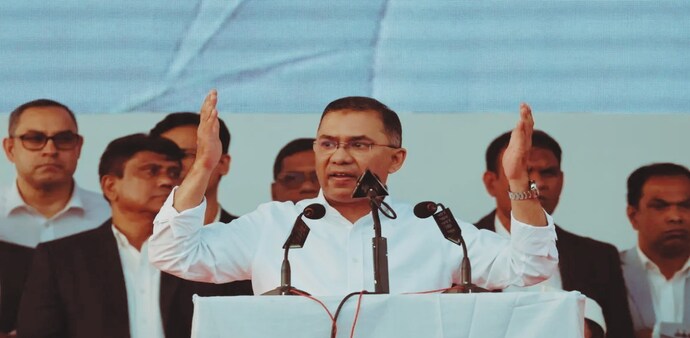
The Bangladesh Nationalist Party (BNP), led by former Prime Minister Khaleda Zia's son Tarique Rahman, is all set for a "sweeping" victory in the first election held since Sheikh Hasina's ouster in 2024.
Rahman returned to Bangladesh in December after almost 17 years in exile in London. The BNP and its allies bagged 181, whereas the Jamaat-e-Islami has 61 seats in its kitty, according to The Daily Star.
In a post on X, the BNP's media cell claimed victory, saying, "The Bangladesh Nationalist Party-BNP is set to form the government after victory in the majority of seats."
The election was a two-way contest between the BNP and its former ally, Jamaat-e-Islami. Sheikh Hasina's Awami League has been disbanded in Bangladesh.
Soon after the results were out, Prime Minister Narendra Modi congratulated Tarique Rahman. In a post on X (previously Twitter), he wrote, "I convey my warm congratulations to Mr Tarique Rahman on leading BNP to a decisive victory in the Parliamentary elections in Bangladesh."
What changes for India
Historically, India's relationship with the BNP has been marked by mutual suspicion, especially following its alliance with the Jamaat from 2001 to 2006. Despite much water under the Padma, both sides are now moving towards a more balanced relationship based on "mutual respect".
PM Modi congratulated Rahman while emphasising India's support for a "democratic, progressive and inclusive Bangladesh", signalling New Delhi's intent to start on a fresh note with Dhaka.
The BNP has pledged to take a strong stance on the Teesta river water-sharing agreement and border killings by the Border Security Force (BSF), which they feel Sheikh Hasina was too "subservient" to India on.
On the Teesta water-sharing pact, Rahman has sought a "fair share" because this is an issue of national survival. Besides, the BNP supremo is also seeking a revival of SAARC as well as balanced ties with China.
During Rahman's reign, the protection of the Hindus in Bangladesh will be a major litmus test for India. Tarique Rahman, for his part, has publicly said that "religion is individual, but the state belongs to everyone". Recent reports of post-poll violence, however, remain a point of friction.
Tarique Rahman vs Sheikh Hasina's approach to India
While it was a shonali adhyay (golden period) for India-Bangladesh ties under Hasina's 15-year rule from 2009 to 2024, Rahman has introduced a "Bangladesh First" doctrine. Her strategy was based on the promise of a stable, pro-India Bangladesh that would reap economic and security rewards.
Rahman, on the other hand, has the mantra of "Friend Yes, Master No" vis-à-vis India, implying that New Delhi would have to address Dhaka's grievances rather than it being a unilateral alignment.
In case of regional issues, Hasina prioritised bilateral ties with New Delhi and largely bypassed SAARC. She also focused on sub-regional connectivity that facilitated Indian transit to the Northeast. Rahman intends to revive the grouping, founded by his father Ziaur Rahman, to dilute India's dominance in South Asia.
Hasina's border policy was defined by India's security needs as she cracked down on Indian insurgent groups like ULFA operating from Bangladesh. In exchange, she sought political support from Delhi and downplayed civilian casualties at the border to maintain diplomatic harmony.
Rahman, on the other hand, has taken a tough stance against the border killings by the BSF. He also views the border as a site of national sovereignty that must be defended and not just managed.
In the case of the Teesta water-sharing pact, Hasina relied on "quiet diplomacy" and her personal rapport with Indian leaders to resolve issues. While she secured the Enclave Exchange, she was unable to sign the Teesta water sharing pact due to opposition from West Bengal.
Rahman, on the other hand, has framed this as a matter of national survival and human rights. His government is expected to pursue a Teesta Master Plan and use the upcoming renewal of the Ganges Water Treaty as leverage to force India into a more equitable water-sharing framework across 54 shared rivers.
The Bangladesh Nationalist Party (BNP), led by former Prime Minister Khaleda Zia's son Tarique Rahman, is all set for a "sweeping" victory in the first election held since Sheikh Hasina's ouster in 2024.
Rahman returned to Bangladesh in December after almost 17 years in exile in London. The BNP and its allies bagged 181, whereas the Jamaat-e-Islami has 61 seats in its kitty, according to The Daily Star.
In a post on X, the BNP's media cell claimed victory, saying, "The Bangladesh Nationalist Party-BNP is set to form the government after victory in the majority of seats."
The election was a two-way contest between the BNP and its former ally, Jamaat-e-Islami. Sheikh Hasina's Awami League has been disbanded in Bangladesh.
Soon after the results were out, Prime Minister Narendra Modi congratulated Tarique Rahman. In a post on X (previously Twitter), he wrote, "I convey my warm congratulations to Mr Tarique Rahman on leading BNP to a decisive victory in the Parliamentary elections in Bangladesh."
What changes for India
Historically, India's relationship with the BNP has been marked by mutual suspicion, especially following its alliance with the Jamaat from 2001 to 2006. Despite much water under the Padma, both sides are now moving towards a more balanced relationship based on "mutual respect".
PM Modi congratulated Rahman while emphasising India's support for a "democratic, progressive and inclusive Bangladesh", signalling New Delhi's intent to start on a fresh note with Dhaka.
The BNP has pledged to take a strong stance on the Teesta river water-sharing agreement and border killings by the Border Security Force (BSF), which they feel Sheikh Hasina was too "subservient" to India on.
On the Teesta water-sharing pact, Rahman has sought a "fair share" because this is an issue of national survival. Besides, the BNP supremo is also seeking a revival of SAARC as well as balanced ties with China.
During Rahman's reign, the protection of the Hindus in Bangladesh will be a major litmus test for India. Tarique Rahman, for his part, has publicly said that "religion is individual, but the state belongs to everyone". Recent reports of post-poll violence, however, remain a point of friction.
Tarique Rahman vs Sheikh Hasina's approach to India
While it was a shonali adhyay (golden period) for India-Bangladesh ties under Hasina's 15-year rule from 2009 to 2024, Rahman has introduced a "Bangladesh First" doctrine. Her strategy was based on the promise of a stable, pro-India Bangladesh that would reap economic and security rewards.
Rahman, on the other hand, has the mantra of "Friend Yes, Master No" vis-à-vis India, implying that New Delhi would have to address Dhaka's grievances rather than it being a unilateral alignment.
In case of regional issues, Hasina prioritised bilateral ties with New Delhi and largely bypassed SAARC. She also focused on sub-regional connectivity that facilitated Indian transit to the Northeast. Rahman intends to revive the grouping, founded by his father Ziaur Rahman, to dilute India's dominance in South Asia.
Hasina's border policy was defined by India's security needs as she cracked down on Indian insurgent groups like ULFA operating from Bangladesh. In exchange, she sought political support from Delhi and downplayed civilian casualties at the border to maintain diplomatic harmony.
Rahman, on the other hand, has taken a tough stance against the border killings by the BSF. He also views the border as a site of national sovereignty that must be defended and not just managed.
In the case of the Teesta water-sharing pact, Hasina relied on "quiet diplomacy" and her personal rapport with Indian leaders to resolve issues. While she secured the Enclave Exchange, she was unable to sign the Teesta water sharing pact due to opposition from West Bengal.
Rahman, on the other hand, has framed this as a matter of national survival and human rights. His government is expected to pursue a Teesta Master Plan and use the upcoming renewal of the Ganges Water Treaty as leverage to force India into a more equitable water-sharing framework across 54 shared rivers.