
Bangladesh protests: Supreme Court scales back quota system for government job applicants amid riots, mounting deaths
The top court in its verdict ordered 93 percent of the government jobs to be allocated on a merit-based system and left the remaining 7 percent for relatives of veterans, who fought in Bangladesh’s war of independence in 1971 and other categories.
- Jul 21, 2024,
- Updated Jul 21, 2024 3:10 PM IST
Bangladesh’s supreme court on July 21 scaled back the quota system for government job applicants after nation-wide unrest and deadly clashes between police and protesters left over 100 dead.
The top court in its verdict ordered 93 percent of the government jobs to be allocated on a merit-based system and left the remaining 7 percent for relatives of veterans, who fought in Bangladesh’s war of independence in 1971 and other categories. Earlier, the system reserved 30 percent of such jobs the relatives of war veterans.
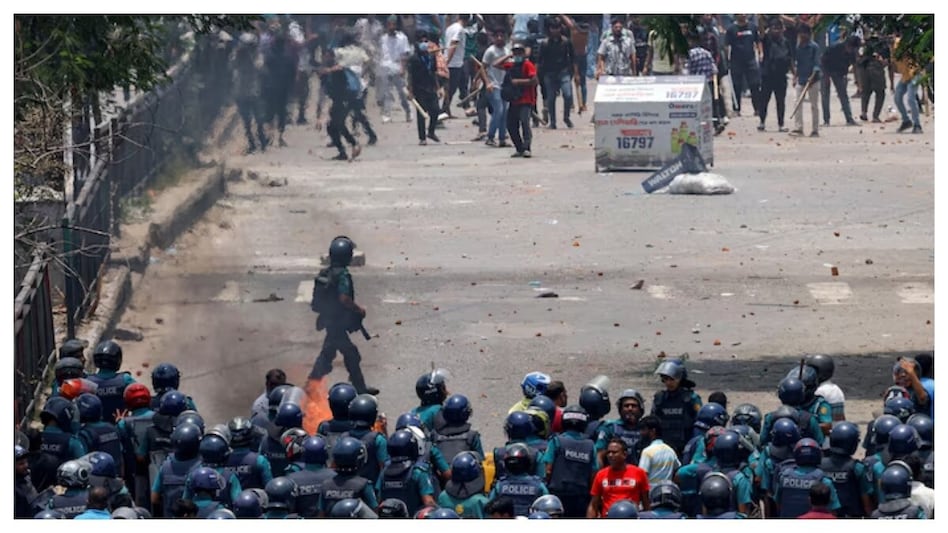
The verdict came after demonstrations turned deadly when protesters began clashing with police. Police had to resort to firing of tear gas, rubber bullets and smoke grenades to scatter stone-throwing protesters, who filled the streets and university campuses.
Sporadic clashes in parts of Dhaka, the nation’s capital, were reported on July 20 but it was not immediately clear whether there were any fatalities.
Bangladeshi authorities haven’t shared any official numbers on the deaths and injured, but according to local media reports at least 103 people have died so far.
The nationwide unrest forced the Sheikh Hasina-led government to impose curfew restrictions to stem riots across the country as police was unable to control the fallout. Ahead of the court’s hearing, soldiers patrolled cities across the country and a shoot-on-sight order was issued while a nationwide curfew and an internet blackout continued to remain in force.
Home Minister Asaduzzaman Khan said the curfew will be relaxed between 3 pm to 5 pm today for people to carry out essential errands. The government has declared July 21 and July 22 as public holidays with only emergency services allowed to operate.
The chaos represents a challenge to Hasina since her fourth consecutive win as the PM after January’s elections, which were boycotted by the opposition groups.
The protesters argue the quota system is discriminatory and benefits supporters of Hasina, whose Awami League party led the independence movement, saying it should be replaced with a merit-based system.
Hasina has defended the quota system, saying that veterans deserve the highest respect for their contributions in the war against Pakistan, regardless of their political affiliation.
Representatives from both sides met late on July 19 in an attempt to reach a resolution and Law Minister Anisul Huq said the government was open to discussing their demands, including the reform of the current quota system, the reopening of student dormitories shut by the police following the clashes and for some university officials to step down after failing to protect campuses from the violence.
The main opposition Bangladesh Nationalist Party has backed the protests, vowing to organise its own demonstrations as many of its supporters have joined the student-led protests. However, BNP said in a statement its followers were not responsible for the violence and denied the ruling party’s accusations of using the protests for political gains.
The Awami League and the BNP have often accused each other of fueling political chaos and violence, most recently ahead of the country’s national election, which was marred by a crackdown on several opposition figures.
In 2018, the government halted the job quotas following mass student protests. But in June, Bangladesh’s High Court nullified that decision and reinstated the quotas after the relatives’ of 1971 veterans filed petitions. The Supreme Court suspended the ruling, pending an appeal hearing.Hasina has called on protesters to wait for the court’s verdict.
Meanwhile, the United States and Canada have urged their citizens to avoid travelling to the country amid escalating tensions and widespread protests. Citing significant ‘civil unrest’, the US State Department has raised its travel advisory to level four on July 20, warning of demonstrations and violent clashes across Dhaka and other parts of the country. Canada expressed deep concern and called for a peaceful resolution to the ongoing protests.
Indian students return
Nearly 1,000 Indian students have returned to India from Bangladesh through various land transit points or by flight. External Affairs Minister S Jaishankar said the Foreign Ministry is fully focused on ensuring safety and well-being of the Indians in Bangladesh.
The Indian High Commission is in regular contact with more than 4,000 students still in various universities across Bangladesh. Students from Nepal and Bhutan have also been aided in crossing into India upon request.
India has dubbed the protests an ‘internal matter’ for the other country. Officials have issued an advisory for Indian nationals and helpline numbers have been activated.
Bangladesh’s supreme court on July 21 scaled back the quota system for government job applicants after nation-wide unrest and deadly clashes between police and protesters left over 100 dead.
The top court in its verdict ordered 93 percent of the government jobs to be allocated on a merit-based system and left the remaining 7 percent for relatives of veterans, who fought in Bangladesh’s war of independence in 1971 and other categories. Earlier, the system reserved 30 percent of such jobs the relatives of war veterans.
The verdict came after demonstrations turned deadly when protesters began clashing with police. Police had to resort to firing of tear gas, rubber bullets and smoke grenades to scatter stone-throwing protesters, who filled the streets and university campuses.
Sporadic clashes in parts of Dhaka, the nation’s capital, were reported on July 20 but it was not immediately clear whether there were any fatalities.
Bangladeshi authorities haven’t shared any official numbers on the deaths and injured, but according to local media reports at least 103 people have died so far.
The nationwide unrest forced the Sheikh Hasina-led government to impose curfew restrictions to stem riots across the country as police was unable to control the fallout. Ahead of the court’s hearing, soldiers patrolled cities across the country and a shoot-on-sight order was issued while a nationwide curfew and an internet blackout continued to remain in force.
Home Minister Asaduzzaman Khan said the curfew will be relaxed between 3 pm to 5 pm today for people to carry out essential errands. The government has declared July 21 and July 22 as public holidays with only emergency services allowed to operate.
The chaos represents a challenge to Hasina since her fourth consecutive win as the PM after January’s elections, which were boycotted by the opposition groups.
The protesters argue the quota system is discriminatory and benefits supporters of Hasina, whose Awami League party led the independence movement, saying it should be replaced with a merit-based system.
Hasina has defended the quota system, saying that veterans deserve the highest respect for their contributions in the war against Pakistan, regardless of their political affiliation.
Representatives from both sides met late on July 19 in an attempt to reach a resolution and Law Minister Anisul Huq said the government was open to discussing their demands, including the reform of the current quota system, the reopening of student dormitories shut by the police following the clashes and for some university officials to step down after failing to protect campuses from the violence.
The main opposition Bangladesh Nationalist Party has backed the protests, vowing to organise its own demonstrations as many of its supporters have joined the student-led protests. However, BNP said in a statement its followers were not responsible for the violence and denied the ruling party’s accusations of using the protests for political gains.
The Awami League and the BNP have often accused each other of fueling political chaos and violence, most recently ahead of the country’s national election, which was marred by a crackdown on several opposition figures.
In 2018, the government halted the job quotas following mass student protests. But in June, Bangladesh’s High Court nullified that decision and reinstated the quotas after the relatives’ of 1971 veterans filed petitions. The Supreme Court suspended the ruling, pending an appeal hearing.Hasina has called on protesters to wait for the court’s verdict.
Meanwhile, the United States and Canada have urged their citizens to avoid travelling to the country amid escalating tensions and widespread protests. Citing significant ‘civil unrest’, the US State Department has raised its travel advisory to level four on July 20, warning of demonstrations and violent clashes across Dhaka and other parts of the country. Canada expressed deep concern and called for a peaceful resolution to the ongoing protests.
Indian students return
Nearly 1,000 Indian students have returned to India from Bangladesh through various land transit points or by flight. External Affairs Minister S Jaishankar said the Foreign Ministry is fully focused on ensuring safety and well-being of the Indians in Bangladesh.
The Indian High Commission is in regular contact with more than 4,000 students still in various universities across Bangladesh. Students from Nepal and Bhutan have also been aided in crossing into India upon request.
India has dubbed the protests an ‘internal matter’ for the other country. Officials have issued an advisory for Indian nationals and helpline numbers have been activated.