
Bangladesh's Hindu students who helped in the fall of Sheikh Hasina, now fear for their own families' lives: Report
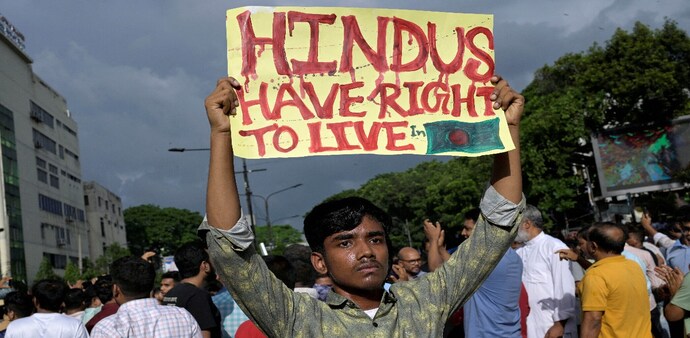
The situation has left many Hindu students questioning their place in the country. Despite their contributions to the protests, they are now facing the brunt of the backlash.
- Aug 11, 2024,
- Updated Aug 11, 2024 1:48 PM IST
In the wake of escalating violence against Hindu minorities in Bangladesh, 26-year-old former Dhaka University student Nilay Kumar Biswas finds himself unable to sleep, plagued by anxiety for his family's safety. While speaking to the news outlet, The Print, Biswas reported on the violence faced by Hindus at the hands of Islamists following the fall of Bangladesh's Prime Minister Sheikh Hasina. The unrest, which began as a nationwide protest against the controversial quota system in government jobs, has since morphed into a violent campaign targeting Hindu communities across the country.
The unrest began in June with widespread protests demanding the reform of a quota system that reserved 56% of government jobs for specific groups, including 30% for descendants of 1971 Liberation War freedom fighters. Many students, including a significant number from the Hindu community, joined the protests, seeing it as a fight for fairness. The movement ultimately led to the resignation of Prime Minister Sheikh Hasina, a victory that has now turned into a nightmare for the very students who fought for change.
With the resignation of Sheikh Hasina, the country has seen a surge in violence, particularly against Hindu minorities. Members of the Bangladesh Nationalist Party (BNP) and the outlawed Bangladesh Jamaat-e-Islami have been accused of exploiting the protests to incite violence against Hindus. Reports of attacks on Hindu homes, temples, and businesses have flooded social media, with many fearing for their lives.
"At night, I can’t sleep because of distress calls from friends and family who live outside Dhaka," Biswas said. Once feeling relatively safe in the capital, he now fears for the safety of his loved ones as law enforcement appears powerless against the rampaging mobs. "Most police stations remain unmanned, and as murderous mobs go on a rampage, the ordinary Bangladeshi watches helplessly. The minority Hindu community feels especially vulnerable at such times because we are easy targets," he added.
Biswas, who recently completed his master's degree in social science from Dhaka University’s Department of Mass Communication and Journalism, expressed disillusionment. He recalled how Hindu students had stood shoulder to shoulder with their Muslim counterparts, demanding an end to the quota system. "Hindu students have spilled blood for a cause that united an entire nation," he said. "Today, as anarchy descends on Bangladesh, Hindu temples are being attacked, our houses are being looted, set on fire, our lives are in danger."
The situation has left many Hindu students questioning their place in the country. Despite their contributions to the protests, they are now facing the brunt of the backlash. Biswas described how he and others like him have been left to plead for their lives and the safety of their families, as Islamist mobs continue their violent campaign. "My Muslim friends are standing guard outside temples and Hindu houses to prevent mobs from ransacking and torching them," Biswas shared, adding that appeals on social media from well-meaning Muslims offer some hope. "It is the fellow Muslims who can protect us. Who else do we turn to?" he asked, reflecting the desperation of the Hindu community in these perilous times.
The ongoing violence has sparked widespread fear and uncertainty. Many, like Biswas, are calling for the establishment of an interim government to restore order and prevent further bloodshed. "Bangladesh needs a new beginning with Muslims, Hindus, and citizens of all other faiths," he stressed. The fear of further casualties and destruction looms large, with efforts to document the extent of the communal riots ongoing.
Another student, Aaria Bhowmik, also welcomed Sheikh Hasina’s resignation with enthusiasm, only to quickly realise the grim reality. Initially, she posted celebratory photos on social media, declaring her support for the movement. But as the violence against Hindus intensified, she too was forced to confront the harsh truth. "In protest, we stand united, irrespective of religion," she wrote. "But now, as Hindus, we are being attacked. It’s time to raise our voices against this injustice."
The tragic irony of the situation is not lost on the Hindu students who joined the protests with hopes of a better Bangladesh. They now find themselves at the mercy of radical elements, desperately seeking protection and justice in a country they once considered their own.
In the wake of escalating violence against Hindu minorities in Bangladesh, 26-year-old former Dhaka University student Nilay Kumar Biswas finds himself unable to sleep, plagued by anxiety for his family's safety. While speaking to the news outlet, The Print, Biswas reported on the violence faced by Hindus at the hands of Islamists following the fall of Bangladesh's Prime Minister Sheikh Hasina. The unrest, which began as a nationwide protest against the controversial quota system in government jobs, has since morphed into a violent campaign targeting Hindu communities across the country.
The unrest began in June with widespread protests demanding the reform of a quota system that reserved 56% of government jobs for specific groups, including 30% for descendants of 1971 Liberation War freedom fighters. Many students, including a significant number from the Hindu community, joined the protests, seeing it as a fight for fairness. The movement ultimately led to the resignation of Prime Minister Sheikh Hasina, a victory that has now turned into a nightmare for the very students who fought for change.
With the resignation of Sheikh Hasina, the country has seen a surge in violence, particularly against Hindu minorities. Members of the Bangladesh Nationalist Party (BNP) and the outlawed Bangladesh Jamaat-e-Islami have been accused of exploiting the protests to incite violence against Hindus. Reports of attacks on Hindu homes, temples, and businesses have flooded social media, with many fearing for their lives.
"At night, I can’t sleep because of distress calls from friends and family who live outside Dhaka," Biswas said. Once feeling relatively safe in the capital, he now fears for the safety of his loved ones as law enforcement appears powerless against the rampaging mobs. "Most police stations remain unmanned, and as murderous mobs go on a rampage, the ordinary Bangladeshi watches helplessly. The minority Hindu community feels especially vulnerable at such times because we are easy targets," he added.
Biswas, who recently completed his master's degree in social science from Dhaka University’s Department of Mass Communication and Journalism, expressed disillusionment. He recalled how Hindu students had stood shoulder to shoulder with their Muslim counterparts, demanding an end to the quota system. "Hindu students have spilled blood for a cause that united an entire nation," he said. "Today, as anarchy descends on Bangladesh, Hindu temples are being attacked, our houses are being looted, set on fire, our lives are in danger."
The situation has left many Hindu students questioning their place in the country. Despite their contributions to the protests, they are now facing the brunt of the backlash. Biswas described how he and others like him have been left to plead for their lives and the safety of their families, as Islamist mobs continue their violent campaign. "My Muslim friends are standing guard outside temples and Hindu houses to prevent mobs from ransacking and torching them," Biswas shared, adding that appeals on social media from well-meaning Muslims offer some hope. "It is the fellow Muslims who can protect us. Who else do we turn to?" he asked, reflecting the desperation of the Hindu community in these perilous times.
The ongoing violence has sparked widespread fear and uncertainty. Many, like Biswas, are calling for the establishment of an interim government to restore order and prevent further bloodshed. "Bangladesh needs a new beginning with Muslims, Hindus, and citizens of all other faiths," he stressed. The fear of further casualties and destruction looms large, with efforts to document the extent of the communal riots ongoing.
Another student, Aaria Bhowmik, also welcomed Sheikh Hasina’s resignation with enthusiasm, only to quickly realise the grim reality. Initially, she posted celebratory photos on social media, declaring her support for the movement. But as the violence against Hindus intensified, she too was forced to confront the harsh truth. "In protest, we stand united, irrespective of religion," she wrote. "But now, as Hindus, we are being attacked. It’s time to raise our voices against this injustice."
The tragic irony of the situation is not lost on the Hindu students who joined the protests with hopes of a better Bangladesh. They now find themselves at the mercy of radical elements, desperately seeking protection and justice in a country they once considered their own.