
Christine Lagarde to step down as European Central Bank chief in February
Lagarde’s early exit comes after a tenure marked by the Covid-19 pandemic, Europe’s energy crisis and renewed inflation pressures.
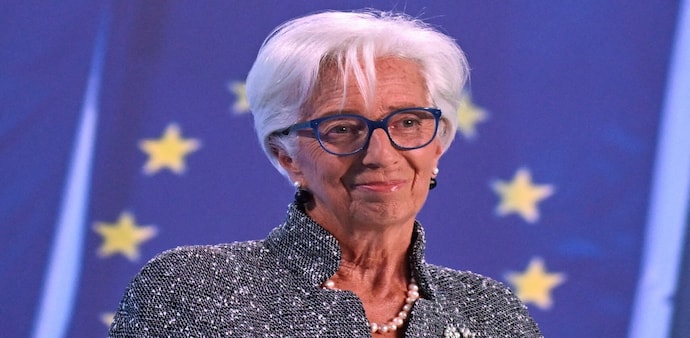
- Oct 29, 2026,
- Updated Oct 29, 2026 6:13 PM IST
Christine Lagarde will step down as president of the European Central Bank in February, bringing her eight-year term to an early end and setting up a fresh leadership race for the central bank at a sensitive time for Europe’s economy, The New York Times reported on Thursday.
Lagarde, 70, was due to remain in the role until October 2027. Her early departure means European political leaders will now have to choose a successor to lead the institution responsible for setting interest rates across the 21 countries that use the euro.
Lagarde’s crisis-hit tenure
Lagarde took charge of the ECB in November 2019, just months before the Covid-19 pandemic triggered a major economic shock. The central bank responded with a huge bond-buying programme to support the eurozone economy.
The next major test came in 2022 after Russia’s full-scale invasion of Ukraine triggered an energy crisis. Natural gas prices surged and eurozone inflation climbed above 10%.
The ECB then moved away from negative interest rates and began a series of aggressive rate increases to bring inflation under control.
Don't Miss: No farewell golfing event for outgoing IAF chief? Air Force sports complex near PM's residence shut
After inflation slowed, the ECB began cutting interest rates in mid-2024. Inflation eventually returned to the bank’s 2% target late last year.
A new challenge before her exit
The calm did not last. This year, the U.S.-Israeli war against Iran pushed energy prices higher again and caused inflation to rise. The ECB responded by raising interest rates, becoming the first major central bank to do so in response to the war.
Lagarde had earlier described the ECB as being in a “good place” at the start of the year, when inflation was close to target and interest rates were stable.
Her tenure also went beyond traditional monetary policy. She pushed the ECB to address the financial impact of climate change and repeatedly called for reforms to make Europe’s economy more productive and competitive.
On artificial intelligence, Lagarde warned in August: “Europe largely missed out on the first digital revolution. We cannot afford to repeat that experience with artificial intelligence, the second digital revolution.”
Who replaces Lagarde
The ECB presidency is decided by European political leaders, meaning the selection of Lagarde’s successor could become a political balancing act.
Her departure also comes as the ECB faces wider changes in its leadership. A new vice president took over earlier this year, while two more members of its six-person executive board are due to leave next year, including chief economist Philip Lane.
Lagarde’s exit will therefore mark not just the end of her tenure, but a broader change at the top of one of Europe’s most important institutions.