
Did Iran move centrifuges before US strike? Satellite images show trucks lined up at Fordow
Fordow is one of the most heavily fortified nuclear enrichment sites in Iran. Built secretly and later revealed by Western powers in 2009, the underground facility houses around 2,000 centrifuges
- Jun 22, 2025,
- Updated Jun 22, 2025 2:57 PM IST
Damien Symon, a geo-intelligence researcher, on Sunday flagged satellite images suggesting that Iran may have moved critical equipment or reinforced its Fordow nuclear facility in the hours before the US carried out airstrikes on June 22.
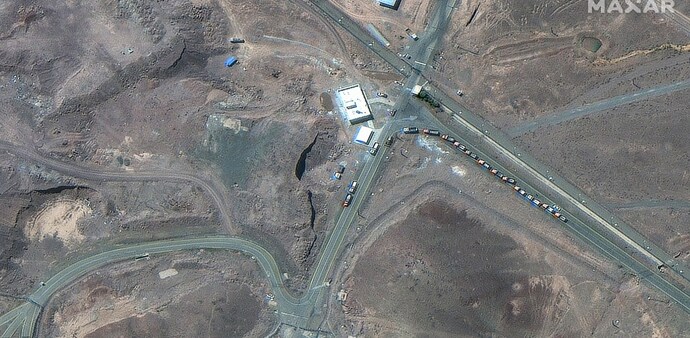
"IMPORTANT: Prior to the US strikes at Fordow, imagery shows a possible logistics shuffle underway at the site, multiple trucks/heavy machinery were gathered at tunnel entrance of the facility on June 19-20th, 2025," Symon, a well-known researcher tracking military infrastructure, posted on X.
Symon's post came after John Pollock, who handles communications for the UK-based think tank Chatham House, posted satellite images from Maxar, saying. "This seems important. Before the US strikes on Esfahan, Natanz, and Fordow, Maxar satellite images showed a possible increase in logistics at Fordow - 16 trucks gathered on 19-20 June with heavy machinery near the entrance to the main facility."
In a follow-up post, Symon added: "This activity may suggest that Iran, anticipating a strike, has started reinforcing the facility possibly by moving in materials to strengthen tunnels or seal the site in preparation of a fallout."
The images have triggered speculation online that Iran may have tried to move advanced centrifuges or key components out of Fordow before the US strike. Technically, it is possible, but such a move is logistically complex and time-consuming. Centrifuges are sensitive machines that must be disassembled with care, secured during transit, and reinstalled in highly controlled environments. Fordow's location — 80 to 90 metres underground in a mountain — adds to the challenge.
The International Atomic Energy Agency (IAEA) issued a brief update on X confirming: "Following attacks on three nuclear sites in Iran — including Fordow — the IAEA can confirm that no increase in off-site radiation levels has been reported as of this time. IAEA will provide further assessments on situation in Iran as more information becomes available."
Fordow is one of the most heavily fortified nuclear enrichment sites in Iran. Built secretly and later revealed by US, Britain, and France in 2009, the underground facility houses around 2,000 centrifuges, most of them advanced IR-6 machines, according to Reuters. Before the US strikes, about 350 of them were enriching uranium to levels as high as 60% — just short of weapons-grade enrichment.
Under the 2015 Joint Comprehensive Plan of Action (JCPOA), Iran had agreed not to carry out enrichment activities at Fordow. That restriction has since lapsed.
While there is no confirmation yet on whether Iran moved centrifuges ahead of the strike, it has done so before. In April 2022, Sputnik International reported that Iran had moved centrifuge machines to secure locations ahead of the one-year anniversary of the act of sabotage against the TESA Karaj centrifuge-manufacturing workshop outside Tehran. "Given their high significance, centrifuge machines were moved to a safer location and are now in operation," Kamalvandi had then said while speaking to Iran's al-Alam television.
Damien Symon, a geo-intelligence researcher, on Sunday flagged satellite images suggesting that Iran may have moved critical equipment or reinforced its Fordow nuclear facility in the hours before the US carried out airstrikes on June 22.
"IMPORTANT: Prior to the US strikes at Fordow, imagery shows a possible logistics shuffle underway at the site, multiple trucks/heavy machinery were gathered at tunnel entrance of the facility on June 19-20th, 2025," Symon, a well-known researcher tracking military infrastructure, posted on X.
Symon's post came after John Pollock, who handles communications for the UK-based think tank Chatham House, posted satellite images from Maxar, saying. "This seems important. Before the US strikes on Esfahan, Natanz, and Fordow, Maxar satellite images showed a possible increase in logistics at Fordow - 16 trucks gathered on 19-20 June with heavy machinery near the entrance to the main facility."
In a follow-up post, Symon added: "This activity may suggest that Iran, anticipating a strike, has started reinforcing the facility possibly by moving in materials to strengthen tunnels or seal the site in preparation of a fallout."
The images have triggered speculation online that Iran may have tried to move advanced centrifuges or key components out of Fordow before the US strike. Technically, it is possible, but such a move is logistically complex and time-consuming. Centrifuges are sensitive machines that must be disassembled with care, secured during transit, and reinstalled in highly controlled environments. Fordow's location — 80 to 90 metres underground in a mountain — adds to the challenge.
The International Atomic Energy Agency (IAEA) issued a brief update on X confirming: "Following attacks on three nuclear sites in Iran — including Fordow — the IAEA can confirm that no increase in off-site radiation levels has been reported as of this time. IAEA will provide further assessments on situation in Iran as more information becomes available."
Fordow is one of the most heavily fortified nuclear enrichment sites in Iran. Built secretly and later revealed by US, Britain, and France in 2009, the underground facility houses around 2,000 centrifuges, most of them advanced IR-6 machines, according to Reuters. Before the US strikes, about 350 of them were enriching uranium to levels as high as 60% — just short of weapons-grade enrichment.
Under the 2015 Joint Comprehensive Plan of Action (JCPOA), Iran had agreed not to carry out enrichment activities at Fordow. That restriction has since lapsed.
While there is no confirmation yet on whether Iran moved centrifuges ahead of the strike, it has done so before. In April 2022, Sputnik International reported that Iran had moved centrifuge machines to secure locations ahead of the one-year anniversary of the act of sabotage against the TESA Karaj centrifuge-manufacturing workshop outside Tehran. "Given their high significance, centrifuge machines were moved to a safer location and are now in operation," Kamalvandi had then said while speaking to Iran's al-Alam television.