
'Diplomatic catastrophe for Taliban': Ex-Afghan VP on Doha ceasefire with Pakistan
On Sunday, Qatar announced that Pakistan and Afghanistan agreed to an immediate ceasefire following a week of deadly border clashes — the bloodiest since the Taliban seized power in 2021.
- Oct 19, 2025,
- Updated Oct 19, 2025 11:16 AM IST
Former Afghan vice president Amrullah Saleh on Sunday described the Doha ceasefire agreement between Pakistan and Afghanistan as a "diplomatic catastrophe" for the Taliban, warning that Islamabad had "trapped" the group into legitimising Pakistan's long-standing claims about cross-border militancy.
"The Taliban couldn't refuse or say no to talks with Pakistan in Doha or impose preconditions. Qatar is seen as the venue and the authority that issued the certificate of rule for the Taliban," Saleh said in a post on X.
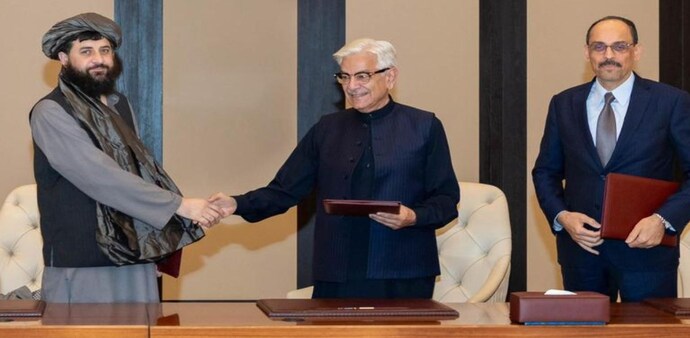
On Sunday, Qatar announced that Pakistan and Afghanistan agreed to an immediate ceasefire following a week of deadly border clashes — the bloodiest since the Taliban seized power in 2021. Qatar's foreign ministry confirmed that both sides accepted an immediate truce during talks in Doha co-mediated by Türkiye.
Explaining what he called Pakistan's "trap," Saleh said: "If the Kandahari Taliban represented the TTP in the talks—then they have to work with Pakistan to dismantle it. If the Kandahari Taliban didn’t represent the TTP in the Doha talks, then they have to work with Pakistan's GHQ to defeat it — defeat the common threat."
"Pakistan masterfully internationalized its claim that the Afghan Taliban harbor terrorists either by will or due to lack of strength. In either case, the implementation of this agreement, which involves Türkiye as a mediator, will prove a diplomatic catastrophe for the Taliban," he added.
The ceasefire followed spiraling violence along the 2,600-km border, including a suicide bombing on Friday near the frontier that killed seven Pakistani soldiers and wounded 13 others. Pakistan's army chief, Field Marshal Asim Munir, had accused the Taliban regime of harboring militants responsible for the attacks, while Afghanistan's Defence Minister Mullah Muhammad Yaqoob denied the charge, blaming Islamabad for supporting Islamic State-linked groups.
Islamabad's delegation, led by Defence Minister Khawaja Muhammad Asif, said the talks focused on "ending cross-border terrorism against Pakistan."
Saleh said the Tehrik-i-Taliban Pakistan (TTP) remained the "spoiler in the puzzle," noting its absence from the Doha discussions. "Who owned and represented the TTP as an asset, and who sees them as an Afghanistan-based threat against Pakistan, will be the boldest part of the implementation phase," he said.
He added that the Taliban now faced a critical dilemma in the implementation of the agreement: "The Afghan Taliban either work jointly with the GHQ to defeat them or represents their interest in the implementation phase. In the end, the Taliban will remain in the orbit of Pakistan — if not by will, but by compulsion."
Former Afghan vice president Amrullah Saleh on Sunday described the Doha ceasefire agreement between Pakistan and Afghanistan as a "diplomatic catastrophe" for the Taliban, warning that Islamabad had "trapped" the group into legitimising Pakistan's long-standing claims about cross-border militancy.
"The Taliban couldn't refuse or say no to talks with Pakistan in Doha or impose preconditions. Qatar is seen as the venue and the authority that issued the certificate of rule for the Taliban," Saleh said in a post on X.
On Sunday, Qatar announced that Pakistan and Afghanistan agreed to an immediate ceasefire following a week of deadly border clashes — the bloodiest since the Taliban seized power in 2021. Qatar's foreign ministry confirmed that both sides accepted an immediate truce during talks in Doha co-mediated by Türkiye.
Explaining what he called Pakistan's "trap," Saleh said: "If the Kandahari Taliban represented the TTP in the talks—then they have to work with Pakistan to dismantle it. If the Kandahari Taliban didn’t represent the TTP in the Doha talks, then they have to work with Pakistan's GHQ to defeat it — defeat the common threat."
"Pakistan masterfully internationalized its claim that the Afghan Taliban harbor terrorists either by will or due to lack of strength. In either case, the implementation of this agreement, which involves Türkiye as a mediator, will prove a diplomatic catastrophe for the Taliban," he added.
The ceasefire followed spiraling violence along the 2,600-km border, including a suicide bombing on Friday near the frontier that killed seven Pakistani soldiers and wounded 13 others. Pakistan's army chief, Field Marshal Asim Munir, had accused the Taliban regime of harboring militants responsible for the attacks, while Afghanistan's Defence Minister Mullah Muhammad Yaqoob denied the charge, blaming Islamabad for supporting Islamic State-linked groups.
Islamabad's delegation, led by Defence Minister Khawaja Muhammad Asif, said the talks focused on "ending cross-border terrorism against Pakistan."
Saleh said the Tehrik-i-Taliban Pakistan (TTP) remained the "spoiler in the puzzle," noting its absence from the Doha discussions. "Who owned and represented the TTP as an asset, and who sees them as an Afghanistan-based threat against Pakistan, will be the boldest part of the implementation phase," he said.
He added that the Taliban now faced a critical dilemma in the implementation of the agreement: "The Afghan Taliban either work jointly with the GHQ to defeat them or represents their interest in the implementation phase. In the end, the Taliban will remain in the orbit of Pakistan — if not by will, but by compulsion."