
Empty pumps, endless lines: Ukraine's drone strikes choke Russian fuel output to 20-year low
Data from energy analysts shows that Russia’s crude processing collapsed by 25 percent year-on-year, dropping to 3.95 million barrels per day — the lowest operational volume recorded in over two decades.
- Jul 3, 2026,
- Updated Jul 3, 2026 5:02 PM IST
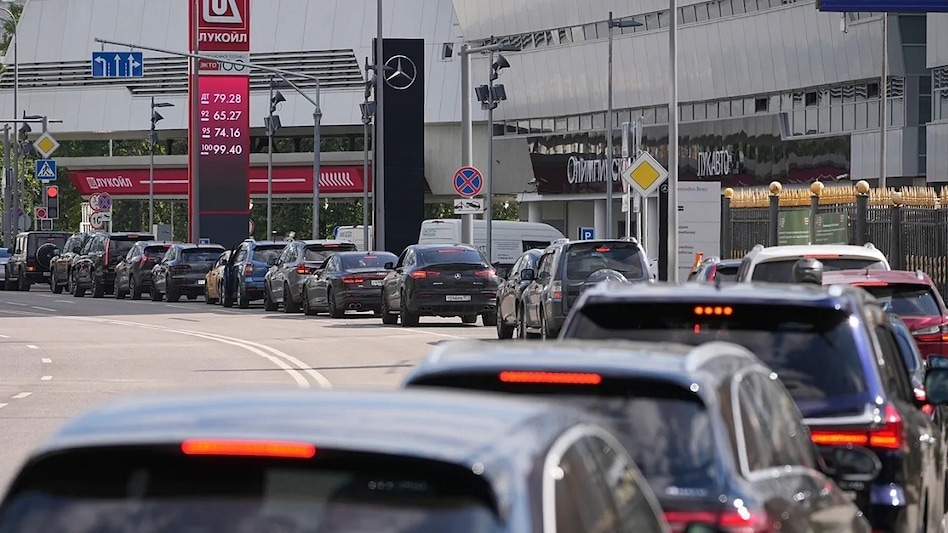
Signs reading "We are sorry, the equipment is temporarily out of service" now hang on gas pump nozzles across Moscow. Following months of persistent Ukrainian drone strikes targeted at oil refineries and supply depots, Russia is grappling with an unprecedented domestic fuel shortage that has forced widespread rationing, caused skyrocketing prices, and triggered long queues at petrol stations.
The operational reality has brought the physical costs of the war directly to ordinary citizens, prompting a rare public acknowledgment from the Kremlin.
"Problems persist for both motorists and businesses," President Vladimir Putin said. "There are still queues at petrol stations, and finding the right grade of petrol isn't always easy."
Industrial outages at historical lows
While Putin maintained that the shortages were "not critical" and "temporary," industry data reveals significant structural damage. An analysis indicates that Ukraine has launched more than 50 targeted attacks on Russian oil refineries, terminals, and energy infrastructure, hitting several key facilities multiple times.
The compounding impact on production has been stark. Data from energy analysts shows that Russia’s crude processing collapsed by 25 percent year-on-year, dropping to 3.95 million barrels per day — the lowest operational volume recorded in over two decades.
Concurrently, gasoline production fell to about 850,000 barrels per day, creating an acute supply deficit during peak summer demand. Approximately one-third of Russia’s entire refining capacity is estimated to be currently offline, hitting at a critical time for the economy as the agricultural harvest season heavily drives up fuel demand.
Emergency fuel from India
In a rare reversal of global energy dynamics, Russia has begun importing refined gasoline from India by sea to manage this domestic deficit. Industry sources confirm that India has already dispatched at least 60,000 metric tonnes of gasoline, with two tankers carrying cargoes of 30,000 to 40,000 tonnes currently en route. The development marks a striking economic loop: India, a major buyer of discounted Russian crude oil, is now refining raw product and exporting it back to Moscow as finished fuel.
To facilitate these emergency shipments, the Russian parliament approved critical amendments to the national tax code. The new legislation introduces state budget subsidies for fuel imports, with the financial relief explicitly calculated based on Indian port delivery costs and baseline prices.
Kremlin spokesman Dmitry Peskov confirmed that Russia is in active discussions with foreign partners to stabilize the retail market and curb panic-buying. Moscow reportedly plans to secure a total of 400,000 metric tonnes of imported gasoline each month from international suppliers to close its domestic demand gap. Alongside shipments from India, neighboring Belarus has accelerated its supply, nearly tripling its rail exports to Russia.
Domestic rationing & Slow repairs
The domestic fallout has expanded rapidly, with fuel restrictions now active in more than 50 Russian regions. The shortages have rippled deep into Siberian hubs like Irkutsk, where local authorities have implemented strict queue-management systems at fuel hubs and raised public transit fares to offset rising energy costs.
In response to the widening crunch, the government has banned gasoline and aviation fuel exports, and officials are actively considering extending the restriction to diesel.
Though Putin emphasised that national gasoline reserves remain only 4 percent lower than last year, market experts note that distribution bottlenecks remain severe. Getting the fuel from where it is stored to where it is needed is expected to take several weeks.
Signs reading "We are sorry, the equipment is temporarily out of service" now hang on gas pump nozzles across Moscow. Following months of persistent Ukrainian drone strikes targeted at oil refineries and supply depots, Russia is grappling with an unprecedented domestic fuel shortage that has forced widespread rationing, caused skyrocketing prices, and triggered long queues at petrol stations.
The operational reality has brought the physical costs of the war directly to ordinary citizens, prompting a rare public acknowledgment from the Kremlin.
"Problems persist for both motorists and businesses," President Vladimir Putin said. "There are still queues at petrol stations, and finding the right grade of petrol isn't always easy."
Industrial outages at historical lows
While Putin maintained that the shortages were "not critical" and "temporary," industry data reveals significant structural damage. An analysis indicates that Ukraine has launched more than 50 targeted attacks on Russian oil refineries, terminals, and energy infrastructure, hitting several key facilities multiple times.
The compounding impact on production has been stark. Data from energy analysts shows that Russia’s crude processing collapsed by 25 percent year-on-year, dropping to 3.95 million barrels per day — the lowest operational volume recorded in over two decades.
Concurrently, gasoline production fell to about 850,000 barrels per day, creating an acute supply deficit during peak summer demand. Approximately one-third of Russia’s entire refining capacity is estimated to be currently offline, hitting at a critical time for the economy as the agricultural harvest season heavily drives up fuel demand.
Emergency fuel from India
In a rare reversal of global energy dynamics, Russia has begun importing refined gasoline from India by sea to manage this domestic deficit. Industry sources confirm that India has already dispatched at least 60,000 metric tonnes of gasoline, with two tankers carrying cargoes of 30,000 to 40,000 tonnes currently en route. The development marks a striking economic loop: India, a major buyer of discounted Russian crude oil, is now refining raw product and exporting it back to Moscow as finished fuel.
To facilitate these emergency shipments, the Russian parliament approved critical amendments to the national tax code. The new legislation introduces state budget subsidies for fuel imports, with the financial relief explicitly calculated based on Indian port delivery costs and baseline prices.
Kremlin spokesman Dmitry Peskov confirmed that Russia is in active discussions with foreign partners to stabilize the retail market and curb panic-buying. Moscow reportedly plans to secure a total of 400,000 metric tonnes of imported gasoline each month from international suppliers to close its domestic demand gap. Alongside shipments from India, neighboring Belarus has accelerated its supply, nearly tripling its rail exports to Russia.
Domestic rationing & Slow repairs
The domestic fallout has expanded rapidly, with fuel restrictions now active in more than 50 Russian regions. The shortages have rippled deep into Siberian hubs like Irkutsk, where local authorities have implemented strict queue-management systems at fuel hubs and raised public transit fares to offset rising energy costs.
In response to the widening crunch, the government has banned gasoline and aviation fuel exports, and officials are actively considering extending the restriction to diesel.
Though Putin emphasised that national gasoline reserves remain only 4 percent lower than last year, market experts note that distribution bottlenecks remain severe. Getting the fuel from where it is stored to where it is needed is expected to take several weeks.