
Explained: Why Poland, Italy did not join Board of Peace, why US allies are staying away from Trump's brainchild, and more
This digital explainer tells the story in simple terms, starting with the opt-outs and covering who's in, who's out, and why—especially among Trump's allies.
- Feb 12, 2026,
- Updated Feb 12, 2026 11:14 AM IST
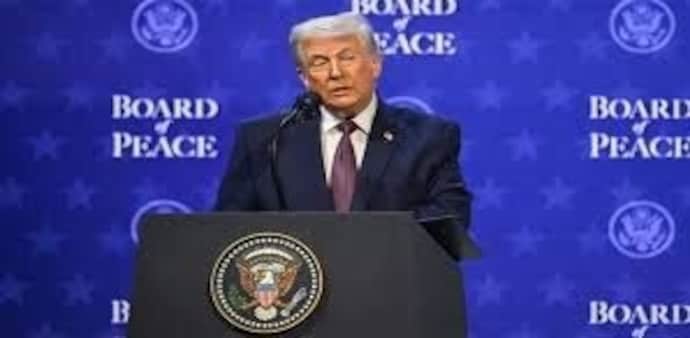
Poland and Italy have declined to join US President Donald Trump's new Board of Peace for Gaza, raising questions about its future. This digital explainer tells the story in simple terms, starting with the opt-outs and covering who's in, who's out, and why—especially among Trump's allies. It highlights tensions over the board's broad powers, Trump's leadership, and invitations to nations like Russia.
Why are Poland and Italy not joining the Board of Peace?
Poland's Prime Minister Donald Tusk cited national doubts about the board's structure. Italy's Foreign Minister Antonio Tajani pointed to a constitutional barrier: Italy can only join groups where all members have equal power, but Trump's extensive executive role violates that. Italian PM Giorgia Meloni, a Trump ally, called for changes but remains open.
What is the Board of Peace?
Launched by Trump, it's meant to enforce a 20-point Gaza ceasefire plan and promote global cooperation. Trump heads it and sees it expanding beyond Gaza to rival the UN. He invited many leaders last week; permanent spots cost $1 billion, while three-year memberships are free.
Which countries have joined?
Countries that have joined the Board of Peace include Argentina, Belarus, Morocco, Vietnam, Pakistan, Kazakhstan, Uzbekistan, Kosovo, Hungary, Egypt, Turkey, Qatar, Jordan, Indonesia, and Saudi Arabia. These span regions, including some US rivals like Belarus invited alongside Russia.
Why aren't Trump's allies like Poland and Italy joining?
Many Western allies fear it undermines the UN or gives Trump unchecked power. Poland worries about its unclear role; Italy faces legal hurdles. Even Meloni, Trump's friend, seeks tweaks for constitutionality. Others delay due to parliamentary approvals or costs.
What's Germany's stance?
Germany is interested but hasn't joined. Chancellor Friedrich Merz skipped the signing due to travel and stressed the UN's key role.
What about Japan, South Korea, the UK, and Canada?
- Japan: Examining details but supports Middle East peace.
- South Korea: Reviewing positively; likely to join soon.
- UK: Wary of Russia's invite amid Ukraine war; will aid Gaza rebuild anyway.
- Canada: PM Mark Carney questions the use of a $1 billion fee and prioritises Gaza aid flows.
Why the cautious Western approach?
Invites to Russia and Belarus despite Ukraine tensions spook Europe. Some see it as a Trump power play over the UN, with legal, financial, or approval delays holding others back.
Poland and Italy have declined to join US President Donald Trump's new Board of Peace for Gaza, raising questions about its future. This digital explainer tells the story in simple terms, starting with the opt-outs and covering who's in, who's out, and why—especially among Trump's allies. It highlights tensions over the board's broad powers, Trump's leadership, and invitations to nations like Russia.
Why are Poland and Italy not joining the Board of Peace?
Poland's Prime Minister Donald Tusk cited national doubts about the board's structure. Italy's Foreign Minister Antonio Tajani pointed to a constitutional barrier: Italy can only join groups where all members have equal power, but Trump's extensive executive role violates that. Italian PM Giorgia Meloni, a Trump ally, called for changes but remains open.
What is the Board of Peace?
Launched by Trump, it's meant to enforce a 20-point Gaza ceasefire plan and promote global cooperation. Trump heads it and sees it expanding beyond Gaza to rival the UN. He invited many leaders last week; permanent spots cost $1 billion, while three-year memberships are free.
Which countries have joined?
Countries that have joined the Board of Peace include Argentina, Belarus, Morocco, Vietnam, Pakistan, Kazakhstan, Uzbekistan, Kosovo, Hungary, Egypt, Turkey, Qatar, Jordan, Indonesia, and Saudi Arabia. These span regions, including some US rivals like Belarus invited alongside Russia.
Why aren't Trump's allies like Poland and Italy joining?
Many Western allies fear it undermines the UN or gives Trump unchecked power. Poland worries about its unclear role; Italy faces legal hurdles. Even Meloni, Trump's friend, seeks tweaks for constitutionality. Others delay due to parliamentary approvals or costs.
What's Germany's stance?
Germany is interested but hasn't joined. Chancellor Friedrich Merz skipped the signing due to travel and stressed the UN's key role.
What about Japan, South Korea, the UK, and Canada?
- Japan: Examining details but supports Middle East peace.
- South Korea: Reviewing positively; likely to join soon.
- UK: Wary of Russia's invite amid Ukraine war; will aid Gaza rebuild anyway.
- Canada: PM Mark Carney questions the use of a $1 billion fee and prioritises Gaza aid flows.
Why the cautious Western approach?
Invites to Russia and Belarus despite Ukraine tensions spook Europe. Some see it as a Trump power play over the UN, with legal, financial, or approval delays holding others back.