
Global refining capacity is becoming a key factor in fuel-market security
Global refining capacity is set to expand significantly over the next five years, with new projects concentrated in Asia and Africa. The shift could alter regional fuel trade flows as some markets add capacity while others face refinery closures.
- Oct 5, 2026,
- Updated Oct 5, 2026 2:15 AM IST
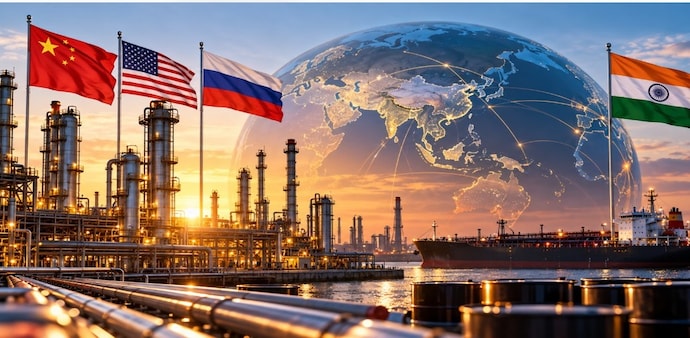
Global refining capacity is emerging as an important factor in fuel-market security, with a relatively small group of countries accounting for a significant share of the world's ability to process crude oil into finished petroleum products.
China accounts for 18.1 per cent of global refining capacity, followed by the United States at 17.5 per cent and Russia at 6.5 per cent, according to the data in the supplied graphic. Together, the three countries account for 42.1 per cent of global refining capacity.
Refining capacity determines how much crude can be processed into products such as diesel, gasoline and jet fuel. Changes in refinery operations, domestic demand or export policies can therefore affect the availability of finished products in international markets.
Recent developments have brought this into focus. The US considered restrictions on diesel exports, including a possible 90-day blanket ban, before the proposal was subsequently dropped. China paused fuel exports for October, while PetroChina cancelled gasoline and jet fuel cargoes. Russia also extended its diesel export ban, according to the information provided.
The developments come as the global refining industry is also preparing for a significant expansion in capacity.
BloombergNEF (BNEF) projects 4.2 million barrels per day (mb/d) of net refining-capacity additions between 2026 and 2030, 162 per cent higher than the additions recorded during the preceding five-year period. If projects come online as planned, the increase could result in an oversupply of refining capacity in some markets.
MUST READ: Europe enters winter with gas storage at 71%, raising fears of supply shortages and higher prices
India and China to drive near-term additions
Africa and Asia Pacific are expected to account for about 95 per cent of global net capacity growth, with investments driven by rising demand, import substitution and export-oriented and petrochemical-integrated refineries.
India and China together are expected to account for 71 per cent of additions in 2026 and 2027, with much of the near-term capacity already operational or under construction, according to BNEF.
ALSO READ: Vedanta Power posts record Q2 sales, up 26% YoY; H1 sales rise 32% to 10,817 MU
India currently accounts for 4.7 per cent of global refining capacity, ranking fourth in the supplied chart after China, the US and Russia. South Korea has 3.4 per cent, while Saudi Arabia accounts for 3.2 per cent.
Global refining capacity: Key numbers
| Country/Region | Share of global refining capacity | Key point |
|---|---|---|
| China | 18.1% | Largest refining capacity; part of major near-term capacity additions |
| United States | 17.5% | Second-largest refining base; potential refinery closures could alter supply |
| Russia | 6.5% | Third-largest refining capacity |
| India | 4.7% | Fourth-largest; India and China expected to account for 71% of additions in 2026-27 |
| South Korea | 3.4% | Among the larger refining centres globally |
| Saudi Arabia | 3.2% | Significant refining base |
| Germany | 1.9% | Smaller refining share; part of Europe's refining base |
| Italy | 1.6% | Smaller global refining share |
| Spain | 1.5% | Smaller global refining share |
Europe faces a different refining outlook
Europe has a much smaller share of global refining capacity. Germany accounts for 1.9 per cent, Italy 1.6 per cent and Spain 1.5 per cent.
This can increase the region's reliance on imported refined products when domestic refinery capacity is insufficient or plants face disruptions. At the same time, BNEF expects further refinery closures in Europe and the US, potentially altering regional product trade flows.
ALSO READ: Nayara Energy hikes fuel prices: Petrol up Rs 5, diesel Rs 3 amid crude, retail fuel losses
Global capacity expansion outlook
| Indicator | Outlook |
|---|---|
| Net capacity additions, 2026-30 | 4.2 million b/d |
| Increase vs preceding five-year period | 162% |
| Share of global growth from Africa & Asia Pacific | ~95% |
| India + China share of additions in 2026-27 | 71% |
The longer-term capacity outlook is also uncertain. A larger proportion of projects scheduled for 2028-2030 remains at earlier development stages, increasing the possibility of delays or cancellations.
The global refining market is therefore facing two contrasting trends: a large pipeline of new capacity concentrated in Asia and Africa, alongside potential closures in mature markets. The resulting changes could reshape regional fuel trade, refinery utilisation and the balance between domestic supply and imports over the coming years.
Global refining capacity is emerging as an important factor in fuel-market security, with a relatively small group of countries accounting for a significant share of the world's ability to process crude oil into finished petroleum products.
China accounts for 18.1 per cent of global refining capacity, followed by the United States at 17.5 per cent and Russia at 6.5 per cent, according to the data in the supplied graphic. Together, the three countries account for 42.1 per cent of global refining capacity.
Refining capacity determines how much crude can be processed into products such as diesel, gasoline and jet fuel. Changes in refinery operations, domestic demand or export policies can therefore affect the availability of finished products in international markets.
Recent developments have brought this into focus. The US considered restrictions on diesel exports, including a possible 90-day blanket ban, before the proposal was subsequently dropped. China paused fuel exports for October, while PetroChina cancelled gasoline and jet fuel cargoes. Russia also extended its diesel export ban, according to the information provided.
The developments come as the global refining industry is also preparing for a significant expansion in capacity.
BloombergNEF (BNEF) projects 4.2 million barrels per day (mb/d) of net refining-capacity additions between 2026 and 2030, 162 per cent higher than the additions recorded during the preceding five-year period. If projects come online as planned, the increase could result in an oversupply of refining capacity in some markets.
MUST READ: Europe enters winter with gas storage at 71%, raising fears of supply shortages and higher prices
India and China to drive near-term additions
Africa and Asia Pacific are expected to account for about 95 per cent of global net capacity growth, with investments driven by rising demand, import substitution and export-oriented and petrochemical-integrated refineries.
India and China together are expected to account for 71 per cent of additions in 2026 and 2027, with much of the near-term capacity already operational or under construction, according to BNEF.
ALSO READ: Vedanta Power posts record Q2 sales, up 26% YoY; H1 sales rise 32% to 10,817 MU
India currently accounts for 4.7 per cent of global refining capacity, ranking fourth in the supplied chart after China, the US and Russia. South Korea has 3.4 per cent, while Saudi Arabia accounts for 3.2 per cent.
Global refining capacity: Key numbers
| Country/Region | Share of global refining capacity | Key point |
|---|---|---|
| China | 18.1% | Largest refining capacity; part of major near-term capacity additions |
| United States | 17.5% | Second-largest refining base; potential refinery closures could alter supply |
| Russia | 6.5% | Third-largest refining capacity |
| India | 4.7% | Fourth-largest; India and China expected to account for 71% of additions in 2026-27 |
| South Korea | 3.4% | Among the larger refining centres globally |
| Saudi Arabia | 3.2% | Significant refining base |
| Germany | 1.9% | Smaller refining share; part of Europe's refining base |
| Italy | 1.6% | Smaller global refining share |
| Spain | 1.5% | Smaller global refining share |
Europe faces a different refining outlook
Europe has a much smaller share of global refining capacity. Germany accounts for 1.9 per cent, Italy 1.6 per cent and Spain 1.5 per cent.
This can increase the region's reliance on imported refined products when domestic refinery capacity is insufficient or plants face disruptions. At the same time, BNEF expects further refinery closures in Europe and the US, potentially altering regional product trade flows.
ALSO READ: Nayara Energy hikes fuel prices: Petrol up Rs 5, diesel Rs 3 amid crude, retail fuel losses
Global capacity expansion outlook
| Indicator | Outlook |
|---|---|
| Net capacity additions, 2026-30 | 4.2 million b/d |
| Increase vs preceding five-year period | 162% |
| Share of global growth from Africa & Asia Pacific | ~95% |
| India + China share of additions in 2026-27 | 71% |
The longer-term capacity outlook is also uncertain. A larger proportion of projects scheduled for 2028-2030 remains at earlier development stages, increasing the possibility of delays or cancellations.
The global refining market is therefore facing two contrasting trends: a large pipeline of new capacity concentrated in Asia and Africa, alongside potential closures in mature markets. The resulting changes could reshape regional fuel trade, refinery utilisation and the balance between domestic supply and imports over the coming years.