
'Hormuz isn't social media where you can...': Iran mocks US blockade as ships continue to pass
The US began implementing the blockade on Monday, targeting vessels moving to and from Iranian ports, in a bid to hit Iran's revenues
- Apr 14, 2026,
- Updated Apr 14, 2026 6:47 PM IST
Iran stepped up its rhetoric a day after the United States began enforcing a blockade of ships entering and exiting Iranian ports via the Strait of Hormuz. Tehran has mocked the US naval blockade move in social media posts.
Must Read: 'No clear direction of...': 14 ships cross Strait of Hormuz since US blockade
"The Strait of Hormuz isn’t social media. If someone blocks you, you can't just block them back," Iran's Consulate in Hyderabad said, in an apparent swipe at Washington's attempt to restrict maritime traffic linked to Tehran.
Must Read: $435 million daily blow: US blockade of Hormuz threatens Iran's trade lifeline
The US began implementing the blockade on Monday, targeting vessels moving to and from Iranian ports, in a bid to hit Iran's revenues. The move comes as Iran has restricted shipments from and to Gulf countries in the strait while continuing its own oil exports to select countries, including China.
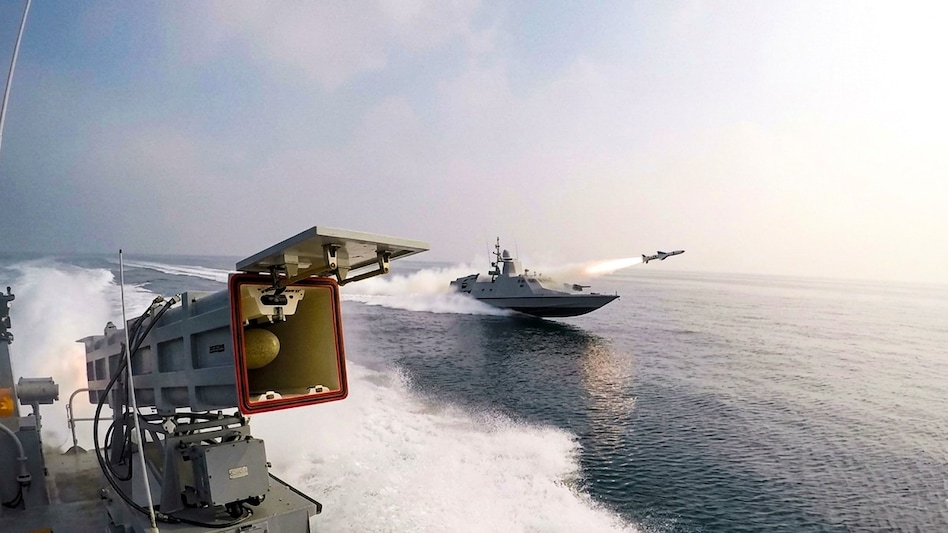
After US President Donald Trump announced a blockade, Tehran suggested that its missile boats would target any approaching navy ships.
Iran's Consulate General in Mumbai warned: "Red bees of the #PersianGulf" yeah, the fast missile boats are warming up. Funny how #Trump kept claiming #Iran's navy was "finished"…now they're about to find out how a swarm can pin you down real quick. Abhi toh sirf trailer hai, picture abhi baaki hai".
Another post, from an Iranian diplomatic handle in Ghana, appeared to mock the blockade's enforcement, claiming a sanctioned tanker had transited the strait despite US warnings.
Martin Kelly, Head of Advisory at EOS Risk Group, said on Tuesday that at least 14 ships had transited the Strait of Hormuz since April 13, including vessels linked to sanctioned trade and Iran-related cargo.
"There is no real clear direction of what the blockade looks like. The location of US assets is unknown, and it is unknown where the interdictions will take place," Kelly said, adding that some ships had altered course or briefly turned back before resuming transit. He noted that certain vessels appeared to adjust speed or routes, possibly to avoid interception.
Iran stepped up its rhetoric a day after the United States began enforcing a blockade of ships entering and exiting Iranian ports via the Strait of Hormuz. Tehran has mocked the US naval blockade move in social media posts.
Must Read: 'No clear direction of...': 14 ships cross Strait of Hormuz since US blockade
"The Strait of Hormuz isn’t social media. If someone blocks you, you can't just block them back," Iran's Consulate in Hyderabad said, in an apparent swipe at Washington's attempt to restrict maritime traffic linked to Tehran.
Must Read: $435 million daily blow: US blockade of Hormuz threatens Iran's trade lifeline
The US began implementing the blockade on Monday, targeting vessels moving to and from Iranian ports, in a bid to hit Iran's revenues. The move comes as Iran has restricted shipments from and to Gulf countries in the strait while continuing its own oil exports to select countries, including China.
After US President Donald Trump announced a blockade, Tehran suggested that its missile boats would target any approaching navy ships.
Iran's Consulate General in Mumbai warned: "Red bees of the #PersianGulf" yeah, the fast missile boats are warming up. Funny how #Trump kept claiming #Iran's navy was "finished"…now they're about to find out how a swarm can pin you down real quick. Abhi toh sirf trailer hai, picture abhi baaki hai".
Another post, from an Iranian diplomatic handle in Ghana, appeared to mock the blockade's enforcement, claiming a sanctioned tanker had transited the strait despite US warnings.
Martin Kelly, Head of Advisory at EOS Risk Group, said on Tuesday that at least 14 ships had transited the Strait of Hormuz since April 13, including vessels linked to sanctioned trade and Iran-related cargo.
"There is no real clear direction of what the blockade looks like. The location of US assets is unknown, and it is unknown where the interdictions will take place," Kelly said, adding that some ships had altered course or briefly turned back before resuming transit. He noted that certain vessels appeared to adjust speed or routes, possibly to avoid interception.