
Hormuz: Open or closed? Iran strikes US bases in Kuwait, Qatar, Bahrain, Jordan after fresh attacks
Tehran announced it had hit American Patriot missile systems, ammunition depots and drone infrastructure at US bases spread across five countries
- Jul 13, 2026,
- Updated Jul 13, 2026 11:53 AM IST
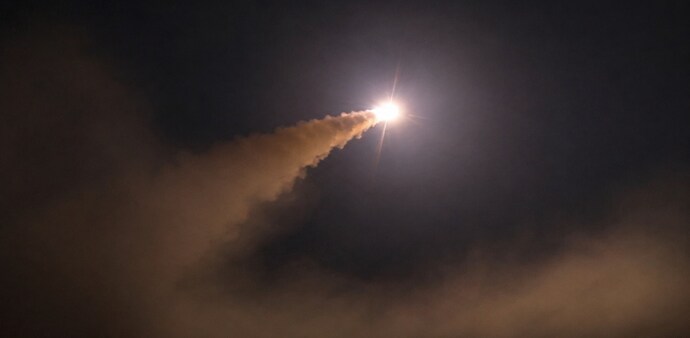
Iran and the United States traded strikes across the Gulf on Sunday in one of the most serious escalations since the conflict began in February. Tehran announced it had hit American Patriot missile systems, ammunition depots and drone infrastructure at US bases spread across five countries. Washington said its forces had already struck Iranian air defence sites, missile capabilities and IRGC speedboats near the Strait of Hormuz hours earlier.
Explosions were heard in Iran's southern port city of Bandar Abbas. Qeshm Island also came under attack.
What Iran struck and where
In a coordinated offensive spanning Kuwait, Bahrain, Qatar, Oman and Jordan, Iran's Islamic Revolutionary Guard Corps said it had gone after American military infrastructure across the region.
DON'T MISS: US-Iran war: Oil prices rise amid intensified attacks, only 6 vessels pass through Hormuz on Sunday
The IRGC stated: "In response to the continued criminal American aggression against areas in the south of the country, the Islamic Republic of Iran's army, hours ago, targeted the Patriot system, ammunition depot, and radar site of the terrorist American army in Kuwait with its destructive drones."
Iranian aerospace forces also carried out what they described as a "heavy attack" on US aircraft carrier support and refuelling platforms at the port of Duqm in Oman. The IRGC claimed ballistic missile strikes on the Al Udeid Air Base in Qatar destroyed a fighter jet maintenance centre and a command-and-control facility. At Jordan's Prince Hassan Air Base, missiles and drones set fuel tanks and ammunition depots on fire. The US military base at Sheikh Isa in Bahrain was also struck, along with communications systems and radar installations.
Tehran issued a direct warning to Washington: "The consequences of such movements and insecurity in the region will be borne by the American-Zionist enemy, and if these attacks are repeated, we will respond more severely."
What the US did
US Central Command said American forces struck dozens of targets on Sunday using fighter aircraft, naval vessels, one-way attack drones and unmanned sea drones. The operation targeted Iranian air defence systems, coastal radar installations, missile and drone capabilities and small naval boats, all aimed, CENTCOM said, at further degrading Iran's ability to threaten civilian shipping through the Strait of Hormuz.
CENTCOM spokesperson Tim Hawkins told CNN that US aircraft also intercepted and destroyed an Iranian cruise missile and a one-way attack drone.
President Donald Trump, speaking to Reuters, offered a blunt summary of the operations: "We're beating them up."
ALSO READ: We're beating them up': Trump as US strikes IRGC boats, missiles around Strait of Hormuz
The Gulf caught in the middle
The breadth of Sunday's strikes pulled several countries directly into the conflict. Qatar, which had not been targeted since April and had been playing a mediating role in ceasefire talks, was hit. Three people, including a child, were injured by falling debris. Qatar held Iran "fully legally responsible" for the attack.
The UAE said its air defence systems engaged Iranian missiles and drones. Bahrain reported intercepting multiple aerial attacks. Jordan confirmed missile strikes. Oman reported drone attacks and summoned Iran's ambassador to protest. Kuwait said one worker was injured after an oil drilling platform was struck. The US Embassy in Oman advised American citizens in Duqm and Musandam to shelter in place.
Hormuz: Open or closed?
The renewed fighting has deepened uncertainty around the Strait of Hormuz. Iran's recently established Persian Gulf Strait Authority declared that transit through the strait was currently impossible, citing "recent illegal movements of the United States military forces in the region."
The US pushed back flatly. "Iran does not control the strait. Traffic is flowing," US officials said. The US Navy-led Joint Maritime Information Center advised commercial vessels that an expanded southern route near Oman remained open for two-way navigation despite the security threat.
Iran and the United States traded strikes across the Gulf on Sunday in one of the most serious escalations since the conflict began in February. Tehran announced it had hit American Patriot missile systems, ammunition depots and drone infrastructure at US bases spread across five countries. Washington said its forces had already struck Iranian air defence sites, missile capabilities and IRGC speedboats near the Strait of Hormuz hours earlier.
Explosions were heard in Iran's southern port city of Bandar Abbas. Qeshm Island also came under attack.
What Iran struck and where
In a coordinated offensive spanning Kuwait, Bahrain, Qatar, Oman and Jordan, Iran's Islamic Revolutionary Guard Corps said it had gone after American military infrastructure across the region.
DON'T MISS: US-Iran war: Oil prices rise amid intensified attacks, only 6 vessels pass through Hormuz on Sunday
The IRGC stated: "In response to the continued criminal American aggression against areas in the south of the country, the Islamic Republic of Iran's army, hours ago, targeted the Patriot system, ammunition depot, and radar site of the terrorist American army in Kuwait with its destructive drones."
Iranian aerospace forces also carried out what they described as a "heavy attack" on US aircraft carrier support and refuelling platforms at the port of Duqm in Oman. The IRGC claimed ballistic missile strikes on the Al Udeid Air Base in Qatar destroyed a fighter jet maintenance centre and a command-and-control facility. At Jordan's Prince Hassan Air Base, missiles and drones set fuel tanks and ammunition depots on fire. The US military base at Sheikh Isa in Bahrain was also struck, along with communications systems and radar installations.
Tehran issued a direct warning to Washington: "The consequences of such movements and insecurity in the region will be borne by the American-Zionist enemy, and if these attacks are repeated, we will respond more severely."
What the US did
US Central Command said American forces struck dozens of targets on Sunday using fighter aircraft, naval vessels, one-way attack drones and unmanned sea drones. The operation targeted Iranian air defence systems, coastal radar installations, missile and drone capabilities and small naval boats, all aimed, CENTCOM said, at further degrading Iran's ability to threaten civilian shipping through the Strait of Hormuz.
CENTCOM spokesperson Tim Hawkins told CNN that US aircraft also intercepted and destroyed an Iranian cruise missile and a one-way attack drone.
President Donald Trump, speaking to Reuters, offered a blunt summary of the operations: "We're beating them up."
ALSO READ: We're beating them up': Trump as US strikes IRGC boats, missiles around Strait of Hormuz
The Gulf caught in the middle
The breadth of Sunday's strikes pulled several countries directly into the conflict. Qatar, which had not been targeted since April and had been playing a mediating role in ceasefire talks, was hit. Three people, including a child, were injured by falling debris. Qatar held Iran "fully legally responsible" for the attack.
The UAE said its air defence systems engaged Iranian missiles and drones. Bahrain reported intercepting multiple aerial attacks. Jordan confirmed missile strikes. Oman reported drone attacks and summoned Iran's ambassador to protest. Kuwait said one worker was injured after an oil drilling platform was struck. The US Embassy in Oman advised American citizens in Duqm and Musandam to shelter in place.
Hormuz: Open or closed?
The renewed fighting has deepened uncertainty around the Strait of Hormuz. Iran's recently established Persian Gulf Strait Authority declared that transit through the strait was currently impossible, citing "recent illegal movements of the United States military forces in the region."
The US pushed back flatly. "Iran does not control the strait. Traffic is flowing," US officials said. The US Navy-led Joint Maritime Information Center advised commercial vessels that an expanded southern route near Oman remained open for two-way navigation despite the security threat.