
Houthis attack Saudi Arabia airbase as Hormuz talk stalls; oil climbs to nearly $107
US-Iran war: Officials from Yemen's internationally recognised government said the Houthis were strengthening their positions along the country's western coast on the Red Sea.
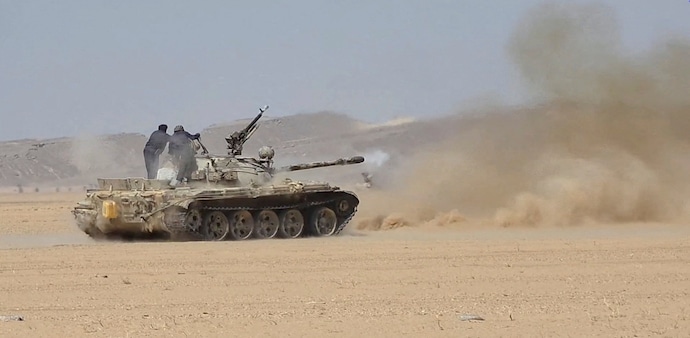
- Sep 15, 2026,
- Updated Sep 15, 2026 8:21 AM IST
US-Iran war: Fresh attacks by Yemen's Iran-aligned Houthis on Saudi Arabia and renewed pressure on the kingdom's infrastructure pushed oil prices higher. Gulf Arab states also postponed planned talks with Iran, raising concerns about wider disruption to global oil supplies.
Crude oil prices rose more than 4% on Monday before settling about 1% higher. At 0026 GMT on Tuesday, Brent crude futures were up $1.24, or 1.18%, at $106.93 a barrel. US West Texas Intermediate futures rose $1.29, or 1.24%, to $102.65 a barrel.
The Houthis said on Monday that they had fired dozens of missiles and drones at the Khamis Mushait military airbase in southern Saudi Arabia. The group said it targeted aircraft hangars, radar systems, runways and ammunition depots in retaliation for Saudi air strikes in Yemen.
MUST READ | Trump says the US could just decide to stay in Iran and ‘keep the oil’ like Venezuela
Saudi authorities issued emergency alerts in Khamis Mushait and three other southern cities. The Saudi-led coalition in Yemen said 13 civilians were wounded in the attacks.
Officials from Yemen's internationally recognised government said the Houthis were strengthening their positions along the country's western coast on the Red Sea. They said the group retained effective control over almost the entire coastline despite increased aerial bombardment by Saudi and Yemeni forces, including around the historic port of Mocha.
The officials said recent Houthi advances, including the capture of Perim Island at the mouth of the Red Sea, had increased pressure on Saudi oil exports after an earlier attack forced the East-West pipeline offline. Riyadh blamed that attack on Iranian-backed militias in Iraq.
DON'T MISS | Iran, Oman agree on new Hormuz routes: What it means for oil, ships and global trade
Saudi Arabia built the 1,200-km pipeline from the Gulf to the Red Sea in the 1980s to bypass the Strait of Hormuz when the waterway came under threat during the Iran-Iraq war. Traders said a prolonged shutdown could cut off as much as 4% of global oil supply while the strait remains largely blockaded. Riyadh has not said when pipeline operations might resume.
One Yemeni official said the Houthis were under heavy pressure and were responding by intensifying their missile and drone attacks on Saudi Arabia.
Three sources told Reuters that Washington had so far resisted Saudi requests for direct military intervention beyond intelligence support. Trump said over the weekend that he had spoken with the Saudi Crown Prince and that the Houthis had contacted Washington, urging it to stay out of the conflict.
MUST READ | Trump says Iran ‘probably’ behind Saudi oil pipeline attack as West Asia tensions rise
Saudi state media reported that Crown Prince Mohammed bin Salman met US regional commander Admiral Brad Cooper in Jeddah on Monday. Saudi Arabia has led a coalition fighting the Houthis since 2015, though the conflict had largely subsided under a ceasefire in recent years. Fighting resumed this month, with the Houthis pushing back forces aligned with the internationally recognised government.
US-Iran war: Fresh attacks by Yemen's Iran-aligned Houthis on Saudi Arabia and renewed pressure on the kingdom's infrastructure pushed oil prices higher. Gulf Arab states also postponed planned talks with Iran, raising concerns about wider disruption to global oil supplies.
Crude oil prices rose more than 4% on Monday before settling about 1% higher. At 0026 GMT on Tuesday, Brent crude futures were up $1.24, or 1.18%, at $106.93 a barrel. US West Texas Intermediate futures rose $1.29, or 1.24%, to $102.65 a barrel.
The Houthis said on Monday that they had fired dozens of missiles and drones at the Khamis Mushait military airbase in southern Saudi Arabia. The group said it targeted aircraft hangars, radar systems, runways and ammunition depots in retaliation for Saudi air strikes in Yemen.
MUST READ | Trump says the US could just decide to stay in Iran and ‘keep the oil’ like Venezuela
Saudi authorities issued emergency alerts in Khamis Mushait and three other southern cities. The Saudi-led coalition in Yemen said 13 civilians were wounded in the attacks.
Officials from Yemen's internationally recognised government said the Houthis were strengthening their positions along the country's western coast on the Red Sea. They said the group retained effective control over almost the entire coastline despite increased aerial bombardment by Saudi and Yemeni forces, including around the historic port of Mocha.
The officials said recent Houthi advances, including the capture of Perim Island at the mouth of the Red Sea, had increased pressure on Saudi oil exports after an earlier attack forced the East-West pipeline offline. Riyadh blamed that attack on Iranian-backed militias in Iraq.
DON'T MISS | Iran, Oman agree on new Hormuz routes: What it means for oil, ships and global trade
Saudi Arabia built the 1,200-km pipeline from the Gulf to the Red Sea in the 1980s to bypass the Strait of Hormuz when the waterway came under threat during the Iran-Iraq war. Traders said a prolonged shutdown could cut off as much as 4% of global oil supply while the strait remains largely blockaded. Riyadh has not said when pipeline operations might resume.
One Yemeni official said the Houthis were under heavy pressure and were responding by intensifying their missile and drone attacks on Saudi Arabia.
Three sources told Reuters that Washington had so far resisted Saudi requests for direct military intervention beyond intelligence support. Trump said over the weekend that he had spoken with the Saudi Crown Prince and that the Houthis had contacted Washington, urging it to stay out of the conflict.
MUST READ | Trump says Iran ‘probably’ behind Saudi oil pipeline attack as West Asia tensions rise
Saudi state media reported that Crown Prince Mohammed bin Salman met US regional commander Admiral Brad Cooper in Jeddah on Monday. Saudi Arabia has led a coalition fighting the Houthis since 2015, though the conflict had largely subsided under a ceasefire in recent years. Fighting resumed this month, with the Houthis pushing back forces aligned with the internationally recognised government.