
Iran charging $2 million fee for Strait of Hormuz passage from ships: Report
Reports suggest Iran is enforcing the restrictions selectively. Officials have indicated that vessels linked to countries seen as hostile may face restrictions
- Mar 23, 2026,
- Updated Mar 23, 2026 7:31 AM IST
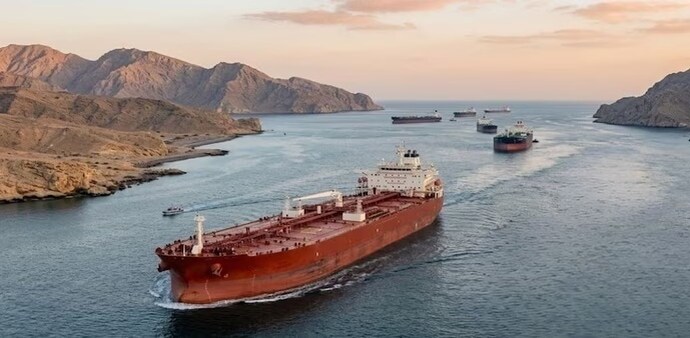
As tensions escalate in West Asia, Iran is reportedly charging steep fees to allow merchant vessels through the Strait of Hormuz, turning one of the world’s busiest energy corridors into a high-risk transit zone.
According to reports citing Iranian lawmaker Alaeddin Boroujerdi, some ships are being asked to pay up to $2 million for safe passage through the conflict-hit waterway. The move comes amid the ongoing war involving Iran, Israel and the United States.
"Now, because war has costs, naturally we must do this and take transit fees from ships passing through the Strait of Hormuz," Boroujerdi said, as reported by Iran International. He also described the measure as a reflection of Iran’s "authority" over the strategic route.
The Strait of Hormuz, which handles about 20 per cent of global oil and liquefied natural gas shipments, has remained effectively disrupted since early March. The situation has pushed global fuel prices higher and disrupted shipping movements across the region.
Reports suggest Iran is enforcing the restrictions selectively. Officials have indicated that vessels linked to countries deemed hostile may face restrictions, while others may be allowed through under certain conditions.
Iran’s foreign minister, Abbas Araghchi, recently said the strait is closed only to ships of “enemies and those supporting their aggression.” In some cases, exceptions appear to have been made. Two Indian-flagged LPG carriers were granted transit, with more reportedly preparing to transit. Ship-tracking data has also shown at least one Pakistani tanker navigating the route.
The situation has been further complicated by rising military rhetoric. US President Donald Trump has warned Iran to reopen the Strait within 48 hours or face strikes on its power infrastructure. In response, Iran’s leadership has threatened retaliation, including potential attacks on regional energy assets.
Iran’s Revolutionary Guards have also warned that any strike on its power plants could lead to the Strait of Hormuz being “completely closed”.
With warnings issued to merchant ships and incidents reported at sea, maritime traffic through the corridor has slowed sharply. In one recent incident, explosive-laden boats struck two fuel tankers in Iraqi waters, killing one crew member, an Indian national.
As tensions escalate in West Asia, Iran is reportedly charging steep fees to allow merchant vessels through the Strait of Hormuz, turning one of the world’s busiest energy corridors into a high-risk transit zone.
According to reports citing Iranian lawmaker Alaeddin Boroujerdi, some ships are being asked to pay up to $2 million for safe passage through the conflict-hit waterway. The move comes amid the ongoing war involving Iran, Israel and the United States.
"Now, because war has costs, naturally we must do this and take transit fees from ships passing through the Strait of Hormuz," Boroujerdi said, as reported by Iran International. He also described the measure as a reflection of Iran’s "authority" over the strategic route.
The Strait of Hormuz, which handles about 20 per cent of global oil and liquefied natural gas shipments, has remained effectively disrupted since early March. The situation has pushed global fuel prices higher and disrupted shipping movements across the region.
Reports suggest Iran is enforcing the restrictions selectively. Officials have indicated that vessels linked to countries deemed hostile may face restrictions, while others may be allowed through under certain conditions.
Iran’s foreign minister, Abbas Araghchi, recently said the strait is closed only to ships of “enemies and those supporting their aggression.” In some cases, exceptions appear to have been made. Two Indian-flagged LPG carriers were granted transit, with more reportedly preparing to transit. Ship-tracking data has also shown at least one Pakistani tanker navigating the route.
The situation has been further complicated by rising military rhetoric. US President Donald Trump has warned Iran to reopen the Strait within 48 hours or face strikes on its power infrastructure. In response, Iran’s leadership has threatened retaliation, including potential attacks on regional energy assets.
Iran’s Revolutionary Guards have also warned that any strike on its power plants could lead to the Strait of Hormuz being “completely closed”.
With warnings issued to merchant ships and incidents reported at sea, maritime traffic through the corridor has slowed sharply. In one recent incident, explosive-laden boats struck two fuel tankers in Iraqi waters, killing one crew member, an Indian national.