
'Iran made a poor choice': US launches fresh strikes after IRGC attacks civilian ship, shuts Hormuz
The US military later identified the vessel as a Cyprus-flagged container ship, saying it suffered "significant engine room damage" and that one civilian crew member remains missing
- Jul 12, 2026,
- Updated Jul 12, 2026 7:32 AM IST
The United States launched a fresh round of strikes on Iran after Tehran attacked a civilian container ship in the Strait of Hormuz and announced that the strategic waterway would remain closed "until further notice".
Tehran's strikes and the US response further strained an already fragile ceasefire between the two countries.
The latest exchange came after Iran said one of its warning shots had struck a vessel travelling through what it described as an unauthorised route in the strait. The closure of the world's most important oil transit chokepoint threatens to derail negotiations aimed at reinforcing last month's ceasefire agreement.
Don't Miss | '1,000 missiles are locked, loaded': Trump's latest threat to Iran could hit fuel prices worldwide
Iran Says Warning Shot Hit Civilian Vessel
Iran's Revolutionary Guards Corps said several vessels had "disregarded our warnings and instructions to correct their course and proceed along the approved route."
One vessel "was struck by a warning shot and brought to a stop," it said.
The US military later identified the vessel as a Cyprus-flagged container ship, saying it suffered "significant engine room damage" and that one civilian crew member remains missing.
Iran also warned it would consider targeting "additional enemy bases in the region" if further attacks were launched against it.
US Launches Fresh Strikes
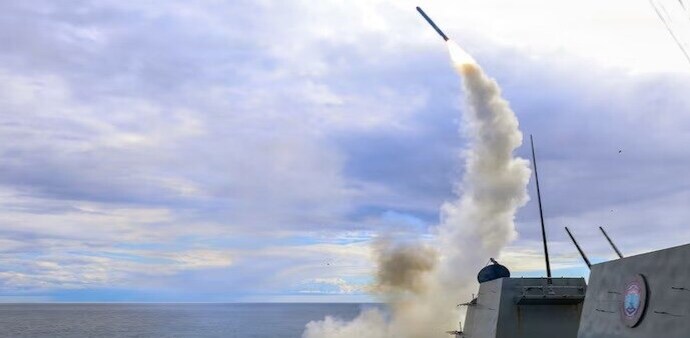
Shortly after Iran's announcement, US Central Command said American forces had begun a third round of strikes against Iran.
Explosions were reported in Bandar Abbas and Sirik, two towns along the Strait of Hormuz, according to Iranian state media.
"The United States is imposing a heavy cost by continuing to degrade Iran's ability to attack civilian mariners and commercial ships freely transiting the strait," US Central Command said.
US Defence Secretary Pete Hegseth wrote on social media: "Iran made a poor choice. Now they pay."
Senior US officials had earlier said negotiations to strengthen last month's ceasefire could not move forward unless shipping through the Strait of Hormuz was secure. They had also called on Iran to publicly commit to keeping the waterway open.
Diplomatic Efforts Fail To Ease Tensions
The latest military exchange came hours after Iran and Oman held talks on the Strait of Hormuz.
Oman said both sides agreed to continue discussions on the strait "at the technical and political levels."
Iranian Foreign Minister Abbas Araghchi said he discussed "appropriate mechanisms for ensuring the safe passage of ships" with his Omani counterpart.
For decades, the international community has regarded the Strait of Hormuz as an international waterway. Iran, however, has insisted that the passage remain under its control and that it be allowed to levy charges on vessels using it, a position it adopted after the war began. The United States has advised commercial vessels to use a southern route through Oman's territorial waters.
Iran Accuses US Of Violating Ceasefire
Iran's new Supreme Leader, Mojtaba Khamenei, making his first public statement since the funeral of his father, Ayatollah Ali Khamenei, vowed revenge for his father's killing in the opening strikes of the war on February 28.
Such revenge "is the will of our nation and must certainly be carried out," he said in a statement carried by state television, hours after US President Donald Trump warned of further missile strikes.
Araghchi also accused Washington of violating the interim ceasefire agreement by ending waivers that allowed Iran to sell crude oil on the open market in US dollars. The US ended the waivers after attacks on shipping in the strait.
Strait Remains Critical To Global Energy Trade
Before the conflict began, around one-fifth of the world's traded oil and natural gas passed through the Strait of Hormuz. Iran's control over the waterway during the war triggered a global energy crisis, although oil prices have since retreated from wartime highs of $120 a barrel.
The renewed military escalation has again raised concerns over the security of one of the world's busiest maritime trade routes.
The United States launched a fresh round of strikes on Iran after Tehran attacked a civilian container ship in the Strait of Hormuz and announced that the strategic waterway would remain closed "until further notice".
Tehran's strikes and the US response further strained an already fragile ceasefire between the two countries.
The latest exchange came after Iran said one of its warning shots had struck a vessel travelling through what it described as an unauthorised route in the strait. The closure of the world's most important oil transit chokepoint threatens to derail negotiations aimed at reinforcing last month's ceasefire agreement.
Don't Miss | '1,000 missiles are locked, loaded': Trump's latest threat to Iran could hit fuel prices worldwide
Iran Says Warning Shot Hit Civilian Vessel
Iran's Revolutionary Guards Corps said several vessels had "disregarded our warnings and instructions to correct their course and proceed along the approved route."
One vessel "was struck by a warning shot and brought to a stop," it said.
The US military later identified the vessel as a Cyprus-flagged container ship, saying it suffered "significant engine room damage" and that one civilian crew member remains missing.
Iran also warned it would consider targeting "additional enemy bases in the region" if further attacks were launched against it.
US Launches Fresh Strikes
Shortly after Iran's announcement, US Central Command said American forces had begun a third round of strikes against Iran.
Explosions were reported in Bandar Abbas and Sirik, two towns along the Strait of Hormuz, according to Iranian state media.
"The United States is imposing a heavy cost by continuing to degrade Iran's ability to attack civilian mariners and commercial ships freely transiting the strait," US Central Command said.
US Defence Secretary Pete Hegseth wrote on social media: "Iran made a poor choice. Now they pay."
Senior US officials had earlier said negotiations to strengthen last month's ceasefire could not move forward unless shipping through the Strait of Hormuz was secure. They had also called on Iran to publicly commit to keeping the waterway open.
Diplomatic Efforts Fail To Ease Tensions
The latest military exchange came hours after Iran and Oman held talks on the Strait of Hormuz.
Oman said both sides agreed to continue discussions on the strait "at the technical and political levels."
Iranian Foreign Minister Abbas Araghchi said he discussed "appropriate mechanisms for ensuring the safe passage of ships" with his Omani counterpart.
For decades, the international community has regarded the Strait of Hormuz as an international waterway. Iran, however, has insisted that the passage remain under its control and that it be allowed to levy charges on vessels using it, a position it adopted after the war began. The United States has advised commercial vessels to use a southern route through Oman's territorial waters.
Iran Accuses US Of Violating Ceasefire
Iran's new Supreme Leader, Mojtaba Khamenei, making his first public statement since the funeral of his father, Ayatollah Ali Khamenei, vowed revenge for his father's killing in the opening strikes of the war on February 28.
Such revenge "is the will of our nation and must certainly be carried out," he said in a statement carried by state television, hours after US President Donald Trump warned of further missile strikes.
Araghchi also accused Washington of violating the interim ceasefire agreement by ending waivers that allowed Iran to sell crude oil on the open market in US dollars. The US ended the waivers after attacks on shipping in the strait.
Strait Remains Critical To Global Energy Trade
Before the conflict began, around one-fifth of the world's traded oil and natural gas passed through the Strait of Hormuz. Iran's control over the waterway during the war triggered a global energy crisis, although oil prices have since retreated from wartime highs of $120 a barrel.
The renewed military escalation has again raised concerns over the security of one of the world's busiest maritime trade routes.