
Iran reviewing proposal from the US to end war: Report
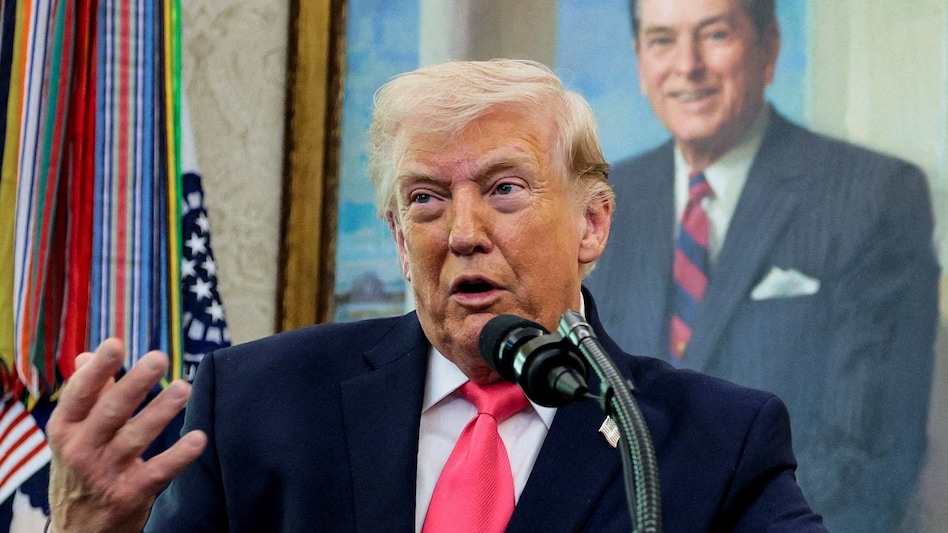
Donald Trump, speaking at a Washington event, asserted that Iranian leaders are negotiating discreetly but fear backlash from their own people and the US.
- Mar 26, 2026,
- Updated Mar 26, 2026 8:00 AM IST
Iran is reportedly reviewing a proposal from the United States to end the ongoing war in the Gulf. However, Iranian Foreign Minister Abbas Araqchi has stated that Tehran has no intention of holding direct talks to de-escalate the broader West Asian conflict. He clarified that exchanges through mediators should not be considered formal negotiations with the US.
Araqchi indicated that messages from the US have been conveyed to Iran's top authorities. Any official position will be announced by them if necessary, he said as reported in Reuters. He also said that Iran expects Lebanon to be included in any ceasefire agreement involving the US and Israel, according to six regional sources familiar with Iran's stance.
Donald Trump, speaking at a Washington event, asserted that Iranian leaders are negotiating discreetly but fear backlash from their own people and the US. The Trump administration reportedly sent a 15-point proposal through Pakistan. The proposal included demands such as removing Iran’s highly enriched uranium stocks, halting enrichment activities, curbing its ballistic missile programme, and ending funding to regional allies, according to Israeli cabinet sources.
The White House declined to reveal details of the proposal publicly and warned of intensified military action if Iran does not accept its terms. White House press secretary Karoline Leavitt stated that President Trump would ensure Iran faces stronger strikes if it does not recognise its military defeat.
Meanwhile, Israeli officials expressed scepticism about Iran’s willingness to accept the US conditions. A senior Israeli defence official voiced concerns that US negotiators might make concessions and stressed that Israel wants any agreement to allow it to maintain the option of pre-emptive strikes.
Admiral Brad Cooper, head of the US Central Command, reported that over 10,000 targets inside Iran have been hit. He noted that 92 per cent of Iran’s largest naval vessels have been destroyed, and drone and missile launch rates have dropped by more than 90 per cent. Cooper added that two-thirds of Iran’s missile, drone, and naval production facilities and shipyards have been damaged or destroyed by US and Israeli forces.
Despite these military efforts, the conflict continues with ongoing air strikes against Iran and retaliatory missile and drone attacks by Iran targeting Israel and US allies. The Israeli military reported several waves of attacks on Iran, including strikes on ship and submarine construction sites. The Iranian semi-official SNN News Agency reported damage in a residential area of Tehran, with rescue operations underway. Kuwait and Saudi Arabia also said they repelled new drone attacks.
The situation remains tense as diplomatic efforts proceed alongside continued military confrontations. Iran’s review of the US proposal marks a cautious step amidst the ongoing hostilities in the region.
Iran is reportedly reviewing a proposal from the United States to end the ongoing war in the Gulf. However, Iranian Foreign Minister Abbas Araqchi has stated that Tehran has no intention of holding direct talks to de-escalate the broader West Asian conflict. He clarified that exchanges through mediators should not be considered formal negotiations with the US.
Araqchi indicated that messages from the US have been conveyed to Iran's top authorities. Any official position will be announced by them if necessary, he said as reported in Reuters. He also said that Iran expects Lebanon to be included in any ceasefire agreement involving the US and Israel, according to six regional sources familiar with Iran's stance.
Donald Trump, speaking at a Washington event, asserted that Iranian leaders are negotiating discreetly but fear backlash from their own people and the US. The Trump administration reportedly sent a 15-point proposal through Pakistan. The proposal included demands such as removing Iran’s highly enriched uranium stocks, halting enrichment activities, curbing its ballistic missile programme, and ending funding to regional allies, according to Israeli cabinet sources.
The White House declined to reveal details of the proposal publicly and warned of intensified military action if Iran does not accept its terms. White House press secretary Karoline Leavitt stated that President Trump would ensure Iran faces stronger strikes if it does not recognise its military defeat.
Meanwhile, Israeli officials expressed scepticism about Iran’s willingness to accept the US conditions. A senior Israeli defence official voiced concerns that US negotiators might make concessions and stressed that Israel wants any agreement to allow it to maintain the option of pre-emptive strikes.
Admiral Brad Cooper, head of the US Central Command, reported that over 10,000 targets inside Iran have been hit. He noted that 92 per cent of Iran’s largest naval vessels have been destroyed, and drone and missile launch rates have dropped by more than 90 per cent. Cooper added that two-thirds of Iran’s missile, drone, and naval production facilities and shipyards have been damaged or destroyed by US and Israeli forces.
Despite these military efforts, the conflict continues with ongoing air strikes against Iran and retaliatory missile and drone attacks by Iran targeting Israel and US allies. The Israeli military reported several waves of attacks on Iran, including strikes on ship and submarine construction sites. The Iranian semi-official SNN News Agency reported damage in a residential area of Tehran, with rescue operations underway. Kuwait and Saudi Arabia also said they repelled new drone attacks.
The situation remains tense as diplomatic efforts proceed alongside continued military confrontations. Iran’s review of the US proposal marks a cautious step amidst the ongoing hostilities in the region.