
Iran says it would open Hormuz within seven days but only on one condition
Iran's military central command said it had been informed that the US was preparing to restart military operations with the support of regional countries.
- Sep 22, 2026,
- Updated Sep 22, 2026 4:14 PM IST
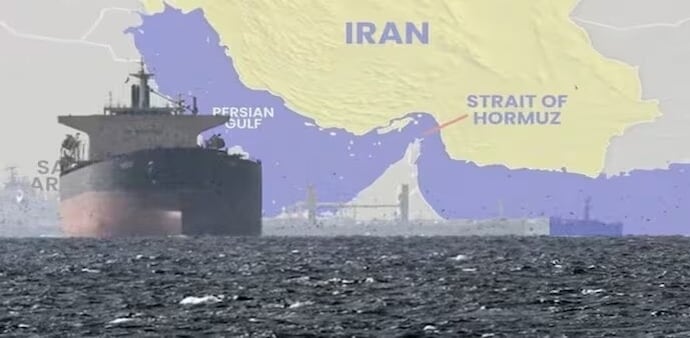
Iran has said it can reopen the Strait of Hormuz provided its one condition is met. The remarks came as shipping through the strategic waterway dropped sharply and two vessels reported attacks while crossing the strait. Preliminary shipping data showed commodity vessel crossings fell to two on Monday from 10 a day earlier, underlining the strain on one of the world's busiest energy routes.
Iran said it would open the strait within seven days if the United States eases military pressure and lifts its blockade on Iranian ports. A senior Iranian official told Reuters on Tuesday that Tehran wants Washington to officially state that it seeks a diplomatic resolution and agree on a timeline for how the process will move forward.
On Sunday, Iran's military central command said it had been informed that the US was preparing to restart military operations with the support of regional countries. It warned that such a move would lead to Tehran's retaliation "without limitations and considerations".
The senior Iranian official said the Iranian delegation to the United Nations General Assembly in New York has full authority to revive diplomacy with the United States. The official said Iran's President Masoud Pezeshkian, who left Tehran for New York on Tuesday morning, will not meet US President Donald Trump at the UN headquarters in New York.
DON'T MISS | Hormuz crisis exposed world's energy weak spots: Why the next shock could hurt more
The official added that details of an agreement to end hostilities with Washington could be discussed in New York through mediators, and said Tehran's proposal had been delivered to the US via mediators on September 16. "The UN General Assembly is a golden opportunity for the US to return to diplomacy," the official said, adding that Tehran would welcome a revival of diplomacy if Washington takes tangible steps.
Shipping data showed that the figures for crossings exclude any vessels that may have passed through the strait with their Automatic Identification System transponders switched off to avoid detection. Kpler data showed that a minerals-laden Panama-flagged Supramax and a Liberia-flagged bulk carrier entered the waterway through an unknown route.
Before the Iran conflict started on February 28, the strait typically handled about 125 large commercial vessels a day, including tankers, gas carriers, bulkers and container vessels, accounting for about 20% of the world's daily crude oil and liquefied natural gas supply.
Iran has said it can reopen the Strait of Hormuz provided its one condition is met. The remarks came as shipping through the strategic waterway dropped sharply and two vessels reported attacks while crossing the strait. Preliminary shipping data showed commodity vessel crossings fell to two on Monday from 10 a day earlier, underlining the strain on one of the world's busiest energy routes.
Iran said it would open the strait within seven days if the United States eases military pressure and lifts its blockade on Iranian ports. A senior Iranian official told Reuters on Tuesday that Tehran wants Washington to officially state that it seeks a diplomatic resolution and agree on a timeline for how the process will move forward.
On Sunday, Iran's military central command said it had been informed that the US was preparing to restart military operations with the support of regional countries. It warned that such a move would lead to Tehran's retaliation "without limitations and considerations".
The senior Iranian official said the Iranian delegation to the United Nations General Assembly in New York has full authority to revive diplomacy with the United States. The official said Iran's President Masoud Pezeshkian, who left Tehran for New York on Tuesday morning, will not meet US President Donald Trump at the UN headquarters in New York.
DON'T MISS | Hormuz crisis exposed world's energy weak spots: Why the next shock could hurt more
The official added that details of an agreement to end hostilities with Washington could be discussed in New York through mediators, and said Tehran's proposal had been delivered to the US via mediators on September 16. "The UN General Assembly is a golden opportunity for the US to return to diplomacy," the official said, adding that Tehran would welcome a revival of diplomacy if Washington takes tangible steps.
Shipping data showed that the figures for crossings exclude any vessels that may have passed through the strait with their Automatic Identification System transponders switched off to avoid detection. Kpler data showed that a minerals-laden Panama-flagged Supramax and a Liberia-flagged bulk carrier entered the waterway through an unknown route.
Before the Iran conflict started on February 28, the strait typically handled about 125 large commercial vessels a day, including tankers, gas carriers, bulkers and container vessels, accounting for about 20% of the world's daily crude oil and liquefied natural gas supply.