
'Iran war will ultimately lower oil prices': Peter Navarro explains Tehran's 'hidden tax'
Trump's decision to confront Iran was aimed not only at national security concerns but also at removing what he described as a long-standing economic burden on global energy markets, says Navarro
- Mar 15, 2026,
- Updated Mar 15, 2026 6:15 PM IST
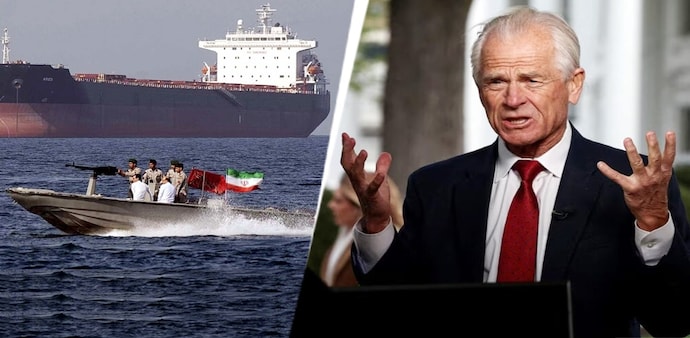
As the closure of the Strait of Hormuz disrupts global oil flows and pushes crude prices higher, White House senior counselor for trade and manufacturing Peter Navarro argues that the Iran conflict could eventually bring energy prices down.
Writing in The Wall Street Journal, Navarro said US President Donald Trump's decision to confront Iran was aimed not only at national security concerns but also at removing what he described as a long-standing economic burden on global energy markets.
Also read: Hormuz shut, Bab el-Mandeb next? Houthi warnings put another chokepoint at risk
"For more than four decades, Iran’s rogue behavior has imposed a hidden tax on the world economy through higher oil prices and slower growth," Navarro wrote. He called the phenomenon the "Iran Terror Premium," arguing that geopolitical tensions created by Iran have forced markets to price oil at higher levels because of the risk of supply disruptions.
Risk premium in global oil markets
Navarro noted that a significant portion of global oil trade passes through the Persian Gulf. "Roughly a quarter of the world's seaborne oil trade transits the Persian Gulf, much of it through the narrow Strait of Hormuz," he wrote.
When markets price crude oil, he said, they factor in the risk that conflict or sabotage could interrupt these flows. "Iran creates that risk through its own forces and through proxy groups such as Hezbollah, Hamas, the Houthis and militias in Iraq, which have targeted energy infrastructure, shipping routes and regional oil facilities."
According to Navarro, even when no oil fields are shut down and no tankers are blocked, the risk of disruption itself pushes prices higher. In this way, he said, oil markets behave like insurance markets: "The greater the perceived risk, the larger the premium."
Economic impact of geopolitical tensions
Navarro cited research showing that geopolitical tensions often correlate with higher oil prices. He pointed to the Geopolitical Risk Index developed by economists Dario Caldara and Matteo Iacoviello, which tracks spikes in geopolitical tension and their effect on energy markets.
Research by Lutz Kilian, Michael Plante and Alexander Richter at the Federal Reserve Bank of Dallas also suggests that rising probabilities of supply disruptions can push oil prices higher.
The Trump advisor said analysts frequently estimate that tensions involving Iran add between $5 and $15 a barrel to oil prices under normal conditions. During major crises, prices can rise above $100 a barrel.
Oil price increases ripple through the global economy, he wrote, affecting transportation, manufacturing, agriculture, and trade.
According to him, the International Monetary Fund research suggests that a sustained 10% increase in oil prices can reduce global economic growth by 0.1 to 0.2 percentage points in the following year.
Applying that framework, Navarro argued that the Iran-related premium could impose an economic drag of between 0.1% and 0.4% on global output. "At today’s roughly $115 trillion world economy, that translates into losses of about $100 billion to $450 billion per year," he wrote.
Long-term argument for lower prices
Navarro acknowledged that military conflict could push prices higher in the short term but argued that removing the geopolitical risk surrounding Iranian actions would eventually reduce the premium embedded in oil markets.
"Military confrontation may cause temporary spikes in oil prices, but once Iran's threat to global energy markets is removed, the geopolitical risk premium should fall—leaving prices lower," he said. "Market evidence suggests equilibrium prices could be well below $60 a barrel."
The White House advisor argued that such a shift would have broad economic effects. "Across the world economy, production costs will fall while a persistent drag on growth is removed and household purchasing power is strengthened."
Navarro concluded that confronting Iran is primarily a national security issue but could also reshape global energy markets by removing what he called the "persistent geopolitical risk surrounding Persian Gulf energy flows."
As the closure of the Strait of Hormuz disrupts global oil flows and pushes crude prices higher, White House senior counselor for trade and manufacturing Peter Navarro argues that the Iran conflict could eventually bring energy prices down.
Writing in The Wall Street Journal, Navarro said US President Donald Trump's decision to confront Iran was aimed not only at national security concerns but also at removing what he described as a long-standing economic burden on global energy markets.
Also read: Hormuz shut, Bab el-Mandeb next? Houthi warnings put another chokepoint at risk
"For more than four decades, Iran’s rogue behavior has imposed a hidden tax on the world economy through higher oil prices and slower growth," Navarro wrote. He called the phenomenon the "Iran Terror Premium," arguing that geopolitical tensions created by Iran have forced markets to price oil at higher levels because of the risk of supply disruptions.
Risk premium in global oil markets
Navarro noted that a significant portion of global oil trade passes through the Persian Gulf. "Roughly a quarter of the world's seaborne oil trade transits the Persian Gulf, much of it through the narrow Strait of Hormuz," he wrote.
When markets price crude oil, he said, they factor in the risk that conflict or sabotage could interrupt these flows. "Iran creates that risk through its own forces and through proxy groups such as Hezbollah, Hamas, the Houthis and militias in Iraq, which have targeted energy infrastructure, shipping routes and regional oil facilities."
According to Navarro, even when no oil fields are shut down and no tankers are blocked, the risk of disruption itself pushes prices higher. In this way, he said, oil markets behave like insurance markets: "The greater the perceived risk, the larger the premium."
Economic impact of geopolitical tensions
Navarro cited research showing that geopolitical tensions often correlate with higher oil prices. He pointed to the Geopolitical Risk Index developed by economists Dario Caldara and Matteo Iacoviello, which tracks spikes in geopolitical tension and their effect on energy markets.
Research by Lutz Kilian, Michael Plante and Alexander Richter at the Federal Reserve Bank of Dallas also suggests that rising probabilities of supply disruptions can push oil prices higher.
The Trump advisor said analysts frequently estimate that tensions involving Iran add between $5 and $15 a barrel to oil prices under normal conditions. During major crises, prices can rise above $100 a barrel.
Oil price increases ripple through the global economy, he wrote, affecting transportation, manufacturing, agriculture, and trade.
According to him, the International Monetary Fund research suggests that a sustained 10% increase in oil prices can reduce global economic growth by 0.1 to 0.2 percentage points in the following year.
Applying that framework, Navarro argued that the Iran-related premium could impose an economic drag of between 0.1% and 0.4% on global output. "At today’s roughly $115 trillion world economy, that translates into losses of about $100 billion to $450 billion per year," he wrote.
Long-term argument for lower prices
Navarro acknowledged that military conflict could push prices higher in the short term but argued that removing the geopolitical risk surrounding Iranian actions would eventually reduce the premium embedded in oil markets.
"Military confrontation may cause temporary spikes in oil prices, but once Iran's threat to global energy markets is removed, the geopolitical risk premium should fall—leaving prices lower," he said. "Market evidence suggests equilibrium prices could be well below $60 a barrel."
The White House advisor argued that such a shift would have broad economic effects. "Across the world economy, production costs will fall while a persistent drag on growth is removed and household purchasing power is strengthened."
Navarro concluded that confronting Iran is primarily a national security issue but could also reshape global energy markets by removing what he called the "persistent geopolitical risk surrounding Persian Gulf energy flows."