
IRGC now de facto ruler of Iran, takes control of key state functions; President sidelined: Report
Mojtaba Khamenei, Ali Khamenei's son, was named Supreme Leader but has not been seen or heard from since
- Apr 1, 2026,
- Updated Apr 1, 2026 3:46 PM IST
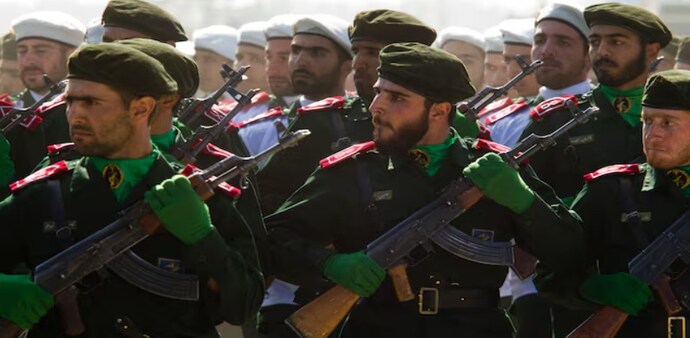
The Islamic Revolutionary Guard Corps (IRGC) has become the de facto ruler of Iran amid ongoing power struggles within the country's leadership, as per reports. This follows US President Donald Trump's claim that negotiations to end the Iran war were underway with more moderate leaders, a statement denied by Iran.
According to a report in India Today that cited Iranian media, IRGC has taken control of key state functions during a political deadlock involving Iran's president, Masoud Pezeshkian, who is seen as a moderate leader. Reports indicate that Pezeshkian has been sidelined amid this power struggle.
The absence of a clear Supreme Leader has contributed to the current situation. Ayatollah Ali Khamenei and much of Iran's top leadership were killed in US-Israeli strikes at the start of the conflict. Mojtaba Khamenei, Ali Khamenei's son, was named Supreme Leader but has not been seen or heard from since. Messages attributed to the Supreme Leader have only been broadcast on live television.
Speculation surrounds Mojtaba Khamenei's condition, with reports suggesting he may be in a coma. US officials, including Trump and Defence Secretary Pete Hegseth, have indicated he might be critically ill or disfigured. This uncertainty has created a political vacuum that the IRGC has moved to fill.
The IRGC now operates through a military council composed of senior officers who make daily decisions. They have established a strict security cordon around Mojtaba Khamenei, restricting access to government reports and blocking communication between the Supreme Leader and the political leadership, including President Pezeshkian.
The IRGC has also interfered with presidential appointments. A recent attempt by Pezeshkian to appoint Hossein Dehghan as intelligence minister was blocked by IRGC commander Ahmad Vahidi, who took over after the death of his predecessor during the war. Vahidi has insisted that all critical leadership roles be controlled directly by the IRGC during the conflict, diverging from the traditional process requiring the Supreme Leader’s approval.
Tensions between the IRGC and President Pezeshkian are evident. The president expressed concerns over the IRGC's escalation of regional tensions by targeting neighbouring Gulf countries, warning of adverse long-term effects on Iran’s fragile economy, strained by weeks of conflict and depleted resources.
The IRGC, initially formed as a paramilitary force after the 1979 revolution, has steadily expanded its influence, controlling significant sectors including oil, transport, banking, and real estate. With Mojtaba Khamenei’s status unclear, the IRGC has consolidated its control and currently manages the strategic Strait of Hormuz, a vital oil transit route that Iran has effectively blocked amid the war.
The Islamic Revolutionary Guard Corps (IRGC) has become the de facto ruler of Iran amid ongoing power struggles within the country's leadership, as per reports. This follows US President Donald Trump's claim that negotiations to end the Iran war were underway with more moderate leaders, a statement denied by Iran.
According to a report in India Today that cited Iranian media, IRGC has taken control of key state functions during a political deadlock involving Iran's president, Masoud Pezeshkian, who is seen as a moderate leader. Reports indicate that Pezeshkian has been sidelined amid this power struggle.
The absence of a clear Supreme Leader has contributed to the current situation. Ayatollah Ali Khamenei and much of Iran's top leadership were killed in US-Israeli strikes at the start of the conflict. Mojtaba Khamenei, Ali Khamenei's son, was named Supreme Leader but has not been seen or heard from since. Messages attributed to the Supreme Leader have only been broadcast on live television.
Speculation surrounds Mojtaba Khamenei's condition, with reports suggesting he may be in a coma. US officials, including Trump and Defence Secretary Pete Hegseth, have indicated he might be critically ill or disfigured. This uncertainty has created a political vacuum that the IRGC has moved to fill.
The IRGC now operates through a military council composed of senior officers who make daily decisions. They have established a strict security cordon around Mojtaba Khamenei, restricting access to government reports and blocking communication between the Supreme Leader and the political leadership, including President Pezeshkian.
The IRGC has also interfered with presidential appointments. A recent attempt by Pezeshkian to appoint Hossein Dehghan as intelligence minister was blocked by IRGC commander Ahmad Vahidi, who took over after the death of his predecessor during the war. Vahidi has insisted that all critical leadership roles be controlled directly by the IRGC during the conflict, diverging from the traditional process requiring the Supreme Leader’s approval.
Tensions between the IRGC and President Pezeshkian are evident. The president expressed concerns over the IRGC's escalation of regional tensions by targeting neighbouring Gulf countries, warning of adverse long-term effects on Iran’s fragile economy, strained by weeks of conflict and depleted resources.
The IRGC, initially formed as a paramilitary force after the 1979 revolution, has steadily expanded its influence, controlling significant sectors including oil, transport, banking, and real estate. With Mojtaba Khamenei’s status unclear, the IRGC has consolidated its control and currently manages the strategic Strait of Hormuz, a vital oil transit route that Iran has effectively blocked amid the war.