
'It was open before the war': Pakistan's Khawaja Asif jibes US over Strait of Hormuz closure
Pakistan Prime Minister Shehbaz Sharif said in a social media post that the country was ready to "facilitate meaningful and conclusive talks" to help resolve the conflict
- Mar 26, 2026,
- Updated Mar 26, 2026 12:05 PM IST
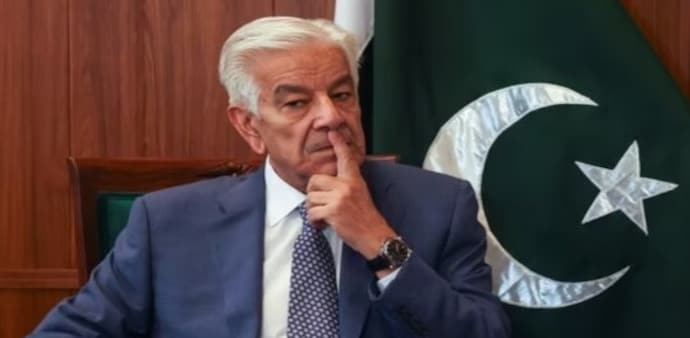
Pakistan Defence Minister Khawaja Asif has questioned the United States' focus on the Strait of Hormuz amid the ongoing conflict, suggesting that the emphasis on reopening the route may be misplaced.
In a post on X, Khawaja Asif wrote, "The goal of the war seems to have shifted to opening the Strait of Hormuz, which was open before the war," indicating that the current priority does not align with the situation before the conflict.
Pakistan's mediation push and Iran's stance
Pakistan's offer to mediate between the United States and Iran has come into focus amid escalating tensions, even as conflicting signals continue to emerge around the possibility of talks.
Pakistan Prime Minister Shehbaz Sharif said in a social media post that the country was ready to "facilitate meaningful and conclusive talks" to help resolve the conflict. The proposal drew attention after United States President Donald Trump shared a screenshot of Sharif's message on his Truth Social platform, though without offering further clarity on any formal engagement.
Despite these developments, Iran has denied that negotiations are currently taking place. Iran's Foreign Minister Abbas Araghchi said in a televised interview, "Messages being conveyed through our friendly countries and us responding by stating our positions or issuing the necessary warnings is not called negotiation or dialogue."
At the centre of the ongoing tensions is the Strait of Hormuz, a crucial global oil transit route that has seen disruptions since the escalation of military action involving the United States and Israel against Iran. While concerns over access to the waterway have grown, Iran has indicated that passage is not uniformly restricted.
What did Iran say on transit via Hormuz?
Iran's Foreign Minister Abbas Araghchi said that vessels from select countries have been allowed transit. "You have seen on the news: China, Russia, Pakistan, Iraq, and India. Two of its ships passed through a few nights ago, and some other countries, and even Bangladesh, I believe," he said, pointing to coordination with countries considered friendly by Tehran.
The issue of ensuring access through the Strait has also featured in reported ceasefire proposals. According to Reuters, discussions conveyed through intermediaries include provisions such as sanctions relief, curbs on Iran's nuclear programme, missile restrictions and reopening of the Strait of Hormuz. However, there has been no official confirmation of these terms.
Pakistan Defence Minister Khawaja Asif has questioned the United States' focus on the Strait of Hormuz amid the ongoing conflict, suggesting that the emphasis on reopening the route may be misplaced.
In a post on X, Khawaja Asif wrote, "The goal of the war seems to have shifted to opening the Strait of Hormuz, which was open before the war," indicating that the current priority does not align with the situation before the conflict.
Pakistan's mediation push and Iran's stance
Pakistan's offer to mediate between the United States and Iran has come into focus amid escalating tensions, even as conflicting signals continue to emerge around the possibility of talks.
Pakistan Prime Minister Shehbaz Sharif said in a social media post that the country was ready to "facilitate meaningful and conclusive talks" to help resolve the conflict. The proposal drew attention after United States President Donald Trump shared a screenshot of Sharif's message on his Truth Social platform, though without offering further clarity on any formal engagement.
Despite these developments, Iran has denied that negotiations are currently taking place. Iran's Foreign Minister Abbas Araghchi said in a televised interview, "Messages being conveyed through our friendly countries and us responding by stating our positions or issuing the necessary warnings is not called negotiation or dialogue."
At the centre of the ongoing tensions is the Strait of Hormuz, a crucial global oil transit route that has seen disruptions since the escalation of military action involving the United States and Israel against Iran. While concerns over access to the waterway have grown, Iran has indicated that passage is not uniformly restricted.
What did Iran say on transit via Hormuz?
Iran's Foreign Minister Abbas Araghchi said that vessels from select countries have been allowed transit. "You have seen on the news: China, Russia, Pakistan, Iraq, and India. Two of its ships passed through a few nights ago, and some other countries, and even Bangladesh, I believe," he said, pointing to coordination with countries considered friendly by Tehran.
The issue of ensuring access through the Strait has also featured in reported ceasefire proposals. According to Reuters, discussions conveyed through intermediaries include provisions such as sanctions relief, curbs on Iran's nuclear programme, missile restrictions and reopening of the Strait of Hormuz. However, there has been no official confirmation of these terms.