
'It'll be a huge error': Scholar cautions Bangladesh PM Tarique Rahman against turning down India's second invite
'It'll be a huge error': Scholar cautions Bangladesh PM Tarique Rahman against turning down India's second invite
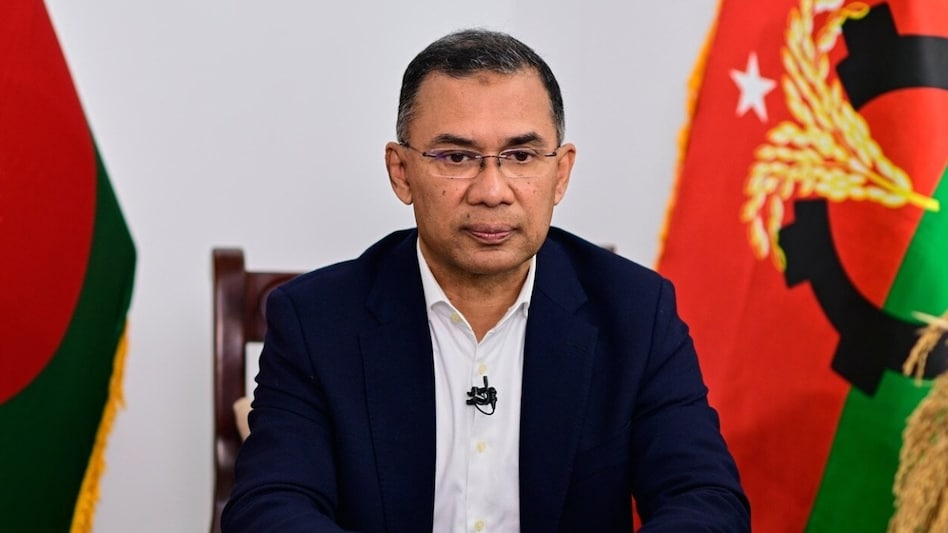
So far, Prime Minister Narendra Modi has invited Rahman twice. The first invitation was delivered personally by Lok Sabha Speaker Om Birla during his meeting with Rahman in Dhaka.
Saurabh Sharma
- Aug 12, 2026,
- Updated Aug 12, 2026 2:29 PM IST
India has invited Bangladesh Prime Minister Tarique Rahman to New Delhi for the BRICS Summit, but there are reports that he may skip the visit.
If Rahman turns down the invitation, it would be a "huge error of political judgment", according to Avinash Paliwal, an author and non-resident scholar at Carnegie Asia.
Advertisement
So far, Prime Minister Narendra Modi has invited Rahman twice. The first invitation was delivered personally by Lok Sabha Speaker Om Birla during his meeting with Rahman in Dhaka.
Must Watch: Sheikh Hasina December Return: What Will It Mean For India-Bangladesh Ties & Dhaka Politics?
Paliwal, in a post on Wednesday, said Indian High Commissioner to Bangladesh Dinesh Trivedi is engaged in "serious, sincere, high-stakes diplomacy" to prevent ties between the two countries from deteriorating further.
"It'll be a huge error of political judgment by Tarique Rahman to spurn India's 2nd invite to New Delhi," the foreign policy expert said.
Trivedi met Rahman in Dhaka on Sunday. The two discussed bilateral ties and ways to strengthen relations with a "people-centric approach", according to the Indian High Commission.
Advertisement
Trivedi had conveyed Prime Minister Narendra Modi's greetings and India's intent to work with Bangladesh in a "positive, constructive and forward-looking manner".
Don't Miss: PM Modi invites Bangladesh PM Tarique Rahman to visit India
'DHAKA MUST MAKE SPACE FOR RECONCILIATION'
Paliwal, an associate professor of international relations at SOAS University of London, had earlier argued that there was an "urgent need for Bangladeshi parties to rethink their political culture and make space for reconciliation."
In an opinion piece published in The Hindustan Times on July 15, he wrote that the "winner takes all" approach to Bangladeshi politics was not inevitable. He said Bangladesh needed "courage to accept short-term compromises" to build a durable and inclusive political system.
Advertisement
The author said Hasina's return offers an opportunity to hold a fair and open trial that not only holds her to account, "but also impresses upon her the reality of what people truly think about her."
Dhaka, according to him, has a choice: "let Hasina destabilise the country again or to use her return as a starting point of national healing and reconciliation."
The professor warned that simply preventing Hasina's Awami League (AL) from returning to politics would not resolve the problem. "The AL's ouster from Bangladeshi politics is unsustainable. The only question is how to curate its return as an opportunity rather than a risk."
INDIA INVITES RAHMAN AGAIN
PM Modi has invited Rahman, in his capacity as the current chair of BIMSTEC, to attend a session in New Delhi on September 12-13. The invitation was sent through diplomatic channels on July 14.
However, Dhaka has not yet decided whether Rahman will attend.
Bangladesh Foreign Minister Khalilur Rahman said on Monday that he could not predict when a decision would be made. He also said the BIMSTEC invitation was addressed to the organisation's chairperson, rather than personally to Rahman.
Rahman visited China in June, about four months after becoming prime minister, but is yet to decide on a visit to India.
Advertisement
Relations between India and Bangladesh have been strained ever since former Prime Minister Sheikh Hasina was ousted in August 2024, and Muhammad Yunus took charge as interim chief.
While New Delhi is attempting to normalise ties with Rahman, there are no signs yet of a thaw. Dhaka's persistent demand for Hasina's extradition has further complicated the situation.
The tensions deepened further after Hasina held a virtual press conference on the second anniversary of her ouster, August 5. She announced there that she would return to Bangladesh, though the dates were yet to be finalised.
Bangladesh issued a strongly worded statement after Hasina's press conference. However, India's Ministry of External Affairs said it had no role in Hasina's media event and does not endorse anything said there about the Bangladesh government.
India has invited Bangladesh Prime Minister Tarique Rahman to New Delhi for the BRICS Summit, but there are reports that he may skip the visit.
If Rahman turns down the invitation, it would be a "huge error of political judgment", according to Avinash Paliwal, an author and non-resident scholar at Carnegie Asia.
Advertisement
So far, Prime Minister Narendra Modi has invited Rahman twice. The first invitation was delivered personally by Lok Sabha Speaker Om Birla during his meeting with Rahman in Dhaka.
Must Watch: Sheikh Hasina December Return: What Will It Mean For India-Bangladesh Ties & Dhaka Politics?
Paliwal, in a post on Wednesday, said Indian High Commissioner to Bangladesh Dinesh Trivedi is engaged in "serious, sincere, high-stakes diplomacy" to prevent ties between the two countries from deteriorating further.
"It'll be a huge error of political judgment by Tarique Rahman to spurn India's 2nd invite to New Delhi," the foreign policy expert said.
Trivedi met Rahman in Dhaka on Sunday. The two discussed bilateral ties and ways to strengthen relations with a "people-centric approach", according to the Indian High Commission.
Advertisement
Trivedi had conveyed Prime Minister Narendra Modi's greetings and India's intent to work with Bangladesh in a "positive, constructive and forward-looking manner".
Don't Miss: PM Modi invites Bangladesh PM Tarique Rahman to visit India
'DHAKA MUST MAKE SPACE FOR RECONCILIATION'
Paliwal, an associate professor of international relations at SOAS University of London, had earlier argued that there was an "urgent need for Bangladeshi parties to rethink their political culture and make space for reconciliation."
In an opinion piece published in The Hindustan Times on July 15, he wrote that the "winner takes all" approach to Bangladeshi politics was not inevitable. He said Bangladesh needed "courage to accept short-term compromises" to build a durable and inclusive political system.
Advertisement
The author said Hasina's return offers an opportunity to hold a fair and open trial that not only holds her to account, "but also impresses upon her the reality of what people truly think about her."
Dhaka, according to him, has a choice: "let Hasina destabilise the country again or to use her return as a starting point of national healing and reconciliation."
The professor warned that simply preventing Hasina's Awami League (AL) from returning to politics would not resolve the problem. "The AL's ouster from Bangladeshi politics is unsustainable. The only question is how to curate its return as an opportunity rather than a risk."
INDIA INVITES RAHMAN AGAIN
PM Modi has invited Rahman, in his capacity as the current chair of BIMSTEC, to attend a session in New Delhi on September 12-13. The invitation was sent through diplomatic channels on July 14.
However, Dhaka has not yet decided whether Rahman will attend.
Bangladesh Foreign Minister Khalilur Rahman said on Monday that he could not predict when a decision would be made. He also said the BIMSTEC invitation was addressed to the organisation's chairperson, rather than personally to Rahman.
Rahman visited China in June, about four months after becoming prime minister, but is yet to decide on a visit to India.
Advertisement
Relations between India and Bangladesh have been strained ever since former Prime Minister Sheikh Hasina was ousted in August 2024, and Muhammad Yunus took charge as interim chief.
While New Delhi is attempting to normalise ties with Rahman, there are no signs yet of a thaw. Dhaka's persistent demand for Hasina's extradition has further complicated the situation.
The tensions deepened further after Hasina held a virtual press conference on the second anniversary of her ouster, August 5. She announced there that she would return to Bangladesh, though the dates were yet to be finalised.
Bangladesh issued a strongly worded statement after Hasina's press conference. However, India's Ministry of External Affairs said it had no role in Hasina's media event and does not endorse anything said there about the Bangladesh government.
Read more!