
Japan PM Shigeru Ishiba resigns amid party turmoil, US tariff crisis. Who succeeds him?
The announcement comes after months of political turmoil. The LDP lost its parliamentary majority in a snap election late last year, followed by another setback in July when its ruling coalition lost control of the upper house.
- Sep 7, 2025,
- Updated Sep 7, 2025 4:23 PM IST
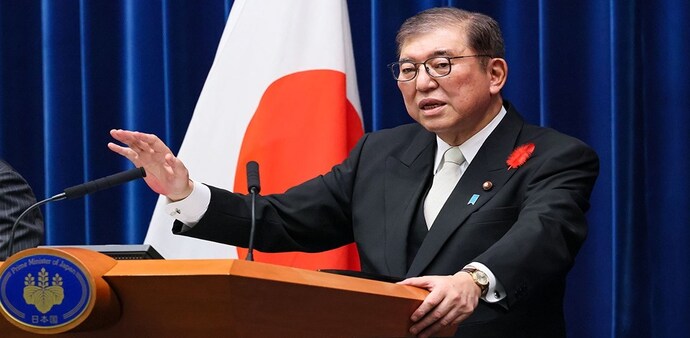
Japan’s Prime Minister Shigeru Ishiba said Sunday he will step down as leader of the world’s fourth-largest economy, citing deep divisions within the ruling Liberal Democratic Party (LDP) and the fallout from US tariff measures.
“I made a difficult decision to step down,” Ishiba told reporters, adding it was his “strong wish” for the LDP to overcome the “difficult divide” within its ranks. He said he had considered resigning since last year’s election but felt the timing was right now that negotiations with Washington over tariffs had reached a milestone.
The announcement comes after months of political turmoil. The LDP lost its parliamentary majority in a snap election late last year, followed by another setback in July when its ruling coalition lost control of the upper house. A party report last week blamed the defeats on unpopular inflation measures, scandals, and weak youth outreach.
Ishiba’s resignation follows US President Donald Trump’s executive order imposing a 15% baseline tariff on Japanese goods, including autos. While Tokyo secured some concessions in a trade deal, Japan’s negotiator Ryosei Akazawa said parts of the agreement — including tariffs on pharmaceuticals and semiconductors — remain unresolved. Ishiba described the tariffs as a “national crisis.”
The outgoing prime minister has asked the LDP to hold an emergency leadership vote. Until a successor is chosen, he will remain in office.
Race for Ishiba’s successor
The leadership contest is expected to be crowded. To qualify, LDP hopefuls need the backing of at least 20 lawmakers. While the party no longer controls either chamber of parliament, it remains the largest bloc in the lower house, making its new leader the frontrunner to become prime minister.
Potential candidates include:
- Sanae Takaichi: Former internal affairs minister, runner-up to Ishiba in last year’s leadership race, known for cautious monetary policy and support for stimulus measures.
- Shinjiro Koizumi: Agriculture minister and son of a former prime minister, seen as a fresh face who could appeal to younger voters. He reportedly urged Ishiba to resign before Sunday’s announcement.
- Takayuki Kobayashi: Former economic security minister, positioned on the right wing of the party, likely to compete for conservative backing.
- Yoshimasa Hayashi: Current chief cabinet secretary, seen as a consensus-builder.
- Katsunobu Kato: Finance minister, also viewed as a possible contender.
With the LDP weakened, there is also a slim chance that an opposition leader could emerge as Japan’s next prime minister if the party fails to secure enough parliamentary support.
Japan’s Prime Minister Shigeru Ishiba said Sunday he will step down as leader of the world’s fourth-largest economy, citing deep divisions within the ruling Liberal Democratic Party (LDP) and the fallout from US tariff measures.
“I made a difficult decision to step down,” Ishiba told reporters, adding it was his “strong wish” for the LDP to overcome the “difficult divide” within its ranks. He said he had considered resigning since last year’s election but felt the timing was right now that negotiations with Washington over tariffs had reached a milestone.
The announcement comes after months of political turmoil. The LDP lost its parliamentary majority in a snap election late last year, followed by another setback in July when its ruling coalition lost control of the upper house. A party report last week blamed the defeats on unpopular inflation measures, scandals, and weak youth outreach.
Ishiba’s resignation follows US President Donald Trump’s executive order imposing a 15% baseline tariff on Japanese goods, including autos. While Tokyo secured some concessions in a trade deal, Japan’s negotiator Ryosei Akazawa said parts of the agreement — including tariffs on pharmaceuticals and semiconductors — remain unresolved. Ishiba described the tariffs as a “national crisis.”
The outgoing prime minister has asked the LDP to hold an emergency leadership vote. Until a successor is chosen, he will remain in office.
Race for Ishiba’s successor
The leadership contest is expected to be crowded. To qualify, LDP hopefuls need the backing of at least 20 lawmakers. While the party no longer controls either chamber of parliament, it remains the largest bloc in the lower house, making its new leader the frontrunner to become prime minister.
Potential candidates include:
- Sanae Takaichi: Former internal affairs minister, runner-up to Ishiba in last year’s leadership race, known for cautious monetary policy and support for stimulus measures.
- Shinjiro Koizumi: Agriculture minister and son of a former prime minister, seen as a fresh face who could appeal to younger voters. He reportedly urged Ishiba to resign before Sunday’s announcement.
- Takayuki Kobayashi: Former economic security minister, positioned on the right wing of the party, likely to compete for conservative backing.
- Yoshimasa Hayashi: Current chief cabinet secretary, seen as a consensus-builder.
- Katsunobu Kato: Finance minister, also viewed as a possible contender.
With the LDP weakened, there is also a slim chance that an opposition leader could emerge as Japan’s next prime minister if the party fails to secure enough parliamentary support.