
‘Kangaroo court’: Brahma Chellaney says Sheikh Hasina’s death sentence is an act of political retribution
"The ICT’s death sentence against ousted Prime Minister Sheikh Hasina surprises no one," said Brahma Chellaney.
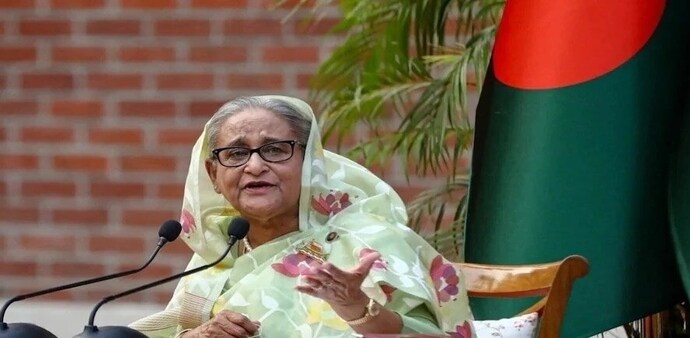
- Nov 17, 2025,
- Updated Nov 17, 2025 4:14 PM IST
The Bangladesh kangaroo court has meted out political retribution through Sheikh Hasina’s death sentence, said geostrategist Brahma Chellaney. He said the Yunus-led regime is seeking to erode the former prime minister’s mass base.
“Bangladesh’s Kangaroo Court: The ICT’s death sentence against ousted Prime Minister Sheikh Hasina surprises no one. The unelected interim regime and its patrons have weaponized the legal process to eliminate their strongest political adversaries. This verdict is not a judicial finding but a calculated act of political retribution,” he said.
“Having already outlawed the country’s largest political party — Hasina’s Awami League, which led Bangladesh to independence — the Yunus-led regime has stripped the planned February 2026 election of legitimacy. Now, through a death sentence delivered by a tribunal stacked with politically aligned judges, it is seeking to erode Hasina’s mass base,” added Chellaney.
Sheikh Hasina received the death penalty in absentia on Monday from a special tribunal, following her conviction for crimes against humanity. The verdict relates to her government's response to student-led protests last year, which resulted in hundreds of fatalities. The International Crimes Tribunal (ICT) described the 78-year-old Awami League leader as the "mastermind and principal architect" of the crackdown that killed protestors in Dhaka and surrounding areas. Hasina has resided in India since fleeing Bangladesh on August 5 last year amid widespread agitation, with the court previously declaring her a fugitive.
The tribunal, established to try collaborators from the 1971 Liberation War but now amended to prosecute former regime leaders, handed down the death sentence after finding Hasina guilty of ordering the use of deadly force against unarmed protesters, making inflammatory statements, and authorising operations that led to the deaths of students.
A report by the UN rights office estimated up to 1,400 deaths during the July Uprising, the month-long student protests in Dhaka and surrounding regions.
The ICT stated that Hasina authorised the deployment of helicopters and lethal weapons, and committed crimes against humanity by inciting violence and failing to punish those responsible for attacks on protesting students. Most senior Awami League leaders have been arrested or have fled since Hasina's regime collapsed.
Reading out the verdict before a heavily guarded courtroom, the ICT said the prosecution proved beyond reasonable doubt that Hasina was responsible for the violent repression in July and August last year. The tribunal's decision comes just months before parliamentary elections are scheduled, with Hasina's Awami League party barred from contesting in February.
In response, Hasina described the tribunal as a "rigged tribunal established and presided over by an unelected government with no democratic mandate." She alleged political motivation and bias behind the sentencing.
In media interviews, Hasina criticised the ICT as a "kangaroo court" operated by her political opponents. She further stated, "They are biased and politically motivated. In their distasteful call for the death penalty, they reveal the brazen and murderous intent of extremist figures within the interim government to remove Bangladesh's last elected prime minister, and to nullify the Awami League as a political force.”
Hasina also said she was not afraid to face her "accusers" in an impartial tribunal. She added, "That is why I have repeatedly challenged the interim government to bring these charges before the International Criminal Court (ICC) in the Hague."
A spokesperson for the interim government led by Nobel laureate Muhammad Yunus has denied the trial was politically motivated, saying that the court “functioned transparently, allowing observers and publishing regular documentation”.
The Bangladesh kangaroo court has meted out political retribution through Sheikh Hasina’s death sentence, said geostrategist Brahma Chellaney. He said the Yunus-led regime is seeking to erode the former prime minister’s mass base.
“Bangladesh’s Kangaroo Court: The ICT’s death sentence against ousted Prime Minister Sheikh Hasina surprises no one. The unelected interim regime and its patrons have weaponized the legal process to eliminate their strongest political adversaries. This verdict is not a judicial finding but a calculated act of political retribution,” he said.
“Having already outlawed the country’s largest political party — Hasina’s Awami League, which led Bangladesh to independence — the Yunus-led regime has stripped the planned February 2026 election of legitimacy. Now, through a death sentence delivered by a tribunal stacked with politically aligned judges, it is seeking to erode Hasina’s mass base,” added Chellaney.
Sheikh Hasina received the death penalty in absentia on Monday from a special tribunal, following her conviction for crimes against humanity. The verdict relates to her government's response to student-led protests last year, which resulted in hundreds of fatalities. The International Crimes Tribunal (ICT) described the 78-year-old Awami League leader as the "mastermind and principal architect" of the crackdown that killed protestors in Dhaka and surrounding areas. Hasina has resided in India since fleeing Bangladesh on August 5 last year amid widespread agitation, with the court previously declaring her a fugitive.
The tribunal, established to try collaborators from the 1971 Liberation War but now amended to prosecute former regime leaders, handed down the death sentence after finding Hasina guilty of ordering the use of deadly force against unarmed protesters, making inflammatory statements, and authorising operations that led to the deaths of students.
A report by the UN rights office estimated up to 1,400 deaths during the July Uprising, the month-long student protests in Dhaka and surrounding regions.
The ICT stated that Hasina authorised the deployment of helicopters and lethal weapons, and committed crimes against humanity by inciting violence and failing to punish those responsible for attacks on protesting students. Most senior Awami League leaders have been arrested or have fled since Hasina's regime collapsed.
Reading out the verdict before a heavily guarded courtroom, the ICT said the prosecution proved beyond reasonable doubt that Hasina was responsible for the violent repression in July and August last year. The tribunal's decision comes just months before parliamentary elections are scheduled, with Hasina's Awami League party barred from contesting in February.
In response, Hasina described the tribunal as a "rigged tribunal established and presided over by an unelected government with no democratic mandate." She alleged political motivation and bias behind the sentencing.
In media interviews, Hasina criticised the ICT as a "kangaroo court" operated by her political opponents. She further stated, "They are biased and politically motivated. In their distasteful call for the death penalty, they reveal the brazen and murderous intent of extremist figures within the interim government to remove Bangladesh's last elected prime minister, and to nullify the Awami League as a political force.”
Hasina also said she was not afraid to face her "accusers" in an impartial tribunal. She added, "That is why I have repeatedly challenged the interim government to bring these charges before the International Criminal Court (ICC) in the Hague."
A spokesperson for the interim government led by Nobel laureate Muhammad Yunus has denied the trial was politically motivated, saying that the court “functioned transparently, allowing observers and publishing regular documentation”.