
'Keep Hormuz open': Trump dials PM Modi, discusses West Asia crisis day after pausing strikes on Iran
Hormuz is a critical chokepoint for global energy supplies, and any disruption has implications for oil flows and prices. Iran has nearly closed the Strait ever since Israel and the US launched strikes on Tehran
- Mar 24, 2026,
- Updated Mar 24, 2026 7:15 PM IST
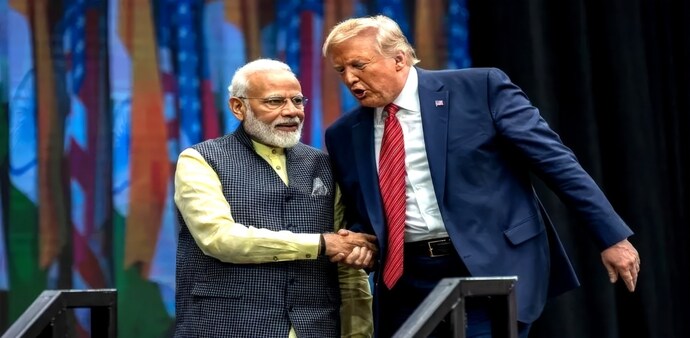
US President Donald Trump and Prime Minister Narendra Modi discussed the escalating situation in West Asia, including the need to keep the Strait of Hormuz open, during a call on Tuesday, US Ambassador to India Sergio Gor said on Tuesday.
Also read: Your medicines could soon cost more: The impact of West Asia tensions
"President Donald Trump just spoke with Prime Minister Modi. They discussed the ongoing situation in the Middle East, including the importance of keeping the Strait of Hormuz open," Gor wrote on X.
Prime Minister Modi said he received a call from Trump and "had a useful exchange of views on the situation in West Asia."
"India supports de-escalation and restoration of peace at the earliest," PM Modi wrote on X. "Ensuring that the Strait of Hormuz remains open, secure, and accessible is essential for the whole world. We agreed to stay in touch regarding efforts towards peace and stability."
The Strait of Hormuz is a critical chokepoint for global energy supplies, and any disruption has implications for oil flows and prices. Iran has nearly closed the Strait ever since Israel and the US launched strikes on Tehran.
Prime Minister Modi, speaking in Parliament, said that the closure of Hormuz is not acceptable.
The call comes just a day after Trump announced a temporary pause in planned military strikes on Iran.
"I am pleased to report that the United States of America, and the country of Iran, have had, over the last two days, very good and productive conversations regarding a complete and total resolution of our hostilities in the Middle East," he wrote on Truth Social.
"Based on the tenor and tone of these in-depth, detailed, and constructive conversations, which will continue throughout the week, I have instructed the Department of War to postpone any and all military strikes against Iranian power plants and energy infrastructure for a five-day period, subject to the success of the ongoing meetings and discussions."
US President Donald Trump and Prime Minister Narendra Modi discussed the escalating situation in West Asia, including the need to keep the Strait of Hormuz open, during a call on Tuesday, US Ambassador to India Sergio Gor said on Tuesday.
Also read: Your medicines could soon cost more: The impact of West Asia tensions
"President Donald Trump just spoke with Prime Minister Modi. They discussed the ongoing situation in the Middle East, including the importance of keeping the Strait of Hormuz open," Gor wrote on X.
Prime Minister Modi said he received a call from Trump and "had a useful exchange of views on the situation in West Asia."
"India supports de-escalation and restoration of peace at the earliest," PM Modi wrote on X. "Ensuring that the Strait of Hormuz remains open, secure, and accessible is essential for the whole world. We agreed to stay in touch regarding efforts towards peace and stability."
The Strait of Hormuz is a critical chokepoint for global energy supplies, and any disruption has implications for oil flows and prices. Iran has nearly closed the Strait ever since Israel and the US launched strikes on Tehran.
Prime Minister Modi, speaking in Parliament, said that the closure of Hormuz is not acceptable.
The call comes just a day after Trump announced a temporary pause in planned military strikes on Iran.
"I am pleased to report that the United States of America, and the country of Iran, have had, over the last two days, very good and productive conversations regarding a complete and total resolution of our hostilities in the Middle East," he wrote on Truth Social.
"Based on the tenor and tone of these in-depth, detailed, and constructive conversations, which will continue throughout the week, I have instructed the Department of War to postpone any and all military strikes against Iranian power plants and energy infrastructure for a five-day period, subject to the success of the ongoing meetings and discussions."