
‘Locked and ready to go’: Trump threatens action if Iran kills protesters amid unrest
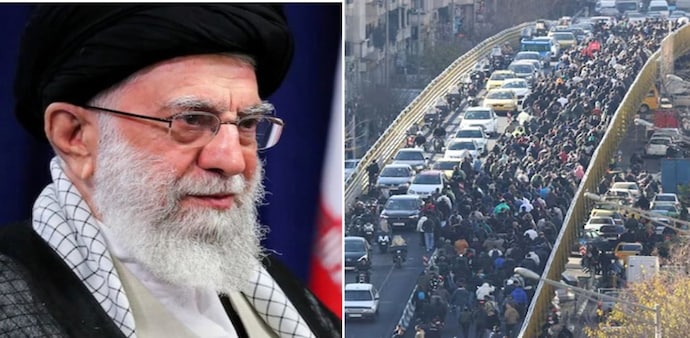
The unrest began last weekend when business owners and ordinary citizens took to the streets to protest Iran’s worsening economic conditions. Years of hyperinflation, compounded by Western sanctions linked to Tehran’s nuclear programme and its support for militant groups in the region, have sharply eroded purchasing power and livelihoods.
- Jan 2, 2026,
- Updated Jan 2, 2026 3:12 PM IST
Former US President Donald Trump issued a stark warning to Iran on December 2, saying the United States would intervene if Iranian authorities “violently kill peaceful protesters,” as a wave of demonstrations driven by economic distress continued to spread across the country.
In a post on his social media platform Truth Social, Trump wrote that Washington was “locked and loaded and ready to go” if Iranian security forces used lethal force against demonstrators. “If Iran shoots and violently kills peaceful protesters, which is their custom, the United States of America will come to their rescue,” he said, offering no further details on what form such intervention might take.
The message, published shortly before 3 am Eastern Time, came amid mounting reports of deaths and injuries as protests entered their second week. According to media reports, at least six to seven people have been killed in clashes between demonstrators and security forces, with violence reported in multiple cities.
Protests sparked by economic crisis
The unrest began last weekend when business owners and ordinary citizens took to the streets to protest Iran’s worsening economic conditions. Years of hyperinflation, compounded by Western sanctions linked to Tehran’s nuclear programme and its support for militant groups in the region, have sharply eroded purchasing power and livelihoods.
Iran’s national currency, the rial, has lost more than a third of its value against the US dollar over the past year, while double-digit inflation has become a persistent feature of daily life. Protesters have cited rising prices, unemployment and economic stagnation as key grievances.
Videos and photographs circulating on social media show crowds marching through Tehran and other major cities, chanting anti-government slogans and, increasingly, openly calling for the end of clerical rule. In a notable shift, pro-monarchy chants — largely absent from Iran’s streets for decades — have reportedly dominated protests in several locations.
Security response and casualties
Clashes between demonstrators and security forces have been reported in western cities such as Hamadan and Nurabad in Lorestan province, where videos appear to show officers firing live ammunition at protesters who refused to disperse. Protests have also reached Qom, a clerical stronghold and symbolically important centre of Iran’s religious establishment.
Iranian authorities have acknowledged public frustration over economic conditions and said peaceful protest is legitimate. However, they have accused “foreign powers” — a phrase often used to refer to the United States and Israel — of exploiting demonstrations to incite violence and destabilise the country.
The Islamic Revolutionary Guards Corps said one member of its affiliated Basij volunteer paramilitary force was killed in Kuhdasht, with 13 others injured. Officials blamed demonstrators for the violence, accusing them of taking advantage of otherwise legitimate protests. The Basij is a powerful force loyal to Supreme Leader Ayatollah Ali Khamenei and has frequently been deployed to suppress dissent.
Opposition voices & international attention
Iran’s exiled crown prince, Reza Pahlavi, praised protesters and honoured those killed in the demonstrations, calling them “true heroes of this land.” He urged Iranians to remain united, framing the unrest as a historic moment in the struggle for political change.
Trump’s remarks have added an international dimension to the crisis, raising questions about whether his rhetoric could escalate tensions between Washington and Tehran at a volatile moment. While he did not outline any specific plan of action, his warning underscores the degree of scrutiny Iran’s handling of the protests is drawing abroad.
Iran faces its most significant wave of protest in three years — with the potential to further strain an already fragile domestic and geopolitical situation.
Former US President Donald Trump issued a stark warning to Iran on December 2, saying the United States would intervene if Iranian authorities “violently kill peaceful protesters,” as a wave of demonstrations driven by economic distress continued to spread across the country.
In a post on his social media platform Truth Social, Trump wrote that Washington was “locked and loaded and ready to go” if Iranian security forces used lethal force against demonstrators. “If Iran shoots and violently kills peaceful protesters, which is their custom, the United States of America will come to their rescue,” he said, offering no further details on what form such intervention might take.
The message, published shortly before 3 am Eastern Time, came amid mounting reports of deaths and injuries as protests entered their second week. According to media reports, at least six to seven people have been killed in clashes between demonstrators and security forces, with violence reported in multiple cities.
Protests sparked by economic crisis
The unrest began last weekend when business owners and ordinary citizens took to the streets to protest Iran’s worsening economic conditions. Years of hyperinflation, compounded by Western sanctions linked to Tehran’s nuclear programme and its support for militant groups in the region, have sharply eroded purchasing power and livelihoods.
Iran’s national currency, the rial, has lost more than a third of its value against the US dollar over the past year, while double-digit inflation has become a persistent feature of daily life. Protesters have cited rising prices, unemployment and economic stagnation as key grievances.
Videos and photographs circulating on social media show crowds marching through Tehran and other major cities, chanting anti-government slogans and, increasingly, openly calling for the end of clerical rule. In a notable shift, pro-monarchy chants — largely absent from Iran’s streets for decades — have reportedly dominated protests in several locations.
Security response and casualties
Clashes between demonstrators and security forces have been reported in western cities such as Hamadan and Nurabad in Lorestan province, where videos appear to show officers firing live ammunition at protesters who refused to disperse. Protests have also reached Qom, a clerical stronghold and symbolically important centre of Iran’s religious establishment.
Iranian authorities have acknowledged public frustration over economic conditions and said peaceful protest is legitimate. However, they have accused “foreign powers” — a phrase often used to refer to the United States and Israel — of exploiting demonstrations to incite violence and destabilise the country.
The Islamic Revolutionary Guards Corps said one member of its affiliated Basij volunteer paramilitary force was killed in Kuhdasht, with 13 others injured. Officials blamed demonstrators for the violence, accusing them of taking advantage of otherwise legitimate protests. The Basij is a powerful force loyal to Supreme Leader Ayatollah Ali Khamenei and has frequently been deployed to suppress dissent.
Opposition voices & international attention
Iran’s exiled crown prince, Reza Pahlavi, praised protesters and honoured those killed in the demonstrations, calling them “true heroes of this land.” He urged Iranians to remain united, framing the unrest as a historic moment in the struggle for political change.
Trump’s remarks have added an international dimension to the crisis, raising questions about whether his rhetoric could escalate tensions between Washington and Tehran at a volatile moment. While he did not outline any specific plan of action, his warning underscores the degree of scrutiny Iran’s handling of the protests is drawing abroad.
Iran faces its most significant wave of protest in three years — with the potential to further strain an already fragile domestic and geopolitical situation.