
Massive setback to Trump: Canada 'not participating' in US-Israel war on Iran, says Mark Carney
He, however, said that the country supports the necessity to prevent Iran's nuclear program and the export of terrorism.
- Mar 16, 2026,
- Updated Mar 16, 2026 10:10 AM IST
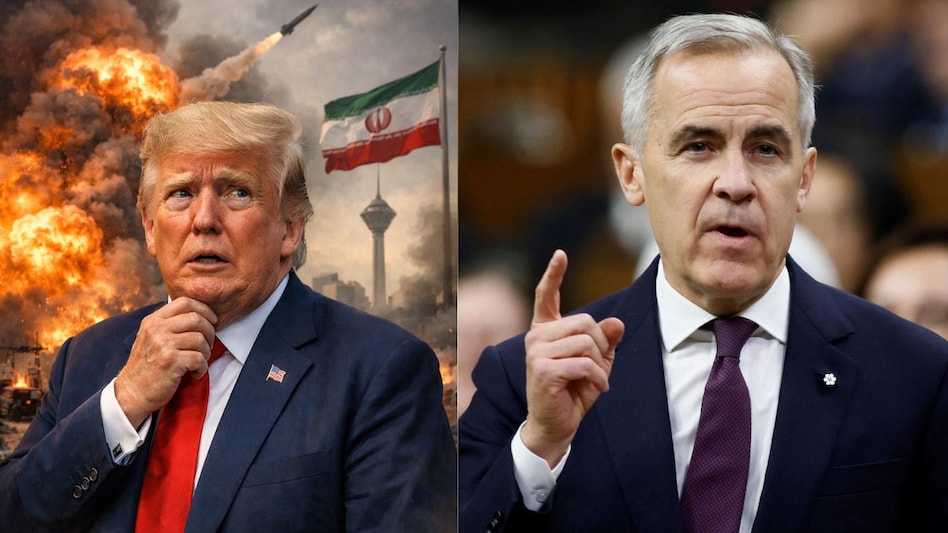
In a massive 'Et tu, Brute?' moment for US President Donald Trump, Canadian Prime Minister Mark Carney recently said in a parliamentary statement that Canada would not participate in the US-Israel offensive against Iran, which is in its third week.
According to the clip, which recently went viral on social media, Carney said on the floor of the Canadian parliament, "Canada is not participating in offensive operations of Israel and the United States and will not ever."
He, however, said that the country supports the necessity to prevent Iran's nuclear program and the export of terrorism. Carney also told the parliament that he spoke to the French President Emmanuel Macron and the two discussed the importance of maintaining safe passage via the Strait of Hormuz as well as the effect of the war on global oil and energy prices.
Commenting on this development, geopolitical analyst Brian Allen said in a post on X that the raging war across West Asia has not united the world behind America but has instead isolated it from the world. To substantiate his argument, he cited instances such as Iran banning American ships from the Strait while letting others, such as China and India, through.
Meanwhile, Trump warned NATO allies of a "very bad future" if they fail to assist the US in securing and reopening Hormuz, which handles approximately 20 per cent of global oil supplies.
In an interview with the Financial Times, he said that China should help secure the strategically vital waterway as it receives around 90 per cent of its oil through the Strait, adding he wants clarity on Beijing's stance before he meets with Xi Jinping in China.
He hinted that his planned trip to China later this month could be delayed depending on the country's position vis-à-vis the Hormuz blockade. Furthermore, Trump said that Britain initially refused to deploy ships despite being a critical US ally, offering support only after Iran's military capability has been reduced.
In a massive 'Et tu, Brute?' moment for US President Donald Trump, Canadian Prime Minister Mark Carney recently said in a parliamentary statement that Canada would not participate in the US-Israel offensive against Iran, which is in its third week.
According to the clip, which recently went viral on social media, Carney said on the floor of the Canadian parliament, "Canada is not participating in offensive operations of Israel and the United States and will not ever."
He, however, said that the country supports the necessity to prevent Iran's nuclear program and the export of terrorism. Carney also told the parliament that he spoke to the French President Emmanuel Macron and the two discussed the importance of maintaining safe passage via the Strait of Hormuz as well as the effect of the war on global oil and energy prices.
Commenting on this development, geopolitical analyst Brian Allen said in a post on X that the raging war across West Asia has not united the world behind America but has instead isolated it from the world. To substantiate his argument, he cited instances such as Iran banning American ships from the Strait while letting others, such as China and India, through.
Meanwhile, Trump warned NATO allies of a "very bad future" if they fail to assist the US in securing and reopening Hormuz, which handles approximately 20 per cent of global oil supplies.
In an interview with the Financial Times, he said that China should help secure the strategically vital waterway as it receives around 90 per cent of its oil through the Strait, adding he wants clarity on Beijing's stance before he meets with Xi Jinping in China.
He hinted that his planned trip to China later this month could be delayed depending on the country's position vis-à-vis the Hormuz blockade. Furthermore, Trump said that Britain initially refused to deploy ships despite being a critical US ally, offering support only after Iran's military capability has been reduced.