
Meet Tommy Robinson, the man behind London's biggest ever rally against immigration
Once a bankrupt ex-prisoner, now the face of one of the UK’s biggest right-wing rallies in years.
- Sep 14, 2025,
- Updated Sep 14, 2025 9:32 AM IST
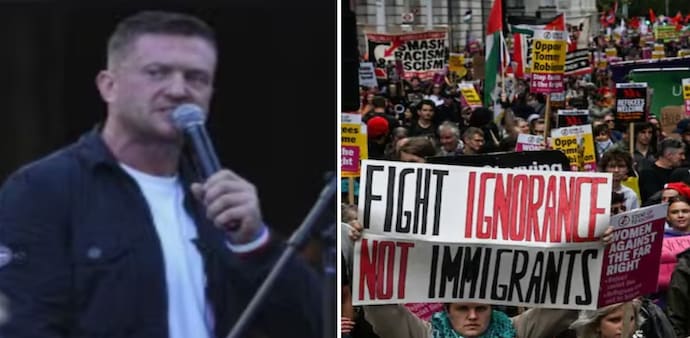
London saw one of the largest demonstrations in recent memory on Saturday, as more than 100,000 people rallied under the leadership of anti-immigration campaigner Tommy Robinson.
Branded the "Unite the Kingdom" march, the event drew an estimated 110,000 participants, with police reporting assaults on several officers during the protests.
Who is Tommy Robinson?
Robinson, born Stephen Yaxley-Lennon in 1982, has been one of the most controversial figures in Britain’s far-right politics for over a decade. At 41, he has built his reputation on anger and confrontation, and he continues to draw both loyal supporters and fierce critics.
Robinson first rose to prominence in 2009 when he co-founded the English Defence League, a street protest movement that quickly became known for violent clashes and links to football hooliganism. Although he stepped down as leader in 2013, saying he was worried about “rising extremism,” he remained active as a campaigner and online activist.
His career has been marked by repeated clashes with the law. He has been convicted for assault, mortgage fraud and contempt of court. In 2018, he was jailed for livestreaming outside a trial. Six years later, in 2024, he received an 18-month prison sentence for breaking a High Court order that barred him from repeating false claims about a Syrian refugee. The judge described this as a “deliberate and flagrant breach” and said Robinson had shown “no remorse.”
Financial troubles have followed him as well. In 2021, Robinson declared bankruptcy, admitting he had gambled away large sums even while asking for donations. He has also acknowledged spending money from supporters “on drink, alcohol and partying.”
Robinson has often said that anger drives him — anger at Islam, at migration to Britain, at the BBC and mainstream media, and at the way police have treated him. That anger has helped him build a dedicated following, especially online. Although banned from Twitter in 2018, he was reinstated under Elon Musk’s ownership and now has more than a million followers on X.
For his critics, Robinson is a provocateur who spreads division and hate. For his supporters, he remains a defender of free speech and patriotism. That divide was on full display on Saturday, when more than 100,000 people joined him in London for a “Unite the Kingdom” march.
Organisers called it a rally for free speech, and it was one of the largest gatherings Britain has seen in years. Demonstrators waved Union Jacks, St George’s flags and wooden crosses as chants in support of Robinson rang out, mixed with insults aimed at Labour leader Keir Starmer.
Police reported scuffles, assaults and attempts to breach barriers separating the rally from a 5,000-strong counter-march organised by Stand Up To Racism.
London saw one of the largest demonstrations in recent memory on Saturday, as more than 100,000 people rallied under the leadership of anti-immigration campaigner Tommy Robinson.
Branded the "Unite the Kingdom" march, the event drew an estimated 110,000 participants, with police reporting assaults on several officers during the protests.
Who is Tommy Robinson?
Robinson, born Stephen Yaxley-Lennon in 1982, has been one of the most controversial figures in Britain’s far-right politics for over a decade. At 41, he has built his reputation on anger and confrontation, and he continues to draw both loyal supporters and fierce critics.
Robinson first rose to prominence in 2009 when he co-founded the English Defence League, a street protest movement that quickly became known for violent clashes and links to football hooliganism. Although he stepped down as leader in 2013, saying he was worried about “rising extremism,” he remained active as a campaigner and online activist.
His career has been marked by repeated clashes with the law. He has been convicted for assault, mortgage fraud and contempt of court. In 2018, he was jailed for livestreaming outside a trial. Six years later, in 2024, he received an 18-month prison sentence for breaking a High Court order that barred him from repeating false claims about a Syrian refugee. The judge described this as a “deliberate and flagrant breach” and said Robinson had shown “no remorse.”
Financial troubles have followed him as well. In 2021, Robinson declared bankruptcy, admitting he had gambled away large sums even while asking for donations. He has also acknowledged spending money from supporters “on drink, alcohol and partying.”
Robinson has often said that anger drives him — anger at Islam, at migration to Britain, at the BBC and mainstream media, and at the way police have treated him. That anger has helped him build a dedicated following, especially online. Although banned from Twitter in 2018, he was reinstated under Elon Musk’s ownership and now has more than a million followers on X.
For his critics, Robinson is a provocateur who spreads division and hate. For his supporters, he remains a defender of free speech and patriotism. That divide was on full display on Saturday, when more than 100,000 people joined him in London for a “Unite the Kingdom” march.
Organisers called it a rally for free speech, and it was one of the largest gatherings Britain has seen in years. Demonstrators waved Union Jacks, St George’s flags and wooden crosses as chants in support of Robinson rang out, mixed with insults aimed at Labour leader Keir Starmer.
Police reported scuffles, assaults and attempts to breach barriers separating the rally from a 5,000-strong counter-march organised by Stand Up To Racism.