
Mojtaba Khamenei wounded & disfigured after deadly Tehran strike. Will he be able to steer Iran?
While there has been no official confirmation from Tehran on the severity of his injuries, state media has referred to him as a “janbaz” — a term reserved for those seriously wounded in service.
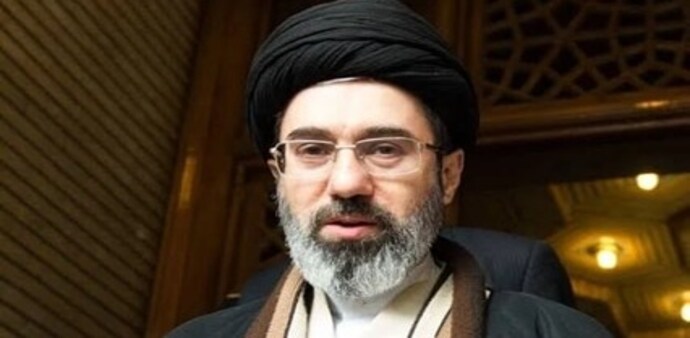
- Apr 11, 2026,
- Updated Apr 11, 2026 5:38 PM IST
West Asia crisis: Iran’s newly appointed Supreme Leader Mojtaba Khamenei is recovering from severe injuries sustained in the airstrike that killed his father, Ali Khamenei, at the outset of the ongoing conflict, according to multiple sources familiar with his inner circle.
The 56-year-old cleric reportedly suffered significant facial disfigurement and serious leg injuries when the supreme leader’s compound in central Tehran was struck on February 28 — the first day of the war launched by the United States and Israel. The strike not only ended the decades-long rule of Ali Khamenei, who had led Iran since 1989, but also claimed the lives of several family members, including Mojtaba’s wife and close relatives.
Despite the extent of his injuries, sources say Mojtaba Khamenei remains mentally alert and actively engaged in state affairs. He is understood to be participating in high-level discussions through audio conferencing, contributing to decisions on both military strategy and sensitive negotiations with Washington. However, he has not made any public appearances since assuming power.
The absence of a visible leader at a critical juncture has raised concerns among analysts and foreign officials. Reports suggest that key institutions, including the powerful Islamic Revolutionary Guard Corps, may be operating without fully centralised command.
The uncertainty comes as high-stakes peace talks between Iran and the United States begin in Islamabad, with both sides attempting to turn a fragile ceasefire into a broader diplomatic breakthrough. The effectiveness of Iran’s negotiating position may hinge significantly on Khamenei’s ability to assert authority despite his condition.
While there has been no official confirmation from Tehran on the severity of his injuries, state media has referred to him as a “janbaz” — a term reserved for those seriously wounded in service. Earlier, US Defense Secretary Pete Hegseth publicly stated that Khamenei had been “wounded and likely disfigured,” with intelligence assessments suggesting he may have lost a leg.
Who is Mojtaba Khamenei?
Born in 1969 in Mashhad, Mojtaba Khamenei grew up during the turbulent years leading up to the Iranian Revolution. His early life was shaped by political upheaval, including reported raids by the Shah’s secret police on his family home during his father’s opposition to the monarchy.
Long viewed as a powerful but behind-the-scenes figure within Iran’s clerical establishment, Mojtaba’s elevation to Supreme Leader marks a historic and controversial transition — placing him at the helm of the Islamic Republic during one of its most precarious moments in decades.
West Asia crisis: Iran’s newly appointed Supreme Leader Mojtaba Khamenei is recovering from severe injuries sustained in the airstrike that killed his father, Ali Khamenei, at the outset of the ongoing conflict, according to multiple sources familiar with his inner circle.
The 56-year-old cleric reportedly suffered significant facial disfigurement and serious leg injuries when the supreme leader’s compound in central Tehran was struck on February 28 — the first day of the war launched by the United States and Israel. The strike not only ended the decades-long rule of Ali Khamenei, who had led Iran since 1989, but also claimed the lives of several family members, including Mojtaba’s wife and close relatives.
Despite the extent of his injuries, sources say Mojtaba Khamenei remains mentally alert and actively engaged in state affairs. He is understood to be participating in high-level discussions through audio conferencing, contributing to decisions on both military strategy and sensitive negotiations with Washington. However, he has not made any public appearances since assuming power.
The absence of a visible leader at a critical juncture has raised concerns among analysts and foreign officials. Reports suggest that key institutions, including the powerful Islamic Revolutionary Guard Corps, may be operating without fully centralised command.
The uncertainty comes as high-stakes peace talks between Iran and the United States begin in Islamabad, with both sides attempting to turn a fragile ceasefire into a broader diplomatic breakthrough. The effectiveness of Iran’s negotiating position may hinge significantly on Khamenei’s ability to assert authority despite his condition.
While there has been no official confirmation from Tehran on the severity of his injuries, state media has referred to him as a “janbaz” — a term reserved for those seriously wounded in service. Earlier, US Defense Secretary Pete Hegseth publicly stated that Khamenei had been “wounded and likely disfigured,” with intelligence assessments suggesting he may have lost a leg.
Who is Mojtaba Khamenei?
Born in 1969 in Mashhad, Mojtaba Khamenei grew up during the turbulent years leading up to the Iranian Revolution. His early life was shaped by political upheaval, including reported raids by the Shah’s secret police on his family home during his father’s opposition to the monarchy.
Long viewed as a powerful but behind-the-scenes figure within Iran’s clerical establishment, Mojtaba’s elevation to Supreme Leader marks a historic and controversial transition — placing him at the helm of the Islamic Republic during one of its most precarious moments in decades.