
Nepal's crucial vote on March 5: The key contenders and why it matters for India
Nearly 1.9 crore of Nepal's 3 crore citizens are eligible to vote. Of the 275 seats, 165 will be decided through direct contests
- Feb 27, 2026,
- Updated Feb 27, 2026 9:28 PM IST
Six months after deadly youth-led protests forced the resignation of Prime Minister KP Sharma Oli, Nepal is preparing for a national election on March 5.
This will be the first election since the anti-corruption demonstrations last September, in which dozens were killed, and hundreds were injured as protesters attacked government buildings and police opened fire.
Public anger over corruption, unemployment, and inequality led to the collapse of the coalition government and triggered fresh elections for the 275-member House of Representatives.
Nearly 1.9 crore of Nepal's 3 crore citizens are eligible to vote. Of the 275 seats, 165 will be decided through direct contests - where the candidate with the most votes wins - while the remaining seats will be allocated under proportional representation based on each party's vote share.
Whoever wins a majority in the lower house will become Nepal’s 16th prime minister in under 20 years. That reflects the political instability the Himalayan nation has experienced since the monarchy was abolished in 2008.
Nepal Elections 2026: What is at stake
Corruption remains a central issue that fueled last year's protests. Job creation is another pressing concern. About a fifth of Nepal's population lives in poverty, and youth unemployment remains high.
Around a fifth of young people are unemployed in a country where many believe the political elite's children enjoy advantages and lifestyles far removed from the struggles of ordinary citizens.
Foreign policy is also emerging as a key theme in the campaign. Nepal, a landlocked nation situated between India and China, must balance ties with its two powerful neighbours.
India accounts for two-thirds of Nepal's international trade, while China accounts for 14% and has lent the country more than $130 million, according to the World Bank.
Why stable Nepal matters for India
For India, Nepal is not just a neighbouring country but a strategic and security partner.
Ranjit Rae, former Indian ambassador to Nepal, said in an earlier interview with Business Today that India's neighbourhood policy begins with ensuring calm in its immediate surroundings.
"Apart from investments and economic growth, India needs a peaceful neighbourhood. A neighbourhood that is in turmoil will absorb India's energies. So the neighbourhood is absolutely critical for India's own growth, regional and global role, and political & geostrategic role."
Security considerations further deepen the relationship. Nepal's location between India and China means that Beijing inevitably becomes a factor in bilateral ties. "Nepal is very important from a security perspective, and China - whether we like it or not - always becomes a factor in the relationship because of its geographical location and fluctuation in the India-China relationship," the former ambassador said.
Rae warned that periods of instability in Nepal have historically created openings for external actors and hostile elements. "Whenever Nepal is vulnerable, third forces, inimical elements, and external elements begin to play. And we have seen that - the hijack of IC 814 in 1999 - and there have been similar incidents where terrorists would either run away to Nepal or use Nepal for activities inimical to our security. So, it becomes a very important security relationship."
Nepal Elections 2026: The leading contenders
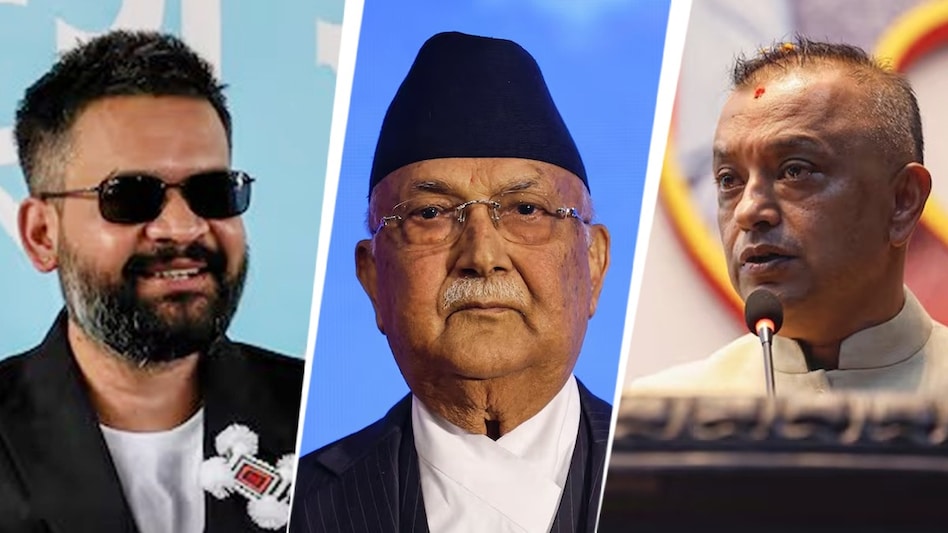
The campaign has produced an unusual mix of candidates: a former rapper turned mayor, the young leader of Nepal's oldest political party, and a communist veteran seeking a return to power.
Balendra Shah, widely known as Balen, is seen as a front-runner. The 35-year-old structural engineer gained modest fame as a rap artist before entering politics. He was elected mayor of Kathmandu in 2022 as an independent, capitalising on public anger toward established parties, and later left the post to run as the National Independent Party's candidate for Prime Minister.
During his tenure as mayor, Shah won praise for clearing illegal vendors, addressing the capital's chronic garbage problem, and pushing road expansions. He also drew criticism for ordering the demolition of homes and properties without adequate planning or notice. On the campaign trail, dressed in his signature black attire and sunglasses, he has drawn visible public support.
Another key contender is Gagan Thapa, 49, the newly installed leader of the Nepali Congress, the country's oldest major political party. A liberal democratic party with close ties to India, the Nepali Congress was part of the coalition government forced out during last year’s protests.
Long regarded as a popular figure within the party, Thapa had been restrained by senior leadership until earlier this year, when he mounted a rebellion and secured his election as party chief. He has pledged to eliminate corruption within five years and make the government fully accountable to the public.
The third leading candidate is former Prime Minister KP Sharma Oli, the communist leader whose government was toppled in September. Blamed by many for the deaths during the protests, he nonetheless retains significant support within the Communist Party and among its base.
Oli argues that Nepal's economy requires stable policies and steady leadership. His political bloc is seen as more friendly toward China, while Thapa’s party is traditionally viewed as closer to India.
With 65 parties contesting and three prominent figures vying for leadership, the March 5 election will determine not only who governs Nepal next, but whether the country can find greater stability after years of upheaval.
(With inputs from Reuters)
Six months after deadly youth-led protests forced the resignation of Prime Minister KP Sharma Oli, Nepal is preparing for a national election on March 5.
This will be the first election since the anti-corruption demonstrations last September, in which dozens were killed, and hundreds were injured as protesters attacked government buildings and police opened fire.
Public anger over corruption, unemployment, and inequality led to the collapse of the coalition government and triggered fresh elections for the 275-member House of Representatives.
Nearly 1.9 crore of Nepal's 3 crore citizens are eligible to vote. Of the 275 seats, 165 will be decided through direct contests - where the candidate with the most votes wins - while the remaining seats will be allocated under proportional representation based on each party's vote share.
Whoever wins a majority in the lower house will become Nepal’s 16th prime minister in under 20 years. That reflects the political instability the Himalayan nation has experienced since the monarchy was abolished in 2008.
Nepal Elections 2026: What is at stake
Corruption remains a central issue that fueled last year's protests. Job creation is another pressing concern. About a fifth of Nepal's population lives in poverty, and youth unemployment remains high.
Around a fifth of young people are unemployed in a country where many believe the political elite's children enjoy advantages and lifestyles far removed from the struggles of ordinary citizens.
Foreign policy is also emerging as a key theme in the campaign. Nepal, a landlocked nation situated between India and China, must balance ties with its two powerful neighbours.
India accounts for two-thirds of Nepal's international trade, while China accounts for 14% and has lent the country more than $130 million, according to the World Bank.
Why stable Nepal matters for India
For India, Nepal is not just a neighbouring country but a strategic and security partner.
Ranjit Rae, former Indian ambassador to Nepal, said in an earlier interview with Business Today that India's neighbourhood policy begins with ensuring calm in its immediate surroundings.
"Apart from investments and economic growth, India needs a peaceful neighbourhood. A neighbourhood that is in turmoil will absorb India's energies. So the neighbourhood is absolutely critical for India's own growth, regional and global role, and political & geostrategic role."
Security considerations further deepen the relationship. Nepal's location between India and China means that Beijing inevitably becomes a factor in bilateral ties. "Nepal is very important from a security perspective, and China - whether we like it or not - always becomes a factor in the relationship because of its geographical location and fluctuation in the India-China relationship," the former ambassador said.
Rae warned that periods of instability in Nepal have historically created openings for external actors and hostile elements. "Whenever Nepal is vulnerable, third forces, inimical elements, and external elements begin to play. And we have seen that - the hijack of IC 814 in 1999 - and there have been similar incidents where terrorists would either run away to Nepal or use Nepal for activities inimical to our security. So, it becomes a very important security relationship."
Nepal Elections 2026: The leading contenders
The campaign has produced an unusual mix of candidates: a former rapper turned mayor, the young leader of Nepal's oldest political party, and a communist veteran seeking a return to power.
Balendra Shah, widely known as Balen, is seen as a front-runner. The 35-year-old structural engineer gained modest fame as a rap artist before entering politics. He was elected mayor of Kathmandu in 2022 as an independent, capitalising on public anger toward established parties, and later left the post to run as the National Independent Party's candidate for Prime Minister.
During his tenure as mayor, Shah won praise for clearing illegal vendors, addressing the capital's chronic garbage problem, and pushing road expansions. He also drew criticism for ordering the demolition of homes and properties without adequate planning or notice. On the campaign trail, dressed in his signature black attire and sunglasses, he has drawn visible public support.
Another key contender is Gagan Thapa, 49, the newly installed leader of the Nepali Congress, the country's oldest major political party. A liberal democratic party with close ties to India, the Nepali Congress was part of the coalition government forced out during last year’s protests.
Long regarded as a popular figure within the party, Thapa had been restrained by senior leadership until earlier this year, when he mounted a rebellion and secured his election as party chief. He has pledged to eliminate corruption within five years and make the government fully accountable to the public.
The third leading candidate is former Prime Minister KP Sharma Oli, the communist leader whose government was toppled in September. Blamed by many for the deaths during the protests, he nonetheless retains significant support within the Communist Party and among its base.
Oli argues that Nepal's economy requires stable policies and steady leadership. His political bloc is seen as more friendly toward China, while Thapa’s party is traditionally viewed as closer to India.
With 65 parties contesting and three prominent figures vying for leadership, the March 5 election will determine not only who governs Nepal next, but whether the country can find greater stability after years of upheaval.
(With inputs from Reuters)