
No Kings movement explained: From Iran war to immigration crackdowns, what led to US protests against Trump
No Kings movement explained: From Iran war to immigration crackdowns, what led to US protests against Trump
Mass protests across the US under the "No Kings" movement reflect growing public anger over Donald Trump's presidency.
Tanushree Singh
- Mar 30, 2026,
- Updated Mar 30, 2026 5:11 PM IST
A surge of protests has gripped the United States, with the "No Kings" movement emerging as a major show of resistance against President Donald Trump's administration since his return to power in 2025.
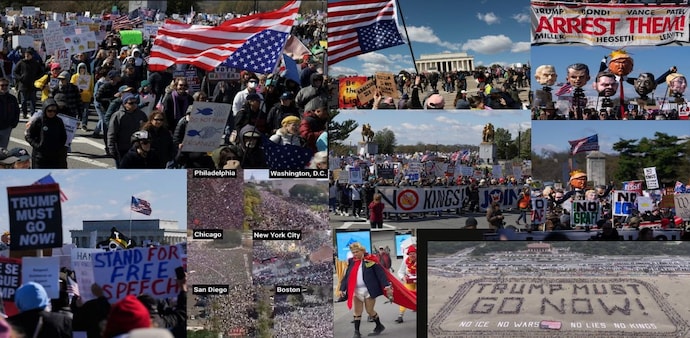
The latest round of protests, held on March 28, spanned all 50 states, with more than 3,000 demonstrations reported nationwide. From major cities like New York and Los Angeles to smaller towns and even international locations, the scale of participation signalled a widening wave of dissent.
Advertisement
What is the 'No Kings' movement?
The "No Kings" movement began in 2025, symbolically launched on Trump's birthday, and has since evolved into a recurring protest campaign. The name reflects a central accusation made by demonstrators that Trump is attempting to exercise power in an authoritarian manner, undermining democratic institutions.
Earlier rounds of protests had already drawn millions, with participation steadily increasing. By March 2026, organisers estimated turnout in the millions once again, making it one of the most visible protest movements in recent US political history.
What triggered the latest protests?
The latest surge of demonstrations is rooted in a combination of domestic and international issues that have intensified in recent months.
At the centre is the ongoing conflict involving the United States, Israel and Iran, which has now stretched into its fourth week. Protesters have linked rising global tensions and military escalation to decisions taken by the Trump administration, with fears of a prolonged war driving anger on the streets.
Advertisement
Alongside foreign policy concerns, immigration enforcement has emerged as a major flashpoint.
Aggressive actions by federal agencies, particularly in states like Minnesota, have drawn sharp criticism. The deaths of two individuals during enforcement operations earlier this year became a rallying point, amplifying outrage and mobilising large crowds.
Economic pressures have also contributed to the unrest, with rising living costs adding to public frustration.
Streets filled, slogans sharpened
From Washington DC's National Mall to Times Square in New York, crowds marched, chanted and carried signs reflecting both anger and satire.
"Trump must go now," flahed one banner. Others leaned into humour, with one widely shared placard reading, "Tried to make a witty sign, forgot Trump can't read."
Advertisement
Protesters also carried effigies of Trump and senior officials, while upside-down American flags, traditionally a distress signal, were seen at several locations.
Celebrities, politicians join in
The protests also drew high-profile voices. Senator Bernie Sanders addressed crowds in Minnesota, warning against what he described as a drift toward authoritarianism and urging citizens to reclaim democratic control.
Musician Bruce Springsteen performed at the Minnesota Capitol, turning the stage into a political moment with a song criticising immigration policies. Actor Robert De Niro, present at protests in New York, called for continued resistance, saying the situation was "getting worse every day."
Clashes, curbs and counterattacks
While organisers have maintained that the protests were largely peaceful, some cities reported clashes with law enforcement and temporary shutdowns of key roads. Authorities in several states deployed the National Guard as a precautionary measure.
The Trump administration, however, dismissed the protests. A White House spokesperson described them as exaggerated and politically motivated, while Republican leaders criticised opposition figures for backing the demonstrations.
Advertisement
The larger context: Why now?
The protests are not an isolated reaction but the result of months of political build-up.
Since returning to the office, Trump has expanded executive authority through a series of orders, including deploying federal forces in cities despite resistance from state governments. Critics argue these moves signal a centralisation of power.
His presidency has also remained shadowed by longstanding controversies from past impeachment proceedings and legal battles to renewed scrutiny around the Epstein files, along with allegations that have continued to shape public perception. Combined with polarising rhetoric and policy decisions, these factors have contributed to a deeply divided political climate.
With US midterm elections approaching later this year, organisers say participation is increasing, with more people registering for protests and political engagement.
A surge of protests has gripped the United States, with the "No Kings" movement emerging as a major show of resistance against President Donald Trump's administration since his return to power in 2025.
The latest round of protests, held on March 28, spanned all 50 states, with more than 3,000 demonstrations reported nationwide. From major cities like New York and Los Angeles to smaller towns and even international locations, the scale of participation signalled a widening wave of dissent.
Advertisement
What is the 'No Kings' movement?
The "No Kings" movement began in 2025, symbolically launched on Trump's birthday, and has since evolved into a recurring protest campaign. The name reflects a central accusation made by demonstrators that Trump is attempting to exercise power in an authoritarian manner, undermining democratic institutions.
Earlier rounds of protests had already drawn millions, with participation steadily increasing. By March 2026, organisers estimated turnout in the millions once again, making it one of the most visible protest movements in recent US political history.
What triggered the latest protests?
The latest surge of demonstrations is rooted in a combination of domestic and international issues that have intensified in recent months.
At the centre is the ongoing conflict involving the United States, Israel and Iran, which has now stretched into its fourth week. Protesters have linked rising global tensions and military escalation to decisions taken by the Trump administration, with fears of a prolonged war driving anger on the streets.
Advertisement
Alongside foreign policy concerns, immigration enforcement has emerged as a major flashpoint.
Aggressive actions by federal agencies, particularly in states like Minnesota, have drawn sharp criticism. The deaths of two individuals during enforcement operations earlier this year became a rallying point, amplifying outrage and mobilising large crowds.
Economic pressures have also contributed to the unrest, with rising living costs adding to public frustration.
Streets filled, slogans sharpened
From Washington DC's National Mall to Times Square in New York, crowds marched, chanted and carried signs reflecting both anger and satire.
"Trump must go now," flahed one banner. Others leaned into humour, with one widely shared placard reading, "Tried to make a witty sign, forgot Trump can't read."
Advertisement
Protesters also carried effigies of Trump and senior officials, while upside-down American flags, traditionally a distress signal, were seen at several locations.
Celebrities, politicians join in
The protests also drew high-profile voices. Senator Bernie Sanders addressed crowds in Minnesota, warning against what he described as a drift toward authoritarianism and urging citizens to reclaim democratic control.
Musician Bruce Springsteen performed at the Minnesota Capitol, turning the stage into a political moment with a song criticising immigration policies. Actor Robert De Niro, present at protests in New York, called for continued resistance, saying the situation was "getting worse every day."
Clashes, curbs and counterattacks
While organisers have maintained that the protests were largely peaceful, some cities reported clashes with law enforcement and temporary shutdowns of key roads. Authorities in several states deployed the National Guard as a precautionary measure.
The Trump administration, however, dismissed the protests. A White House spokesperson described them as exaggerated and politically motivated, while Republican leaders criticised opposition figures for backing the demonstrations.
Advertisement
The larger context: Why now?
The protests are not an isolated reaction but the result of months of political build-up.
Since returning to the office, Trump has expanded executive authority through a series of orders, including deploying federal forces in cities despite resistance from state governments. Critics argue these moves signal a centralisation of power.
His presidency has also remained shadowed by longstanding controversies from past impeachment proceedings and legal battles to renewed scrutiny around the Epstein files, along with allegations that have continued to shape public perception. Combined with polarising rhetoric and policy decisions, these factors have contributed to a deeply divided political climate.
With US midterm elections approaching later this year, organisers say participation is increasing, with more people registering for protests and political engagement.
Read more!