
'Online feedback creates a distorted picture': Vivek Ramaswamy quits X, Instagram
Ramaswamy says his campaign will continue to use social media to distribute material, but he will not personally engage with it.
- Jan 6, 2026,
- Updated Jan 6, 2026 3:49 PM IST
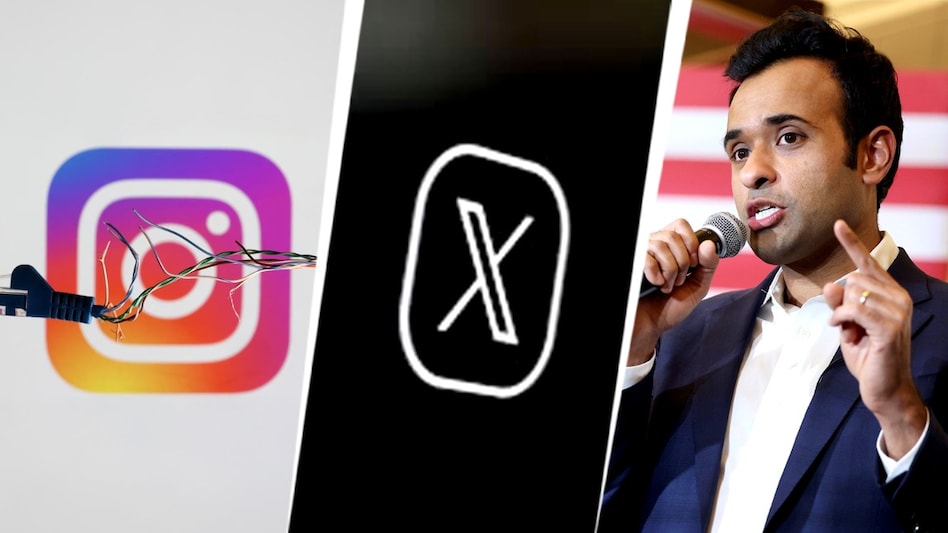
Indian-American entrepreneur Vivek Ramaswamy has begun the new year by logging off. The Republican politician and Ohio governor candidate says he has deleted X and Instagram from his phone, arguing that constant exposure to social media distorts political judgement and risks confusing online noise with real public opinion.
In an opinion piece in The Wall Street Journal, Ramaswamy traces the decision to a conversation with Italian Prime Minister Giorgia Meloni during her visit to the United States last July. "When I met Italian Prime Minister Giorgia Meloni during her visit to the U.S. in July 2024, she told me she never reads or watches the news because she doesn't want the media to influence her approach to governing. Instead, she travels her country and hears directly from citizens. What a beautiful idea," he writes.
Ramaswamy says he is now attempting a version of that approach himself. "My New Year's resolution is to do something similar: I plan to become a social-media teetotaler in 2026," he says. "On New Year’s Eve, I deleted X and Instagram from my phone. I'll spend my newfound time listening to more voters in real-world Ohio, developing more policies to make our state affordable, and being more present with my family."
The move does not mean a complete digital blackout. Ramaswamy says his campaign will continue to use social media to distribute material, but he will not personally engage with it. "My campaign team will still use social media to distribute messages and videos on my behalf. But I won’t browse any of it myself," he writes. "There's a fine line between using the internet to distribute your message and inadvertently allowing constant internet feedback to alter your message. That isn't using social media; it's letting social media use you."
Drawing on his own presidential run, Ramaswamy argues that social media offers politicians a misleading shortcut. "As someone who ran a digitally centered campaign for president, I've seen this effect firsthand—on myself and my competitors," he says.
While politicians want to respond to voters, he notes that traditional tools such as polling are "expensive and infrequent," while platforms offer "free, abundant real-time feedback." The problem, he argues, is that this feedback is not representative. "Modern social media is increasingly disconnected from the electorate. The messages you're most likely to see are the most negative and bombastic, because they're most likely to receive rapid 'likes' and 'reposts’—and that drives revenue for social media content creators."
He describes how algorithmic reinforcement can warp perception. "If you click on one post about a topic, suddenly that viewpoint appears everywhere you look, skewing your view of reality," he writes, adding that while this may be harmless for hobbies, it becomes dangerous when power is involved. "But when those in power mistake online commentary for real-world consensus, they make decisions based on a distorted picture of what those citizens really want."
Ramaswamy also points to evidence that online political signals are increasingly manipulated. "Worse, the online 'pulse' that politicians glean from social media is increasingly manufactured by foreign actors and nonhuman bots," he says, citing a report that engagement with the X account of white nationalist Nick Fuentes showed signs of being "unusually fast, unusually concentrated and unusually foreign in origin."
He also refers to another investigation that found "hundreds of bots drove the pro-Democrat #BlueCrew hashtag, amplifying false claims that the assassination attempt on President Trump in Butler, Pa., was staged." The conclusion, he writes, is blunt: "Politicians who think they’re taking social media cues from U.S. citizens are often mistaken."
According to Ramaswamy, the distortion is reinforced within government itself. "Political staffers on both sides of the aisle skew young and hyper-attuned to social media," he writes, arguing that "Twitter was built to imitate real-life conversations, but in modern younger political circles, real-life conversations are imitating Twitter."
He cites political commentator Richard Hanania's observation that young aides compete to be the most "based," adopting increasingly extreme positions. “If you’ve ever winced at a social-media post by an official government account, remember that the person who wrote it is often a young employee who takes most of his cues from the internet," Ramaswamy writes. "Over time, the state itself begins to sound like X."
He is careful to say that citizens have every right to use social media to influence politicians. "None of this is to say citizens shouldn't use social media to sway politicians. It's their constitutional right to do so," he writes. The responsibility, he argues, lies with leaders to understand what they are responding to.
While acknowledging flaws in legacy media, he says social media introduces a different threat. "But social media presents a new problem: coordinated influence that hides behind armies of avatars, creating a false impression of grassroots support," he writes.
The result, he argues, is a political class trapped in what he calls "Twitter prison." "It's fashionable these days for leaders to complain about the influence of social media on politics, but do nothing to fix it," Ramaswamy writes. "Yet the first step doesn’t even require new laws. We just need to practice what we preach."
He ends with a note of self-awareness. "That's easier said than done. If my current New Year's resolution resembles past ones, I might be back to scrolling X by March," he writes.
Indian-American entrepreneur Vivek Ramaswamy has begun the new year by logging off. The Republican politician and Ohio governor candidate says he has deleted X and Instagram from his phone, arguing that constant exposure to social media distorts political judgement and risks confusing online noise with real public opinion.
In an opinion piece in The Wall Street Journal, Ramaswamy traces the decision to a conversation with Italian Prime Minister Giorgia Meloni during her visit to the United States last July. "When I met Italian Prime Minister Giorgia Meloni during her visit to the U.S. in July 2024, she told me she never reads or watches the news because she doesn't want the media to influence her approach to governing. Instead, she travels her country and hears directly from citizens. What a beautiful idea," he writes.
Ramaswamy says he is now attempting a version of that approach himself. "My New Year's resolution is to do something similar: I plan to become a social-media teetotaler in 2026," he says. "On New Year’s Eve, I deleted X and Instagram from my phone. I'll spend my newfound time listening to more voters in real-world Ohio, developing more policies to make our state affordable, and being more present with my family."
The move does not mean a complete digital blackout. Ramaswamy says his campaign will continue to use social media to distribute material, but he will not personally engage with it. "My campaign team will still use social media to distribute messages and videos on my behalf. But I won’t browse any of it myself," he writes. "There's a fine line between using the internet to distribute your message and inadvertently allowing constant internet feedback to alter your message. That isn't using social media; it's letting social media use you."
Drawing on his own presidential run, Ramaswamy argues that social media offers politicians a misleading shortcut. "As someone who ran a digitally centered campaign for president, I've seen this effect firsthand—on myself and my competitors," he says.
While politicians want to respond to voters, he notes that traditional tools such as polling are "expensive and infrequent," while platforms offer "free, abundant real-time feedback." The problem, he argues, is that this feedback is not representative. "Modern social media is increasingly disconnected from the electorate. The messages you're most likely to see are the most negative and bombastic, because they're most likely to receive rapid 'likes' and 'reposts’—and that drives revenue for social media content creators."
He describes how algorithmic reinforcement can warp perception. "If you click on one post about a topic, suddenly that viewpoint appears everywhere you look, skewing your view of reality," he writes, adding that while this may be harmless for hobbies, it becomes dangerous when power is involved. "But when those in power mistake online commentary for real-world consensus, they make decisions based on a distorted picture of what those citizens really want."
Ramaswamy also points to evidence that online political signals are increasingly manipulated. "Worse, the online 'pulse' that politicians glean from social media is increasingly manufactured by foreign actors and nonhuman bots," he says, citing a report that engagement with the X account of white nationalist Nick Fuentes showed signs of being "unusually fast, unusually concentrated and unusually foreign in origin."
He also refers to another investigation that found "hundreds of bots drove the pro-Democrat #BlueCrew hashtag, amplifying false claims that the assassination attempt on President Trump in Butler, Pa., was staged." The conclusion, he writes, is blunt: "Politicians who think they’re taking social media cues from U.S. citizens are often mistaken."
According to Ramaswamy, the distortion is reinforced within government itself. "Political staffers on both sides of the aisle skew young and hyper-attuned to social media," he writes, arguing that "Twitter was built to imitate real-life conversations, but in modern younger political circles, real-life conversations are imitating Twitter."
He cites political commentator Richard Hanania's observation that young aides compete to be the most "based," adopting increasingly extreme positions. “If you’ve ever winced at a social-media post by an official government account, remember that the person who wrote it is often a young employee who takes most of his cues from the internet," Ramaswamy writes. "Over time, the state itself begins to sound like X."
He is careful to say that citizens have every right to use social media to influence politicians. "None of this is to say citizens shouldn't use social media to sway politicians. It's their constitutional right to do so," he writes. The responsibility, he argues, lies with leaders to understand what they are responding to.
While acknowledging flaws in legacy media, he says social media introduces a different threat. "But social media presents a new problem: coordinated influence that hides behind armies of avatars, creating a false impression of grassroots support," he writes.
The result, he argues, is a political class trapped in what he calls "Twitter prison." "It's fashionable these days for leaders to complain about the influence of social media on politics, but do nothing to fix it," Ramaswamy writes. "Yet the first step doesn’t even require new laws. We just need to practice what we preach."
He ends with a note of self-awareness. "That's easier said than done. If my current New Year's resolution resembles past ones, I might be back to scrolling X by March," he writes.