
Pakistan's double game unmasked? Iran questions Islamabad on…
US-Iran peace talks: Alex Vatanka, Senior Fellow at the Middle East Institute, said Iran and Pakistan’s relationship goes back decades but it is one he would not characterise as friendship.
- Apr 22, 2026,
- Updated Apr 22, 2026 11:27 AM IST
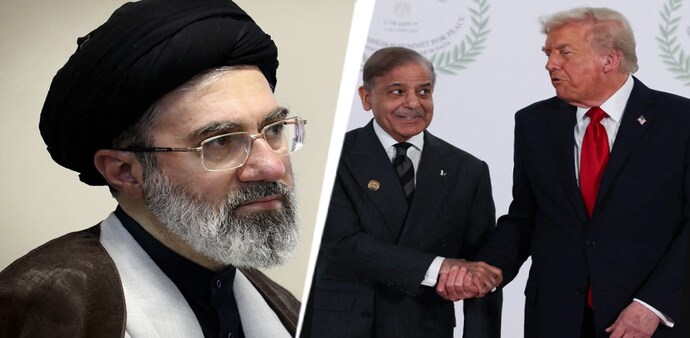
US-Iran talks: Iranian sources believe Pakistan is playing a “double game” and is really bidding on behalf of the Americans, said Alex Vatanka, Senior Fellow at the Middle East Institute and author.
“In fact, if you look at Iranian sources today, they're questioning, what is Pakistan really up to? Are the Pakistanis doing the American bidding? Why are they pushing us? Why do you insist you have to come to Islamabad? This was the latest I picked up just before I joined this call, as we're hearing that JD Vance is not going to make it to Islamabad tomorrow after all,” said Vatanka in a discussion with Senior Fellow at the Atlantic Council, Michael Kugelman.
Vatanka said Iran and Pakistan’s relationship goes back decades but it is one he would not characterise as friendship. There is a deep amount of mistrust there, he pointed out.
Vatanka’s assessment comes as Pakistan has taken on the role of a mediator between Iran and the US. The first round of talks, held in Islamabad, yielded no positive result. The second round, shrouded by uncertainty, was planned for today.
Separately, Tehran has signalled growing distrust in Islamabad’s role as mediator in US-Iran talks. Iranian state television launched an unusually sharp and public criticism of Pakistan, accusing it of playing a “double game” and failing to act as a neutral mediator in ongoing backchannel efforts between Tehran and Washington.
The attack, delivered by a prominent state TV analyst, marks the first open rebuke of Pakistan in Iranian media amid sensitive diplomatic manoeuvring ahead of a potential ceasefire framework.
Vatanka explained that Iran and Pakistan’s relation is one of “ups and downs”. “I would just very quickly point out, the relations didn't go south because of the 1979 Iranian Revolution, which is oftentimes where people think that's the moment. Relations went south a couple of years before that, in the mid-70s, when the Shah was still there. And it really related to different divergent geopolitical pathways that these two countries chose,” he explained.
They were in the same US-led camp in fearing Soviet expansionism , and Iran supported Pakistan in the war with India. But by late 70s, Vatanka explained, both sides had gone their different ways. Iran moved towards the Indians, he said, which it continued to do for a while, creating a foundation of mistrust with Pakistan, he said.
MUST READ | Who is Stephen Payne? The Texas lobbyist behind Pakistan's Washington access
“It's one of those relations that Iran has with its neighbors that is least troubling. Certainly nothing like what Iran has with the Gulf states or some of the other neighbors to its north or to its west. But I would be very careful not characterizing this as one of friendship. There's a deep amount of mistrust going back decades, even before 1979, and that's still there,” he said.
Meanwhile, JD Vance was to leave for Islamabad for the second round of talks on Tuesday but a new New York Times report said that his trip was put on hold after Iran failed to respond to American negotiating positions. The report said that the trip has not been cancelled and could resume if Iran responds in a positive manner.
Iran had initially rejected the second round of talks but apparently received a “last-minute” clearance from the Supreme Leader to participate in the negotiations. It, however, maintained that it would not negotiate with Washington under the current conditions.
US-Iran talks: Iranian sources believe Pakistan is playing a “double game” and is really bidding on behalf of the Americans, said Alex Vatanka, Senior Fellow at the Middle East Institute and author.
“In fact, if you look at Iranian sources today, they're questioning, what is Pakistan really up to? Are the Pakistanis doing the American bidding? Why are they pushing us? Why do you insist you have to come to Islamabad? This was the latest I picked up just before I joined this call, as we're hearing that JD Vance is not going to make it to Islamabad tomorrow after all,” said Vatanka in a discussion with Senior Fellow at the Atlantic Council, Michael Kugelman.
Vatanka said Iran and Pakistan’s relationship goes back decades but it is one he would not characterise as friendship. There is a deep amount of mistrust there, he pointed out.
Vatanka’s assessment comes as Pakistan has taken on the role of a mediator between Iran and the US. The first round of talks, held in Islamabad, yielded no positive result. The second round, shrouded by uncertainty, was planned for today.
Separately, Tehran has signalled growing distrust in Islamabad’s role as mediator in US-Iran talks. Iranian state television launched an unusually sharp and public criticism of Pakistan, accusing it of playing a “double game” and failing to act as a neutral mediator in ongoing backchannel efforts between Tehran and Washington.
The attack, delivered by a prominent state TV analyst, marks the first open rebuke of Pakistan in Iranian media amid sensitive diplomatic manoeuvring ahead of a potential ceasefire framework.
Vatanka explained that Iran and Pakistan’s relation is one of “ups and downs”. “I would just very quickly point out, the relations didn't go south because of the 1979 Iranian Revolution, which is oftentimes where people think that's the moment. Relations went south a couple of years before that, in the mid-70s, when the Shah was still there. And it really related to different divergent geopolitical pathways that these two countries chose,” he explained.
They were in the same US-led camp in fearing Soviet expansionism , and Iran supported Pakistan in the war with India. But by late 70s, Vatanka explained, both sides had gone their different ways. Iran moved towards the Indians, he said, which it continued to do for a while, creating a foundation of mistrust with Pakistan, he said.
MUST READ | Who is Stephen Payne? The Texas lobbyist behind Pakistan's Washington access
“It's one of those relations that Iran has with its neighbors that is least troubling. Certainly nothing like what Iran has with the Gulf states or some of the other neighbors to its north or to its west. But I would be very careful not characterizing this as one of friendship. There's a deep amount of mistrust going back decades, even before 1979, and that's still there,” he said.
Meanwhile, JD Vance was to leave for Islamabad for the second round of talks on Tuesday but a new New York Times report said that his trip was put on hold after Iran failed to respond to American negotiating positions. The report said that the trip has not been cancelled and could resume if Iran responds in a positive manner.
Iran had initially rejected the second round of talks but apparently received a “last-minute” clearance from the Supreme Leader to participate in the negotiations. It, however, maintained that it would not negotiate with Washington under the current conditions.